
Contents
In short:
- Almond flour — finely ground blanched almonds, naturally gluten-free.
- 100 g of the product contains 21.4 g of protein and 10.7 g of fiber, with fewer carbohydrates than wheat flour.
- It is rich in monounsaturated fatty acids and vitamin E, which acts as an antioxidant.
- Suitable for the keto, low-carb and gluten-free diets.
Almond flour is one of the most popular substitutes for regular flour, chosen by people who follow a low-carb or gluten-free diet. This flour is made from finely ground almonds and stands out for its mild nutty flavor and high nutritional value. In this article we will look at what almond flour is, what health benefits it offers, and how to use it correctly in baking.
Key takeaways
- Almond flour is naturally gluten-free and low in carbohydrates — suitable for the keto diet and for people sensitive to gluten.
- 100 g of the product contains 21.4 g of protein and 10.7 g of fiber — satiety and digestion in one product.
- When replacing wheat flour with almond flour, you usually need to add more eggs or another binder to the dough.
What is almond flour?
Almond flour is finely ground almonds made from blanched (skinless) almond kernels. First the almonds are scalded in hot water so that the skin comes off easily, then they are dried and ground into very fine, loose powder. Thanks to blanching, the flour is light in color and mild in flavor.
It is important to distinguish between two terms: almond flour is made from blanched, skinless almonds and is very fine, while almond meal is made from almonds with their skins and is coarser. In baking this difference matters — fine almond flour gives a smoother and fluffier texture, which is why it is the preferred choice for cakes and cookies.
Almond flour is not a new product — it has long been used in Mediterranean cuisine and in traditional French desserts such as macarons. Recently it has become popular again thanks to the growing interest in gluten-free and low-carb diets.
Nutritional value of almond flour
100 g of almond flour usually contains about 21.4 g of protein, 10.7 g of fiber and 21 g of carbohydrates, a large part of which is fiber. Almond flour is fairly high in fat — about 52 g per 100 g of product — but most of it consists of heart-healthy monounsaturated fatty acids.
Almond flour also stands out for its micronutrient profile. It contains vitamin E, which acts as an antioxidant and contributes to protecting cells from oxidative stress, as well as magnesium, calcium, potassium and iron. Vitamin E is one of the reasons why almond flour is considered a valuable part of the diet.
The magnesium and calcium content is also worth noting: magnesium contributes to normal muscle and nervous system function and helps reduce fatigue, while calcium is needed to maintain normal bones and teeth. This flour is therefore valuable not only as a substitute for regular flour, but also as a way to enrich the daily diet with minerals.
Compared to wheat flour, almond flour has about twice as much protein and considerably more healthy fats, while its total carbohydrate content is lower. This composition explains why almond flour is so often chosen instead of regular flour.
Health benefits of almond flour
Almond flour is valued for several clear reasons. Here are its main benefits.
- Low in carbohydrates. Thanks to its high fiber content, the net carbohydrates in almond flour are lower than in wheat flour, making the product suitable for the keto and low-carb diets.
- Naturally gluten-free. Almond flour contains no gluten, so it suits people with celiac disease or gluten sensitivity.
- Monounsaturated fatty acids. These fatty acids help maintain normal blood cholesterol levels.
- Fiber and satiety. 10.7 g of fiber per 100 g of product contributes to normal bowel function and a longer-lasting feeling of fullness.
- Plant protein. 21.4 g of protein per 100 g of product is a useful plant-based source of protein.
- Vitamin E and minerals. Vitamin E acts as an antioxidant, while magnesium and calcium contribute to muscle and bone function.
Research on almonds and their effect on cardiovascular health is reviewed in more detail in the Harvard T.H. Chan School of Public Health article on almonds.
Low in carbs – suitable for the keto diet
One of the main reasons people choose almond flour is its low net carbohydrate content. Net carbs are calculated by subtracting fiber from the total carbohydrate content. Since fiber makes up a large part of the carbohydrates in almond flour, relatively few net carbs remain.
Because of this, almond flour is often used in keto bread, cake and cookie recipes as the main flour substitute. On a keto diet, where daily carbohydrate intake is usually limited to a few dozen grams, this flour lets you still enjoy baked goods without exceeding the carbohydrate limit.
In addition, thanks to its fiber and fat content, almond flour is absorbed more slowly than refined wheat flour, so baked goods made with it provide steadier energy and do not cause a sudden spike in blood sugar.
Almond flour is gluten-free
Almond flour naturally contains no gluten because it is made from nuts rather than grains. This matters for people with celiac disease or non-celiac gluten sensitivity — they need to avoid gluten-containing wheat, rye or barley flour.
However, it is worth knowing that in industrial production almond flour may be packaged in facilities that also process gluten-containing products. If you need to strictly avoid gluten, choose products whose label clearly states that they are gluten-free or that carry a special certificate. Read more about the benefits of fiber in the article “Fiber: benefits for digestion and weight control”.
Almond flour or wheat flour?
The main difference between almond flour and wheat flour is gluten. The gluten in wheat flour gives dough elasticity and allows it to rise, while almond flour contains no gluten, so baked goods made from it are denser and moister.
The nutritional composition also differs: wheat flour has more carbohydrates and less fat, while almond flour is the opposite. Because of its higher fat content, almond flour is higher in calories, but those fats are mostly monounsaturated fatty acids, which are valuable for health.
When replacing wheat flour with almond flour, it is usually enough to use it in a 1:1 ratio by weight, but the dough may need more eggs or a binder because almond flour does not form a gluten network. Beginners are best off following recipes that were originally created specifically for almond flour.
When choosing between these two flours, it is worth considering your goal. If you want to reduce carbohydrate intake or avoid gluten, almond flour is the clear choice. If you are baking regular wheat bread that needs the gluten structure, wheat flour remains more practical, and almond flour is best used as a partial substitute.
How to use almond flour?
Almond flour is a versatile ingredient suitable for various dishes. It is most often used in baking — for pancakes, cakes, cookies, muffins and bread. Thanks to its nutty flavor, baked goods made with almond flour gain extra flavor and a moist texture.
Besides baking, almond flour can be stirred into porridge, smoothies or yogurt to increase the protein and fiber content. It also works well for coating meat or fish instead of breadcrumbs — this makes the dish gluten-free and richer in nutrients.
One practical note — this flour absorbs liquids differently than wheat flour. Because it is high in fat and contains no gluten, the dough becomes thicker and stickier, so when baking for the first time watch the consistency and, if needed, add a little more liquid or an egg.
When baking gluten-free or keto, almond flour is often combined with other ingredients. For example, chia seeds mixed with water can replace an egg in baked goods and help bind the dough. And to add more protein to baked goods, almond flour can be mixed with hemp protein.
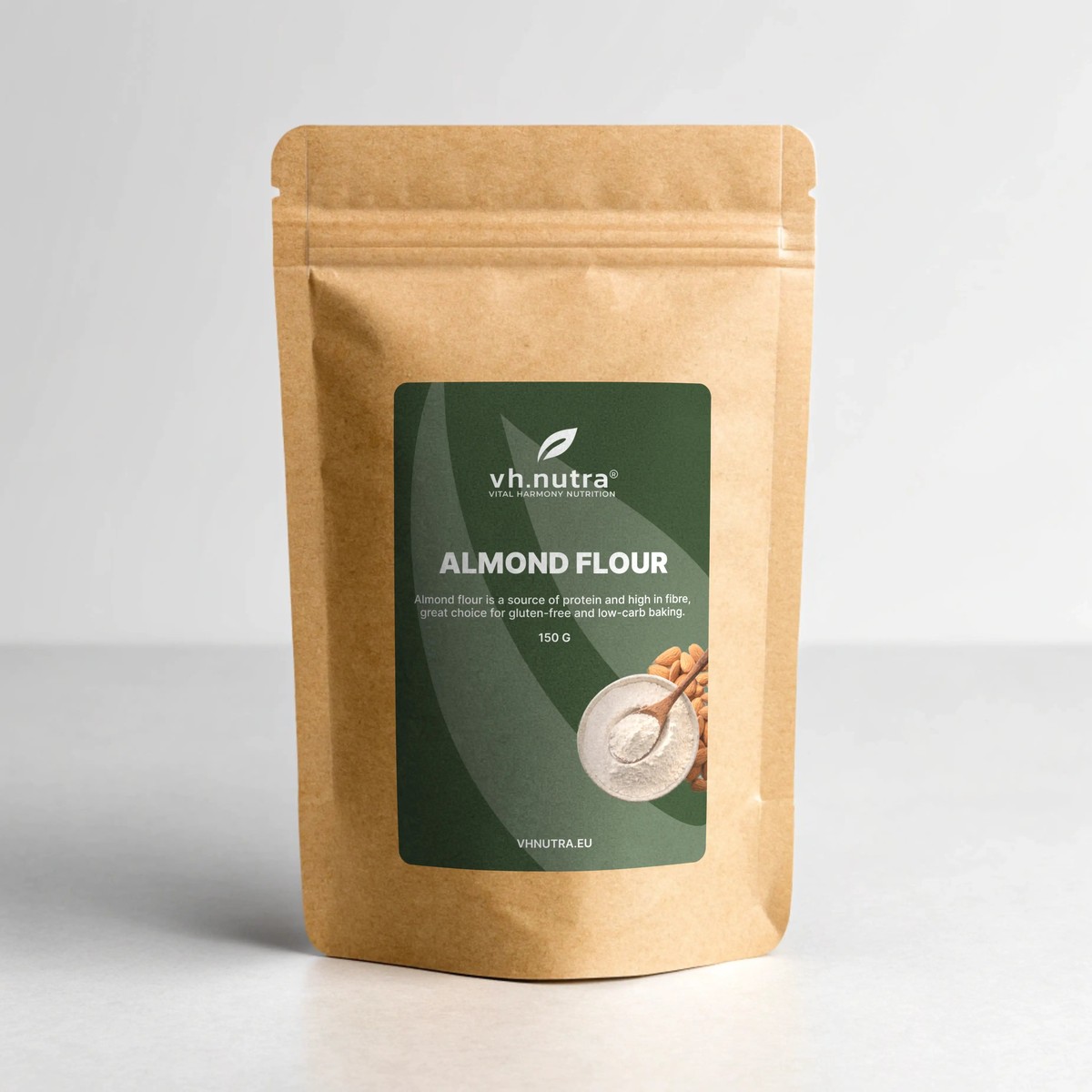
If you want to try this flour, gluten-free almond flour with 21.4 g of protein and 10.7 g of fiber per 100 g of product is a convenient choice for baking and smoothies.
How much almond flour per day?
Almond flour is a food product, so there is no strict daily dose set for it. The most important thing is to consider the total amount of calories consumed, because almond flour is fairly high in calories: 100 g of the product has about 570–590 kcal.
A typical portion for one baked item or smoothie is usually 25–50 g of almond flour. This amount conveniently enriches the dish with protein and fiber without overloading the daily diet with calories. If you start using almond flour more often, keep an eye on the total amount of nuts you eat — almonds are high in calories, so portion size matters.
Side effects and precautions
The most important thing to know about almond flour is a nut allergy. Almonds belong to the tree nut group, so people who are allergic to them must strictly avoid almond flour — the allergy can be severe and cause anaphylaxis.
Almond flour, like all nuts, contains phytic acid, which can slightly reduce the absorption of some minerals. For healthy people this practically causes no problems, but very large amounts every day are not recommended.
If you have allergies or follow a special diet, consult a doctor or dietitian before adding almond flour to your diet. It is also worth checking the product packaging for information about possible traces of gluten or other allergens.
Frequently asked questions
Is almond flour suitable for the keto diet?
Yes. Almond flour is low in net carbohydrates because a large part of its carbohydrates consists of fiber, which is why it is often used in keto baking as a substitute for wheat flour.
Is almond flour gluten-free?
Yes, almond flour naturally contains no gluten because it is made from nuts. However, it is worth choosing products whose label clearly states that they are gluten-free if you need to strictly avoid gluten.
What is the difference between almond flour and almond meal?
Almond flour is made from blanched, skinless almonds and is very fine, while almond meal is made from almonds with their skins and is coarser. Fine almond flour is usually best for baking because it gives a smoother texture.
How should almond flour be stored correctly?
Almond flour is best stored in an airtight container in a cool, dry place. Because of its higher fat content, it can go rancid if stored for a long time, so after opening the package it is advisable to use it within a few months or keep it in the refrigerator.
Disclaimer: This information is for educational purposes only. Before taking supplements, consult a doctor or pharmacist.
Related articles
- Fiber: benefits for digestion and weight control
- Diet shake: what it is and how to use it
- Protein: benefits for muscles and health