
Contents
In short:
- Hemp protein is a plant-based protein powder made from edible hemp seeds.
- 100 g of product contains 52.7 g of protein and 18.5 g of fiber, with only 0.5 g of carbohydrates.
- It contains all nine essential amino acids — making it a complete protein source.
- Suitable for vegans, free of lactose and gluten (may contain traces).
Hemp protein is a plant-based protein source increasingly chosen by athletes and people who eat healthily. This powder is made from cold-pressed hemp seeds, so it retains a natural amount of nutrients. In this article, we will look at the benefits of hemp protein, the amino acids it contains, and how to use it correctly. We will also discuss how hemp protein differs from whey protein and which recipes are worth trying.
Key takeaways
- Hemp protein is a complete plant protein with all nine essential amino acids.
- 100 g of product contains 52.7 g of protein and 18.5 g of fiber — satiety and muscle recovery in one product.
- The recommended dose is 20–25 g (2 tablespoons), mixed with water or a plant-based drink.
What is hemp protein?
Hemp protein is a powder obtained from the seeds of industrial hemp (Cannabis sativa). First, oil is cold-pressed from the seeds, and the remaining seed cake is ground into a fine powder. In this way, the product retains plenty of protein, fiber, and beneficial fatty acids.
It is important to know that edible hemp seeds contain no psychotropic substances. Hemp protein is made from industrial hemp varieties in which the level of tetrahydrocannabinol (THC) does not exceed legal limits, and the seeds themselves contain practically none of these compounds.
100 g of hemp protein typically contains 52.7 g of protein, 18.5 g of fiber, 10.6 g of fat, and only 0.5 g of carbohydrates. Thanks to this composition, the product stands out not only for its high protein but also its high fiber content, while carbohydrates are almost absent. This matters for those who monitor their carbohydrate intake, and the fat content consists mostly of unsaturated fatty acids.
Benefits of hemp protein
Hemp protein is most often chosen for a few clear reasons. Here are its main benefits.
- Muscle mass and recovery. Protein contributes to the growth and maintenance of muscle mass, so hemp protein suits post-workout use or as a daily protein supplement.
- Complete amino acid profile. Hemp seeds contain all nine essential amino acids that the body cannot produce on its own.
- Easy digestion. The main hemp proteins — edestin and albumin — are well absorbed, so the product rarely causes a feeling of heaviness in the stomach.
- Satiety and weight control. Thanks to their high protein and fiber content, hemp protein keeps you feeling full for a long time and can help reduce snacking.
- Heart health. Plant protein and omega-3 and omega-6 fatty acids help maintain normal blood cholesterol levels.
- Suitable for vegans. Hemp protein is free of lactose and animal-derived substances, so it suits vegans and vegetarians.
The nutritional composition of hemp seeds and their effect on cardiovascular health are reviewed in more detail in a scientific review published in “Frontiers in Nutrition”.
Compared with other plant proteins, hemp protein has a more natural composition. It does not involve the chemical extraction processes typical of isolates — the seeds are simply pressed and ground, so more fiber and minerals remain. This differs from, for example, soy or pea protein isolates, in which usually only the protein itself remains.
Amino acid profile
When it comes to hemp protein, it is worth paying attention to its amino acid composition. The product contains all nine essential amino acids: histidine, isoleucine, leucine, lysine, methionine, phenylalanine, threonine, tryptophan, and valine. That is precisely why hemp protein is considered a complete protein — a rare quality among plant sources.
The majority is made up of two proteins — edestin (about 65%) and albumin (about 35%). Both dissolve easily and are well absorbed, and the overall digestibility of hemp protein is about 88–94%. This means the body efficiently takes up amino acids from these proteins.
Hemp protein also contains useful minerals — iron, magnesium, zinc, and phosphorus — as well as vitamin E, which acts as an antioxidant.
Although hemp protein contains somewhat less leucine than whey protein, its branched-chain amino acid (BCAA) content is still sufficient to make the product valuable after a workout. Combining hemp protein with other plant sources, such as rice or peas, can further balance the amino acid profile.
Digestion and fiber
One often-overlooked advantage of hemp protein is its high fiber content. 100 g of product contains 18.5 g of fiber, so this protein helps maintain normal bowel function. Many other protein powders contain almost no fiber, while here it adds to the benefits of the protein.
In addition, hemp protein is lactose-free, so it suits people who do not tolerate milk sugar. Unlike soy or whey protein, hemp protein rarely irritates the digestive system.
Fiber also helps slow the absorption of carbohydrates, so a hemp protein shake provides more even energy without a sudden spike in blood sugar. This is another reason why hemp protein suits not only athletes but also those who want to maintain stable energy throughout the day.
Who is hemp protein suitable for?
Hemp protein is a versatile product suitable for various people. For vegans and vegetarians, it helps supplement protein intake with a plant-based source. For people who do not tolerate lactose or for whom milk protein causes discomfort, hemp protein is a gentle alternative.
For athletes, hemp protein suits as a protein supplement after workouts or between meals. Thanks to its high fiber content, it is also useful for those who want to control their weight or feel full for longer. And thanks to its minerals — iron, magnesium, and zinc — hemp protein is valuable for overall well-being.
Hemp protein or whey protein?
Whey protein is popular for its high leucine content and fast absorption. However, it is made from milk, so it does not suit people who are lactose intolerant or vegans. Hemp protein offers a different path: a complete plant protein with fiber and fatty acids, free of lactose.
If your goal is the fastest possible delivery of amino acids after a workout, whey protein may be more convenient. If plant origin, fiber, and a gentle effect on the stomach matter more, hemp protein is an excellent choice. Read more about the differences in the article “Whey protein or plant protein”.
How to use hemp protein?
Recommended dose: 2 tablespoons (about 20–25 g) mixed with 250–300 ml of water or a plant-based drink. This amount is usually enough for one shake or smoothie.
One level tablespoon of hemp protein is about 10–12 g, so two tablespoons use about 20–25 g of product. If you drink shakes rarely, start with one tablespoon and observe how your stomach reacts.
When is the best time to take it: hemp protein can be taken in the morning with breakfast, after a workout, or between meals as a filling snack. Because of its fiber, it is digested more slowly, so it is ideal when you want to stay full for longer.
How long to use it: hemp protein is a food product, so it can be used for a long time as part of a normal diet. The most important thing is not to exceed your total daily protein requirement, which for a healthy adult averages about 0.8 g per kilogram of body weight.
Maximum safe dose: there is no strict upper limit for hemp protein, but it is not recommended to consume more than a few servings per day. Excess protein can strain the kidneys over time, so stick to the recommended portion and spread your protein intake throughout the day.
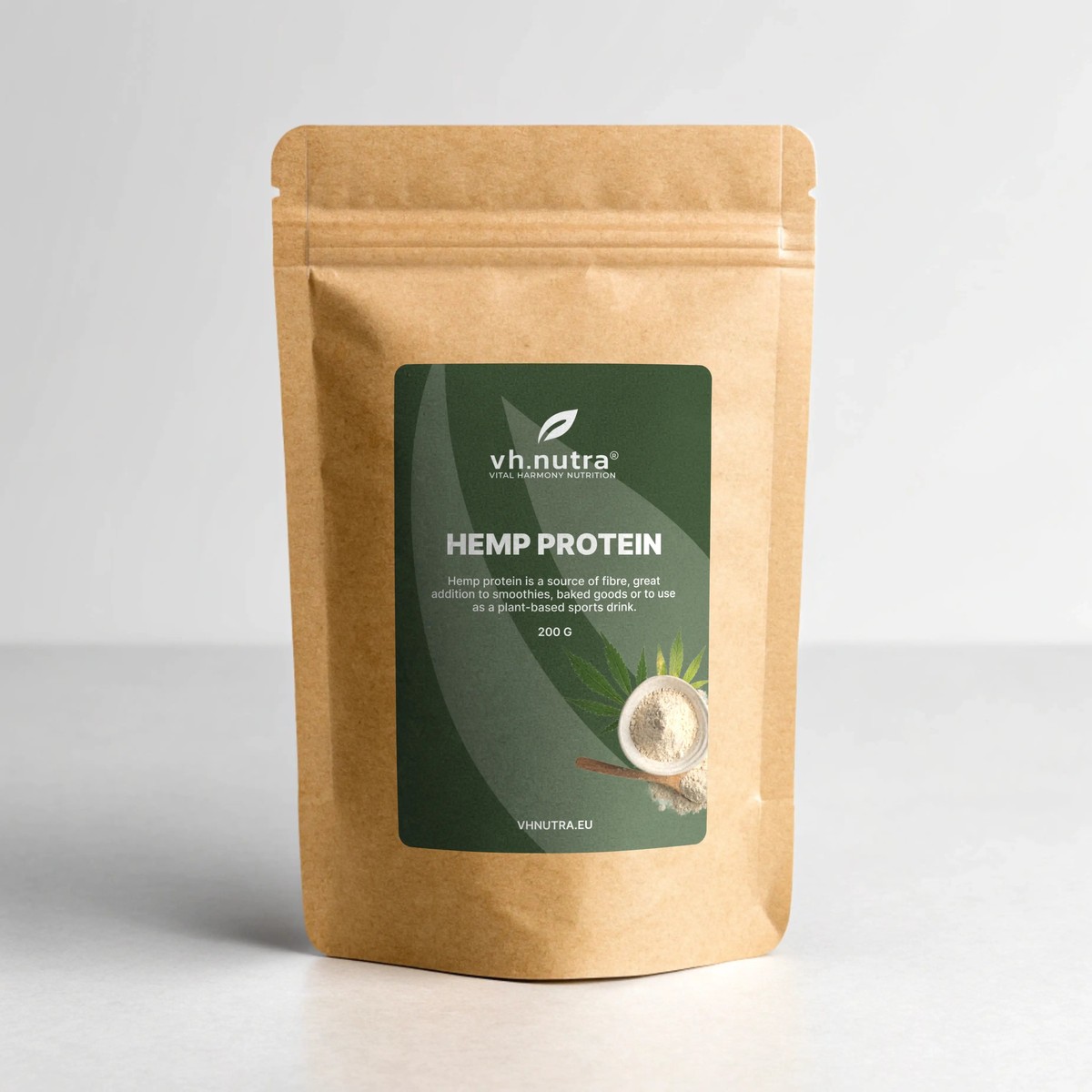
If you want to try this plant protein, hemp protein powder with 52.7 g of protein per 100 g of product is a convenient choice for a daily shake.
If the nutty flavor seems too strong at first, start with a smaller amount and mix it with stronger-tasting ingredients — cocoa, cinnamon, or vanilla. A frozen banana gives the shake thickness and naturally hides the texture of the powder.
Hemp protein recipes
Hemp protein has a distinct nutty flavor and a slightly grainy texture, so it pairs best with cocoa, bananas, and dates. Here are a few simple ways to include it in your daily diet.
Hemp protein can be used not only for sweet drinks — its nutty flavor suits soups, sauces, or hummus. This way you can boost your protein intake even in main dishes.
- Banana and cocoa. Mix 1 banana, 2 tablespoons of hemp protein, 1 tablespoon of cocoa, and 250 ml of plant-based drink.
- Berry smoothie. Blend a handful of frozen berries, 2 tablespoons of hemp protein, and a glass of water or almond drink.
- Porridge and quark. Add a spoonful of hemp protein to oatmeal or quark to increase the protein content.
- Dough. Replace part of the flour in baked goods with hemp protein — this adds a nutty flavor and more protein to your baking.
Side effects and precautions
Hemp protein is well tolerated by most people. Due to its high fiber content, bloating or gas may occur when you first start using it — this usually passes as the body adapts. Start with a smaller portion and increase it gradually.
If you are allergic to nuts or seeds, check the product label — hemp protein may contain traces of gluten, nuts, or soy. During pregnancy and breastfeeding, consult a doctor before use.
Because hemp protein is made from seeds and not from the flowers of the plant, its THC content is minimal. Nevertheless, if you undergo sensitive cannabinoid testing for work or sport, choose products with third-party certification and a verified THC level.
Frequently asked questions
Does hemp protein contain cannabinoids?
No. Hemp protein is made from edible hemp seeds, and the seeds contain no psychotropic substances. The THC content of the product does not exceed the limits set by law.
Is hemp protein suitable for vegans?
Yes. Hemp protein is 100 percent plant-based, free of lactose and animal-derived substances, so it suits vegans and vegetarians.
How much protein is in 100 g of hemp protein?
100 g of product contains 52.7 g of protein and 18.5 g of fiber. This is a high amount compared with many plant protein sources.
Is hemp protein suitable after a workout?
Yes. Protein contributes to the growth and maintenance of muscle mass, so hemp protein suits both post-exercise use and as part of your daily diet.
Disclaimer: This information is for educational purposes only. Before taking supplements, consult a doctor or pharmacist.
Related articles
- Whey protein or plant protein?
- Protein: benefits for muscles and health
- Chia seeds: benefits for digestion and weight control