Table of contents
In short:
- Psyllium (psyllium husk) — a natural dietary fiber that forms a gel in water.
- Helps maintain regular bowel movements and gut health.
- May help lower blood cholesterol levels.
- Always take it with plenty of water, otherwise you may feel discomfort.
Psyllium is the husk of the plantain (Plantago ovata) seed and one of the most popular natural fibers in the world. These husks are known for their ability to absorb water and turn into a thick gel, which is why many people turn to psyllium husk as a simple way to increase their daily fiber intake and keep digestion running smoothly. Below we explain exactly what this fiber is, what benefits it can offer, and how to use it correctly.
Key takeaways
- Psyllium is the husk of plantain seeds, made up mostly of soluble fiber.
- In water this fiber forms a gel that softens stool and supports regular bowel movements.
- Research links psyllium husk to lower LDL (“bad”) cholesterol and better blood sugar control.
- Take one dose (about 5 g) with at least a full glass of water — this is essential for safe use.
What is psyllium?
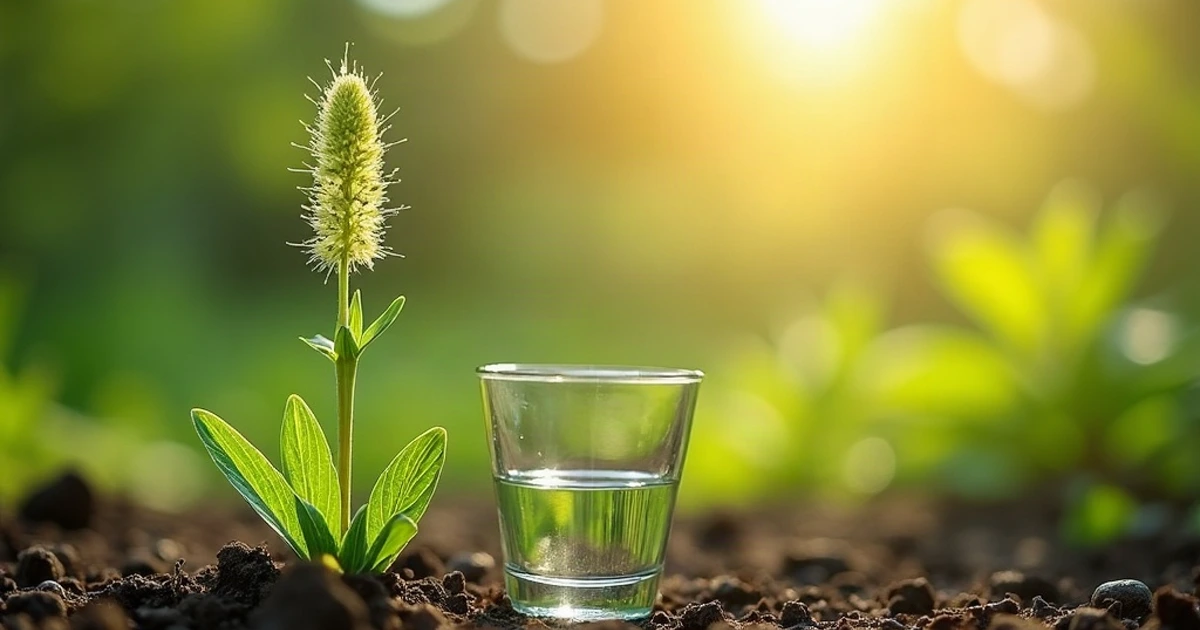
Psyllium is a source of soluble dietary fiber obtained from plantain — a modest herbaceous plant that botanically belongs to the plantain family (Plantaginaceae). It is not the leaves that are used for fiber, but the outer husks of the tiny seeds. Most of the fiber is concentrated in these husks, so after milling they turn into fine, pale, almost tasteless powder or light, flake-like husks.
Once in liquid, psyllium husks rapidly absorb water and form a slippery gel. This property is the basis of how they work — the gel travels through the digestive tract, softens its contents and helps the intestines move them along. That is why this fiber is often called a “bulk-forming” fiber: it increases the volume of intestinal contents without adding calories.
In stores, psyllium husks are usually sold in several forms: fine powder, coarser husks, or capsules. Powder and husks are convenient for mixing into drinks, while capsules are a handy option when you want your fiber on the go or have no time to prepare a drink. The different forms work in a similar way — only the ease of use differs.
The plantain from which these husks are obtained is traditionally grown in India, where it is known as isabgol and has been used for centuries as a natural gut remedy. Today psyllium is also grown in other countries, but India remains the world’s largest supplier of this raw material. The long history of use shows that the product is well studied and safe when the usage guidelines are followed.
How much fiber does psyllium contain?
Psyllium husks stand out for their very high fiber content — around 70–80 g per 100 g of product. By comparison, many whole-grain products contain less than 10 g of fiber per 100 g. Even more importantly, this product is made up mostly of soluble fiber, which is what gives it its characteristic gel property.
Most of the fiber is a compound called arabinoxylan — a complex carbohydrate that human digestive enzymes cannot break down. For this reason psyllium husks reach the large intestine almost unchanged, absorb water there and act as a gentle natural regulator of intestinal contents. The recommended fiber intake for an adult is about 25–30 g per day, and a single serving can make a meaningful contribution to this goal, since most people consume far less fiber daily than recommended.
By comparison, chia seeds contain about 34 g of fiber per 100 g and flaxseed about 27 g per 100 g. This means that psyllium husks clearly outperform other popular natural fiber sources in fiber density, making it easier to reach the desired fiber intake with them.
Psyllium benefits for digestion
Psyllium husks are most commonly used precisely to improve digestive comfort. By absorbing water, they soften stool and increase its bulk, making it easier for stool to move through the intestines. This helps maintain regular bowel movements, and regularity is one of the most important conditions for everyday comfort.
This fiber is also beneficial because it works gently — it does not stimulate the intestines chemically, like some laxatives do, but simply helps the body work at its natural rhythm. That is why it can be used regularly, following the recommended doses. At the same time, fiber feeds the beneficial gut bacteria, supporting a healthy gut microbiome, which in turn contributes to overall well-being.
Interestingly, psyllium husks can also help with looser stools — the gel absorbs excess fluid in the intestines and gives stool form. This is why this fiber is valued as a universal regulator of bowel rhythm, suitable for different situations.
Psyllium benefits for cholesterol control
In the intestines, the psyllium husk gel is able to bind bile acids and cholesterol particles and help remove them with stool. When the body runs short of bile acids, the liver produces them anew — using cholesterol from the blood. In this way total cholesterol, and especially LDL (“bad”) cholesterol, is indirectly reduced.
Scientific reviews show that regular use of psyllium husks can help lower LDL cholesterol by a few percent — a modest but meaningful effect as part of a healthy diet. It is important to stress that this is not a medicine, but a supportive measure that works best together with a balanced diet, plenty of vegetables and regular exercise.
Psyllium benefits for blood sugar metabolism
When psyllium husks are taken with food, the gel they form slows the absorption of carbohydrates from the digestive tract. As a result, blood glucose rises more slowly and less sharply after a meal. For people who monitor their blood sugar or want to avoid sudden energy swings, this property can be useful.
Research shows that soluble fiber can help smooth out post-meal glucose swings. Nevertheless, it is important to understand that psyllium husks do not replace treatment prescribed by a doctor — if you have diabetes or another condition, talk to your doctor about fiber intake.
Psyllium benefits for satiety and weight control
The swollen psyllium husk gel takes up space in the stomach and gives a feeling of fullness, so you are less tempted to snack after a meal. Since this fiber has virtually no calories, it can be a useful tool for those who control their calorie intake.
Although psyllium husks can support satiety, they are not a “miracle” weight-loss product. You will get the best results when you use them as part of a balanced diet — together with vegetables, whole grains and enough water.
How to use psyllium?
The usual psyllium dose is about 5 g (roughly one heaped teaspoon) 1–3 times a day. Beginners are advised to start with a smaller dose — about half a teaspoon once a day — and gradually increase it over one to two weeks. This way the digestive system has time to adapt and bloating is avoided.
The most important rule — drink enough water. Stir each dose into at least one full glass (200–250 ml) of water and drink it immediately, then follow it with another glass. For example, psyllium husks mix easily into water, juice or yogurt — the key is to always get enough fluid with them.
It is best to take the fiber before a meal or with food. You can stir it into porridge, a smoothie or yogurt — just remember to drink more water. The maximum recommended daily dose is usually up to 30 g, but higher doses are rarely needed, so follow the amount stated on the package. This supplement can be used long-term as long as you drink enough fluid and feel no unpleasant symptoms.
After the first few days it is worth having realistic expectations — the effect on digestion usually appears within one to three days, not immediately. Drink a prepared psyllium drink quickly, because as it stands it thickens and turns slimy. If you do not like the taste, choose husks to stir into a smoothie or porridge, where their texture is less noticeable.
By the way, psyllium gel is also valued in the kitchen — it is often used as a natural thickener and a helper in gluten-free baking. When the husks are mixed with water, they form a sticky mass that binds the dough and helps baked goods keep their shape. This fiber is also suitable for thickening soups or sauces — again without extra calories.
Side effects and precautions
The most common side effects of psyllium are bloating, gas and mild abdominal discomfort. They usually appear when the dose is increased too quickly or too little water is drunk. These symptoms can generally be avoided by starting with a low dose and drinking enough fluid.
It is critically important to always take psyllium husks with enough water. Dry husks swallowed without water can swell in the esophagus and cause a dangerous blockage. People with swallowing disorders or narrowing of the digestive tract must consult a doctor before using it. If severe abdominal pain, vomiting or inability to pass stool occurs, stop using it and contact a doctor.
Psyllium interactions with medications
Psyllium husk gel can slow down or reduce the absorption of certain medications, because drug molecules can get “stuck” in the thick gel and fail to reach the intestinal wall. Therefore it is advisable to take the fiber at least 2 hours before or 2 hours after medications. This is especially important with medicines for diabetes, cholesterol or thyroid conditions — for their compatibility, consult a pharmacist.
As with any supplement, before starting to use psyllium husks together with prescription drugs, it is worth consulting a doctor or pharmacist. For more detailed information on their properties and safe use, see the authoritative MedlinePlus source.
Frequently asked questions
Can psyllium be taken every day?
Yes, psyllium husks can be taken daily, following the recommended dose and drinking enough water. Regular use helps maintain a steady fiber intake and smooth digestion. If you plan to use it long-term, it is worth talking to your doctor about it.
When is the best time to take psyllium — morning or evening?
There is no single “correct” time — psyllium husks work regardless of the time of day. For many people it is most convenient to take them in the morning before breakfast or before a meal, to reduce appetite and make it easier to remember. More important than the time is consistency and enough water.
How is psyllium different from plantain seeds?
Psyllium husks are the outer shell of the plantain seed, while plantain seeds are the whole seed with the kernel. The husks contain more fiber, so they swell more strongly and increase the bulk of intestinal contents more. The seeds also contain fiber, but their effect is gentler because part of the seed consists of fats and protein.
Is psyllium suitable for weight loss?
Psyllium husks can help you feel fuller, because the gel fills the stomach with almost no calories, but on their own they do not reduce weight. They work best as part of a balanced diet and exercise — as a supportive measure, not a miracle solution.
Recommended products

Disclaimer: This information is for educational purposes only. Before starting to take supplements, consult a doctor or pharmacist.