Contents
In short:
- Prebiotics are indigestible fibers and other compounds that feed the beneficial bacteria in your gut.
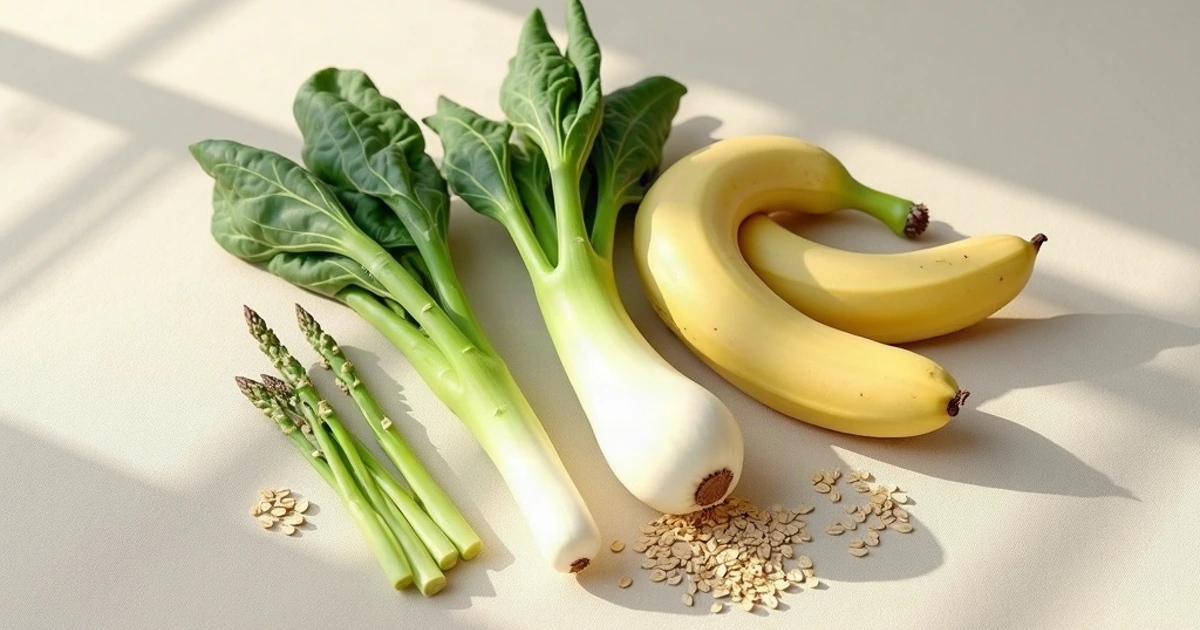
- They are found mostly in chicory root, garlic, onions, leeks, asparagus, oats and green bananas.
- Unlike probiotics, they are not live bacteria but the food for those bacteria.
- Start with a low dose and increase gradually; consult a doctor before combining with medication.
Prebiotics are indigestible food components, most often fibers, that your body cannot absorb itself but which serve as food for the beneficial bacteria in the gut. In recent years prebiotics have drawn growing scientific attention, because a healthy gut microbiome is linked not only to digestion but also to immunity, mood and overall well-being. In this article we explain what prebiotics are, how they differ from probiotics, what benefits they offer and where to find them.
Key takeaways
- Prebiotics are indigestible compounds that selectively promote the growth of beneficial gut bacteria.
- When bacteria break down prebiotics, they produce short-chain fatty acids, including butyrate – the main energy source for the cells of the large intestine.
- The most common prebiotic groups are inulin, fructo-oligosaccharides (FOS) and galacto-oligosaccharides (GOS).
- There is no official daily allowance, but studies most often use 2.5–10 g per day; start with a low dose.
What are prebiotics?
Prebiotics are food components that the human small intestine does not break down or absorb, so they reach the large intestine almost unchanged. There they are fermented by gut bacteria, and this process releases useful compounds, primarily short-chain fatty acids.
The International Scientific Association for Probiotics and Prebiotics (ISAPP) defines prebiotics as “a substrate that is selectively utilized by host microorganisms conferring a health benefit”. In other words, prebiotics are not bacteria themselves – they are substances that help specifically the beneficial bacterial species — such as bifidobacteria and lactobacilli — to grow.
Most prebiotics belong to soluble fibers: inulin, fructo-oligosaccharides and galacto-oligosaccharides. However, other compounds can also have a prebiotic effect – resistant starch, pectin, beta-glucan or psyllium fiber.
Trillions of bacteria live in the gut, and their combined mass can reach about 1–2 kg. These bacteria take part not only in digestion – they help produce vitamins, maintain the gut barrier and interact with the immune system. For this community to stay healthy and diverse, it constantly needs the right “fuel”, and prebiotics suit this purpose best.
How do prebiotics differ from probiotics?
These two terms are easy to confuse, because both relate to gut health. The difference is essentially simple: probiotics are live beneficial bacteria, while prebiotics are the food for those bacteria.
Imagine a garden: probiotics are like the seeds you sow, while prebiotics are the fertilizer that helps the seeds sprout and grow. You can get probiotics from fermented foods (yogurt, kefir, sauerkraut), and prebiotics from fiber-rich plant foods. Read more about the benefits of probiotics in our article about probiotics.
In practice these two components often work best together – we will talk about this later, in the section on synbiotics.
Benefits of prebiotics for the gut and health
The main effect of prebiotics is to encourage beneficial bacteria. When bifidobacteria and lactobacilli ferment prebiotics, they produce short-chain fatty acids: acetate, propionate and butyrate. Butyrate is especially important, because it serves as the main energy source for the cells of the large intestine and helps maintain the integrity of the gut lining.
A scientific review published in the journal “Foods” summarizes that prebiotics are associated with several positive effects:
- Regular digestion. Fiber increases stool bulk and helps maintain regular bowel movements.
- Better mineral absorption. Inulin and FOS promote the absorption of calcium and magnesium in the gut.
- Immune support. A large share of immune cells reside in the gut, so a healthy microbiome helps strengthen defenses.
- Satiety and carbohydrate absorption. Fiber slows the absorption of carbohydrates and helps you feel full longer.
Moreover, growing research points to a link between the gut microbiome and mood – this connection is called the gut–brain axis. Although the science here is still early, short-chain fatty acids and a healthy balance of bacteria are thought to indirectly contribute to better well-being and a calmer mind.
Some soluble fibers, such as beta-glucan and psyllium husk, also help maintain normal blood cholesterol levels, because they bind bile acids in the gut. Read more about the benefits of fiber in our article about fiber.
Types of prebiotics: inulin, FOS, GOS and more
Prebiotics are not a single substance but a whole group of different compounds. The most common types are:
- Inulin – a long-chain fructan found in chicory root, Jerusalem artichokes and onions. One of the most studied prebiotics.
- Fructo-oligosaccharides (FOS) – shorter-chain fructans found in garlic, onions, leeks, asparagus and bananas.
- Galacto-oligosaccharides (GOS) – derived from lactose, naturally found in legumes and breast milk.
- Resistant starch – starch that resists digestion; found in green bananas and in cooked, cooled potatoes or rice.
- Pectin and beta-glucans – soluble fibers abundant in apples, citrus fruits, oats and barley.
Where are prebiotics found? Natural food sources
The best way to get prebiotics is a varied plant-based diet. They are naturally most abundant in these foods:
- Chicory root and Jerusalem artichokes – especially rich sources of inulin.
- Garlic, onions, leeks and asparagus – contain FOS.
- Green bananas and cooked, cooled potatoes – sources of resistant starch.
- Oats and barley – sources of beta-glucans.
- Apples, citrus fruits, flaxseeds and legumes – sources of pectin and GOS.
For the effect of prebiotics to be noticeable, it is important to eat these products regularly, not occasionally. A simple rule is to include at least a few different plant foods in your plate every day: an onion or leek with lunch, an apple as a snack, oats for breakfast.
If you include a few servings of these products in your daily diet, you naturally get a good amount of prebiotics. When it is difficult to reach a sufficient amount through food alone, fiber supplements are a convenient option – for example, psyllium husk fiber, which is a natural source of soluble fiber. A wider selection is available in our digestive system category.
How to take prebiotics? Dosage and tips
Dosage. There is no official recommended daily allowance for prebiotics, but most studies use 2.5–10 g per day. Always check the exact dose on the label of the product you choose.
How to start. The most important thing is to start with a small amount (for example, 2–3 g per day) and increase gradually. This lets the body adapt, so bloating and gas are less troublesome.
When to take. Prebiotics can be taken at any time of day, but many people tolerate them best with food. Consistency matters more than a specific time.
Drink enough water. Fiber absorbs water, so when taking prebiotic supplements you must drink more fluids – otherwise constipation or discomfort may occur.
For how long. The effect on the microbiome develops gradually. Noticeable changes in how you feel can be expected after a few weeks of consistent use, not after a few days.
Maximum safe dose. No clear upper limit has been established, but very large amounts (above 20–30 g per day) usually cause only digestive discomfort. Follow the amount stated on the package and do not exceed it.
Possible side effects and what to expect at first
Prebiotics are considered safe and well tolerated by most people. The most common unpleasant effects are bloating, gas and mild abdominal discomfort, especially in the first weeks of use or when the dose is increased too quickly.
These reactions occur because bacteria start fermenting the fiber more actively and producing gas. They usually pass as the body adapts. Start with a low dose and increase gradually – this usually solves the problem.
For people with irritable bowel syndrome (IBS), some prebiotics (inulin, FOS) are classified as FODMAP carbohydrates and may worsen symptoms. In that case it is worth choosing better-tolerated fibers, such as psyllium husk, and increasing the dose very slowly. If you have digestive disorders, consult a doctor or pharmacist before starting.
Prebiotics and probiotics together: synbiotics
When live bacteria and the food intended for them are combined in one product or regimen, this combination is called a synbiotic. The idea is simple: the probiotic brings beneficial bacteria, while the prebiotic helps them settle and multiply in the gut.
Prebiotics can be taken both separately and together with probiotics – both approaches make sense. If you are just starting to care for your gut health, first make sure you get enough fiber in your diet, and add probiotics as needed.
Synbiotic combinations have long been popular in some countries, and in recent years they are growing more common in Lithuania too. Still, the foundation matters most – a varied diet with enough fiber, which naturally supplies the body with prebiotics as well.
Who may benefit most from prebiotics?
Prebiotics are useful for practically everyone, but in some cases they may be especially valuable:
- After a course of antibiotics. Antibiotics reduce the number of beneficial bacteria, and prebiotics help restore them.
- With irregular digestion. Fiber helps maintain regular bowel movements.
- To strengthen immunity. A healthy microbiome is closely linked to the body’s defenses.
- To get more calcium. Some prebiotics improve calcium absorption, which matters for bones.
When gut bacteria break down prebiotics, they also produce butyrate. This compound is important for the gut lining, so if you want to support gut health comprehensively, it is worth looking into sodium butyrate supplements as well.
Frequently asked questions
Can prebiotics be taken every day? Yes. Prebiotics are food components, so they can be taken daily over the long term. The most important thing is to follow the recommended dose and drink enough water.
When is the best time to take prebiotics – morning or evening? The time of day does not matter much. Many people tolerate prebiotics best with food, so it is convenient to take them with breakfast or dinner.
How long does it take to feel the effect? The microbiome changes gradually, so noticeable changes can be expected after a few weeks of consistent use. Some people notice improvement sooner, others need more time.
Do prebiotics cause bloating? At first they may cause mild bloating and gas, because bacteria start fermenting the fiber more actively. This usually passes within a few days or weeks. Increase the dose gradually.
How do prebiotics differ from probiotics? Probiotics are live beneficial bacteria, while prebiotics are their food. You get probiotics from fermented foods and prebiotics from fiber-rich plant foods.
Are prebiotics suitable for children? For children the most important thing is a varied diet with vegetables, fruits and grains, which naturally contain prebiotics. Supplements should be given to children only after consulting a pediatrician.
Disclaimer: This information is for educational purposes only. Consult a doctor or pharmacist before starting to take supplements.
Related articles
- Probiotics: 7 benefits for gut health, immunity and well-being
- Fiber: 7 benefits for digestion, weight control and health
- Sodium butyrate: 7 benefits for gut health, digestion and immunity