

Contents
In short:
- Eye vitamins are supplements that support normal vision and protect eye cells from oxidative stress.
- The most important nutrients for vision: lutein, zeaxanthin, vitamin A, vitamin C, vitamin E, zinc and omega-3.
- Lutein and zeaxanthin accumulate in the macula and act as a natural filter against blue light.
- Supplements do not replace treatment — for any vision problems, first see an eye doctor.
Eye vitamins are one of the most searched supplement groups, especially among people who spend many hours in front of screens or notice their eyes get tired. But “vitamins for eyes” is a broad term: different substances are responsible for different eye functions, so not every supplement suits everyone. In this article we review which of them have scientific backing, how they work, and how to choose eye vitamins that truly match your needs.
Key takeaways
- Eye vitamins work best when lutein, zeaxanthin, vitamins C and E, and zinc are combined in one formula.
- Lutein and zeaxanthin naturally accumulate in the macula, so a lack of them is linked to a higher risk of age-related macular degeneration.
- Supplements support but do not cure: regular eye doctor check-ups remain the most important step for vision health.
What Are Eye Vitamins
The term eye vitamins refers to supplements that combine nutrients important for vision: carotenoids, vitamins, minerals and fatty acids. Their goal is not to “sharpen vision” overnight, but to support the eye’s structures over time: the retina, macula, lens and tear film. Properly chosen eye vitamins become part of daily vision hygiene, much like toothpaste is for the mouth.
The main attention today goes to two problems: age-related macular degeneration and screen-related eye strain. For the first, carotenoids and zinc have the most evidence; for the second — a proper diet, maintaining moisture and regular breaks. That is why a quality product is usually a complex, not a single vitamin. It is also important to understand what eye vitamins do not do: they neither cure existing diseases nor remove the need to wear glasses or lenses. This is preventive support best combined with regular eye doctor check-ups.
Lutein and Zeaxanthin
Lutein and zeaxanthin are yellow carotenoids that concentrate most in the macula — the central part of the retina responsible for sharp vision. There they work in two ways: they filter harmful blue light and neutralize free radicals that can damage light-sensitive cells.
The body cannot produce these carotenoids on its own — we get them only from food or supplements. They are found mostly in dark green leafy vegetables (spinach, kale) and egg yolks. Studies show that a higher intake is linked to a lower risk of macular degeneration. That is why lutein and zeaxanthin are considered the most important part of eye vitamins — you will not find them in many general multivitamins, but in specialized formulas they usually come first. Read more about these substances in the articles Lutein: benefits for the eyes and Zeaxanthin: how it differs from lutein.
Vitamin A and Beta-Carotene
Vitamin A is essential for vision in dim light: it is a component of rhodopsin, the pigment the retina uses in low-light conditions. A deficiency can show up as night blindness and dry eyes, while a prolonged deficiency can cause more serious corneal damage.
We get vitamin A in two forms: directly from animal foods (liver, fish oils) and as beta-carotene from orange and green vegetables, which the body converts into vitamin A itself. Supplements often combine both forms. In many eye vitamins vitamin A is provided as beta-carotene, because this way the body makes only as much as it needs and the risk of overdose is lower. More about these substances — Vitamin A: benefits for vision and Beta-carotene: benefits and how to take it.
Vitamin C and Vitamin E
Vitamin C and vitamin E are the eye’s main antioxidants. Vitamin C concentrates in the eye’s fluid (aqueous humour), while vitamin E — in the retina’s membranes. Both protect eye cells from oxidative stress, which is increased by UV radiation, cigarette smoke and heavy screen use.
This antioxidant combination is one of the reasons why complex eye vitamins often work better than single vitamins: different substances protect different parts of the eye and complement each other. Still, a larger number of ingredients does not automatically mean a better product — the amounts must be sufficient and evidence-based.
The well-known AREDS study, coordinated by the U.S. National Eye Institute, showed that the combination of vitamin C and vitamin E with beta-carotene and zinc slowed the progression of intermediate macular degeneration. Today beta-carotene is often replaced with lutein and zeaxanthin — this way the formula is also suitable for smokers. Vitamin C additionally contributes to collagen, which is important for the cornea and blood vessels.
Zinc and Selenium
Zinc is needed for the eyes in several ways: it helps move vitamin A from the liver to the retina and takes part in the activity of an antioxidant enzyme. Selenium, in turn, is an important part of the enzyme glutathione peroxidase, which protects cells from peroxides. This mineral is also important for thyroid function, which is indirectly related to eye health.
In the AREDS formula, zinc was one of the four effective components. That is why quality eye vitamins usually contain both zinc and selenium, and their combination with vitamins C and E works synergistically. Zinc matters here also because its level in the body tends to decline with age, while the eyes need a steady supply of it. More about these minerals — Zinc: benefits for the body and Selenium: benefits for immunity.
Omega-3 Fatty Acids
Omega-3 fatty acids, especially DHA, are a natural structural part of the retina. DHA supports the flexibility and function of photoreceptor membranes, so an adequate amount is important throughout life — from infancy to old age.
For some people with dry eye syndrome, omega-3 supplements may help maintain the quality of the tear film, although study results are mixed. Most DHA comes from oily fish (salmon, mackerel, sardines), while plant-based ALA is found in flaxseeds and walnuts.
In some eye vitamins omega-3 is combined with carotenoids, but this is not necessary: if you eat oily fish several times a week, you may not need a separate supplement. When choosing fish oil, pay attention to the DHA and EPA content, because that is what determines the product’s value, not the total oil volume.
Bilberry Extract
Bilberry fruit extract is added to eye supplements for its anthocyanins — pigments that give the berries their dark blue color and have an antioxidant effect. Anthocyanins strengthen small blood vessels and may contribute to better microcirculation in the retina.
Bilberries are traditionally linked to twilight vision, although modern evidence here is more modest than for lutein and zeaxanthin. Still, as an additional ingredient, bilberry extract is a sensible choice in complex eye vitamins, because it enriches the formula with the benefits of anthocyanins.
How to Take Eye Vitamins
The recommended daily dose depends on the specific product, so always follow the dosage stated on the label. Usually complex eye vitamins are taken as one capsule a day with water, ideally with food.
Carotenoids and vitamins A, D and E are fat-soluble, so they are absorbed better with a meal that contains some fat. Vitamin C and zinc have no such requirement, but taking them with a meal is also convenient, because it reduces possible stomach irritation.
How long to take them? The renewal of eye structures is slow, so do not expect an effect after a week. Most studies showing benefit lasted months or years. In practice it is worth taking supplements for at least 2–3 months, and for longer use consult a doctor or pharmacist.
When choosing eye vitamins, read not only the marketing claims but also the composition: check whether specific amounts of lutein, zeaxanthin, zinc and vitamins are listed. Products where ingredient amounts are hidden behind the word “blend” offer less clarity, and sometimes less value.
The maximum safe dose differs for each substance: for example, a very high long-term dose of vitamin A can accumulate in the body and become toxic, while for fat-soluble vitamins it is generally more important not to exceed the recommended amount. Never take several supplements with the same fat-soluble substance at once without first consulting a specialist.
Food Sources
Supplements work best when they complement, rather than replace, a balanced diet. Most of the nutrients important for vision can be obtained from common foods:
- Lutein and zeaxanthin — spinach, kale, broccoli, egg yolks.
- Vitamin A — liver, fish oils, carrots, sweet potatoes, pumpkins.
- Vitamin C — peppers, citrus fruits, strawberries, broccoli.
- Vitamin E — vegetable oils, nuts, seeds.
- Zinc and selenium — seafood, legumes, meat, Brazil nuts.
- Omega-3 — salmon, mackerel, sardines, flaxseeds.
Who Should Consider Them
Additional eye nutrients are most often chosen by people whose eyes are under greater strain: professionals working long hours at a computer, drivers, craftspeople doing precise work. For them both general eye comfort and long-term retinal protection matter.
The second large group is older people, whose risk of macular degeneration increases. The third group is those whose diet regularly lacks green leafy vegetables and oily fish. In such cases eye vitamins help fill the gaps, but they do not replace a healthy diet or regular eye check-ups. If you belong to any of these groups, it is worth discussing supplement choice with a pharmacist or eye doctor.
Side Effects and Interactions
At recommended doses, eye vitamins are well tolerated by most people. Zinc can sometimes cause mild nausea or stomach discomfort — taking it with food reduces this. High doses of zinc over time can interfere with copper absorption, which is why quality products often pair zinc with a small amount of copper.
Caution is needed with fat-soluble vitamins: vitamin A accumulates in the body, so do not take it additionally if you already take another product with vitamin A, and do not exceed the recommended limits. Smokers are advised to avoid beta-carotene supplements. If you take blood-thinning or other medications, consult a doctor or pharmacist before starting supplements — especially important if you consider high doses of vitamin E.
Frequently Asked Questions
Do eye vitamins improve vision?
No, supplements are not meant to “strengthen” visual acuity. Their purpose is to maintain normal visual function and protect eye cells from damage that can lead to vision loss over time. Therefore eye vitamins are a preventive measure, not a treatment: if your vision has noticeably worsened, first see an eye doctor.
When is the best time to take eye vitamins?
Best — with a meal that contains some fat, because carotenoids and fat-soluble vitamins are absorbed precisely with fat. For many people it is convenient to take the capsule with breakfast or lunch, so eye vitamins are easy to fit into the daily rhythm.
Can eye vitamins be taken continuously?
Most people can take the recommended doses for a long time, so eye vitamins suit an ongoing routine. Still, because fat-soluble vitamins accumulate in the body, it is worth periodically consulting a specialist, especially if you take several supplements at once.
Do eye vitamins help with eye strain?
Partly. Eye strain is mostly caused by working too long without breaks and dry eyes, so the most important thing is regular breaks and blinking. Supplements with antioxidants, such as eye vitamins, can help maintain overall eye comfort, but they do not replace adjusting your work routine.
Related Articles
- Lutein: benefits for eyes and vision
- Zeaxanthin: how it differs from lutein
- Vitamin A: benefits for vision and immunity
Recommended Products
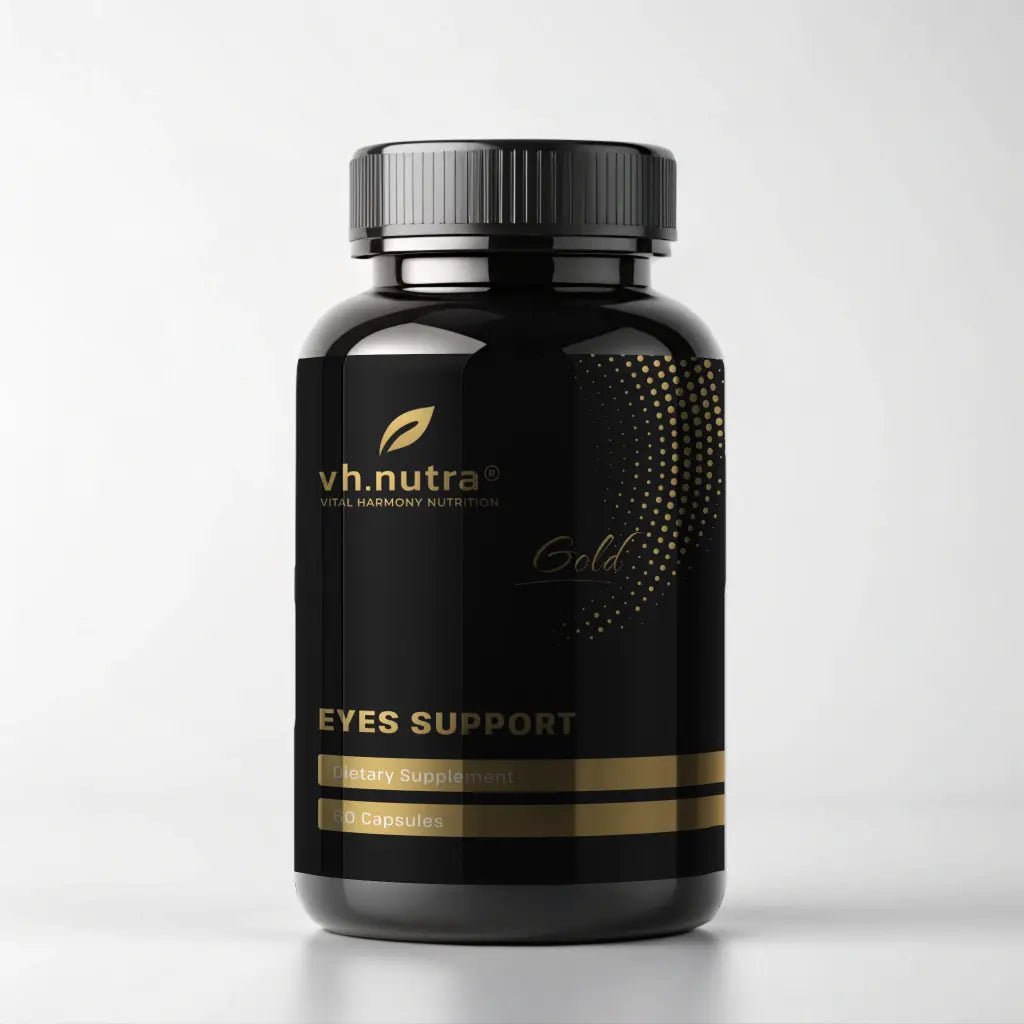
For a complex solution, it is worth choosing a formula that contains lutein, zeaxanthin, vitamins C and E, zinc and selenium at once. One such choice is VH.Nutra Eyes Support, whose composition combines bilberry and marigold extracts with antioxidant vitamins and minerals.
Disclaimer: This information is for educational purposes only and does not replace professional medical advice. Before taking supplements, consult a doctor or pharmacist.