Vitamin A – a fat-soluble vitamin that your body needs for vision, immune system function, skin health and normal cell growth. Unlike water-soluble vitamins, vitamin A is stored in the liver, so the body keeps reserves it can draw on when less of this vitamin comes from food. In this article you will learn what benefits vitamin A brings to your health, in what forms it exists, how to take it safely and which foods contain the most of it.
Key Takeaways
- Vitamin A – a fat-soluble vitamin essential for vision, immunity and skin health.
- Vitamin A exists in two forms: retinol (in animal products) and beta-carotene (in plants).
- This vitamin’s reserves are stored in the liver, so deficiency develops gradually, while very high doses can be toxic.
- The best sources – liver, eggs, carrots, sweet potatoes and dark green leafy vegetables.
Table of Contents
What Is Vitamin A and Why Is It Important?
Vitamin A is a collective name for a group of fat-soluble compounds that act in a similar way in the body. There are two main forms: retinol, the active form of vitamin A found in animal products, and provitamin A carotenoids, of which beta-carotene is the most important. Beta-carotene is a plant pigment that gives carrots, sweet potatoes and pumpkins their orange color, and the body converts it into retinol as needed.
Because it is fat-soluble, vitamin A is absorbed together with dietary fats and stored in the liver. This means the body can build up reserves for several months, so deficiency usually develops not in a single day but gradually, when vitamin A is lacking in the diet for a long time. This property matters in another way too: since vitamin A is not flushed out in urine, its excess also accumulates, so large doses must be handled with care.
Vitamin A Supports Vision and Night Vision
Vision is perhaps the best-known function of vitamin A. Vitamin A is essential for the production of rhodopsin – a light-sensitive pigment in the retina. Rhodopsin allows the eyes to adapt to low light and to see in the dark. When vitamin A is lacking, rhodopsin synthesis slows down, and the first noticeable symptom is usually night blindness, when it becomes difficult to see at dusk or in a dark room.
Long-term vitamin A deficiency can damage the cornea and conjunctiva of the eye, cause dry eyes and, in severe cases, more serious vision problems. Together with vitamin A, vision is also supported by other compounds such as lutein and zeaxanthin, which accumulate in the retina and protect it from blue light. Read more about these carotenoids in the article Lutein: 7 benefits for eyes, vision and protection against blue light.
Vitamin A Strengthens the Immune System
Vitamin A plays an important role in immune defense. First of all, it maintains the integrity of the skin and mucous membranes – the physical barrier that keeps microbes from entering the body. In addition, vitamin A is involved in the production and differentiation of white blood cells, including lymphocytes, which helps the body respond properly to infections.
Research links vitamin A deficiency with increased susceptibility to infections, especially respiratory and digestive tract illnesses. Interestingly, in the immune field vitamin A works closely with other micronutrients – vitamin C, zinc and selenium – which together help maintain strong immunity. Read more about one of these partners in the article Selenium: 7 benefits for immunity, thyroid and antioxidant protection.
Vitamin A Contributes to Skin Health
Vitamin A – more precisely its derivatives, called retinoids – is one of the most studied compounds in skin care. Vitamin A promotes skin cell renewal, helps maintain a healthy skin barrier and can contribute to a more even skin tone. For this reason retinoids are widely used in cosmetics and dermatology to address acne, skin aging and pigmentation problems.
Vitamin A obtained from food is also important for the skin from within: it takes part in the production and repair of skin cells, while beta-carotene acts as an antioxidant that helps protect skin cells from oxidative stress caused by the sun and the environment. It is important to understand, however, that vitamin A is not a substitute for sunscreen, and skin care is best combined with a varied diet and protection from UV rays.
Vitamin A Supports Mucous Membrane Health
Mucous membranes line the inner surfaces of the body – the respiratory tract, digestive tract, urinary tract and the surface of the eyes – and form a moist protective layer that traps pathogens and keeps tissues healthy. Vitamin A is essential for the production of mucus and for the renewal of the epithelial cells that make up these membranes.
When vitamin A is lacking, mucous membranes can dry out and their protective function weakens. This can show up as dry eyes, rough skin and increased sensitivity to respiratory infections. Healthy mucous membranes are the body’s first line of defense, so an adequate amount of vitamin A helps keep this barrier strong and moist.
Vitamin A Is Important for Cell Growth and Differentiation
Vitamin A also plays a deeper, cellular role: it acts as a signaling molecule that regulates gene expression. This means that vitamin A helps cells “understand” what they should become – skin, mucosal or immune cells – and perform their function properly. This process is called cell differentiation and is essential for tissue growth and renewal.
This function is especially important during growth periods – childhood, adolescence and pregnancy – when the body is intensively building new tissues. Vitamin A also takes part in protein synthesis and tissue repair after damage, which makes it important not only for a growing body but also for a healing one.
Vitamin A Contributes to Bone Health
Vitamin A takes part in the growth and remodeling of bone tissue – the continuous process by which old bone tissue is replaced with new. An adequate amount of vitamin A helps maintain bone growth and density, and together with vitamin D and calcium it contributes to a healthy skeletal system.
Balance matters here: both a deficiency and an excess of vitamin A can negatively affect bones. Some studies show that very high doses of vitamin A over a long period can weaken bones and increase fracture risk. Therefore, for bone health the most important thing is to maintain an optimal, rather than the highest possible, level of vitamin A. Read about vitamin D – calcium’s partner – in the article Vitamin D: 7 benefits for immunity, bones and mood.
Vitamin A Is Important for Reproduction and Development
Vitamin A is needed for the normal function of the reproductive system – both in women and in men. It takes part in sperm production, egg development and the normal course of pregnancy. During pregnancy vitamin A is essential for the development of the embryo’s organs, including the heart, eyes and nervous system.
During pregnancy, however, special care must be taken with vitamin A: too much retinol can harm the developing fetus, so pregnant women are advised to avoid large supplement doses and rely on a balanced diet. Any supplement use during pregnancy is worth discussing with a doctor.
How to Take Vitamin A: Dose, Timing and Duration
The recommended daily intake of vitamin A for adult men is about 900 micrograms of retinol activity equivalents (RAE), and for women about 700 micrograms RAE. These amounts are easiest to obtain from a varied diet that includes both animal and plant sources. Since vitamin A is fat-soluble, it is best absorbed when taken with food that contains some fat.
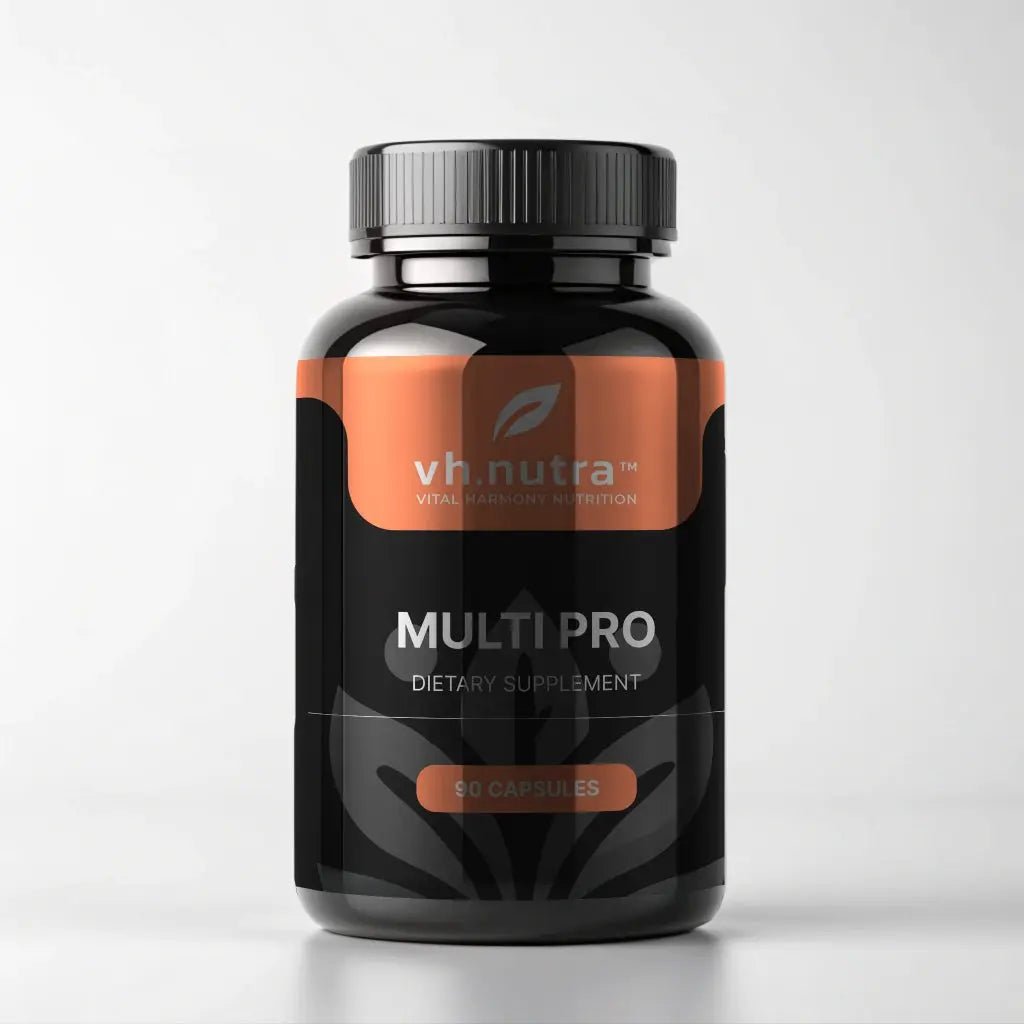
If you choose supplements, vitamin A is best taken with a main meal – this improves absorption and reduces the risk of stomach discomfort. The maximum safe daily dose of retinol for adults is about 3000 micrograms RAE, and exceeding this limit long-term can be toxic. Usually there is no need to take vitamin A supplements continuously in high doses – it is better to choose a moderate dose or a multivitamin complex, for example VH.Nutra Multi Pro, which combines vitamin A with other micronutrients.
Vitamin A Side Effects and Precautions
It is important to distinguish between the two forms of vitamin A, because their safety differs greatly. Retinol, obtained from animal products and supplements, can be toxic in excessive doses because it accumulates in the liver. Symptoms of poisoning may include headache, nausea, dizziness, dry skin, and long-term excess can damage the liver and bones. The tolerable upper limit for adults is about 3000 micrograms RAE per day, and this limit is even lower for pregnant women.
Beta-carotene is safer because the body converts only as much of it into retinol as it needs at the time. Very high amounts of beta-carotene, however, can temporarily turn the skin orange – a condition called carotenemia, which is harmless but cosmetically noticeable. According to the National Institutes of Health (NIH), vitamin A excess most often comes from supplements rather than food, so before taking large doses it is worth consulting a doctor (source).
Vitamin A in Your Diet: Best Food Sources
Vitamin A can be obtained from two types of sources. Animal products provide ready-made retinol, while plant products provide beta-carotene, which the body converts into vitamin A. The best sources:
- Liver and fish oils – the richest sources of retinol.
- Eggs, butter and dairy products – everyday sources of vitamin A.
- Carrots, sweet potatoes and pumpkins – rich sources of beta-carotene.
- Spinach, kale and other dark green vegetables – plant-based beta-carotene.
- Red bell peppers and mangoes – colorful sources of beta-carotene.
Beta-carotene from plants is absorbed better when the vegetables are cooked or puréed and eaten with a little fat, such as olive oil. For example, the body absorbs more beta-carotene from cooked carrots than from raw ones. By including a few servings of colorful vegetables and an occasional animal product in your diet, meeting the daily vitamin A requirement is not difficult.
Frequently Asked Questions About Vitamin A
Does vitamin A help with night vision? Yes, vitamin A is essential for the production of rhodopsin – the pigment responsible for seeing in the dark. Vitamin A deficiency most often first shows up as impaired vision at dusk.
Which form of vitamin A is better – retinol or beta-carotene? Both are important: retinol is the active form and works immediately, while beta-carotene is safer because the body converts only as much of it as needed. It is best to combine both sources in your diet.
Can you overdose on vitamin A? Yes, excess retinol from supplements can be toxic. For adults the safe upper limit is about 3000 micrograms RAE per day, so high doses are not recommended without medical supervision.
Can beta-carotene turn the skin orange? Very high amounts of beta-carotene can temporarily give the skin an orange tint. This is harmless and passes once intake is reduced, but it does indicate that supplements have been overdone.
When is the best time to take vitamin A? Since vitamin A is fat-soluble, it is best taken with a main meal that contains some fat – this improves absorption.
Which foods contain the most vitamin A? The most retinol is found in liver and fish oils, while the most beta-carotene is found in carrots, sweet potatoes, pumpkins and dark green leafy vegetables.
Disclaimer: This information is for educational purposes only. Before starting to take supplements, consult a doctor or pharmacist.