Contents
In short:
- Passion flower (Passiflora incarnata) is a climbing plant whose flowers and leaves are traditionally used for calm and sleep.
- Small studies suggest passion flower may help reduce anxiety symptoms and increase total sleep time.
- Passion flower is best taken in the evening, for short periods; avoid it during pregnancy and before surgery.
Passion flower is one of the few herbal preparations used for centuries for natural calm and better sleep. If it is hard to relax in the evening and your thoughts keep racing, many people look for a gentler alternative to strong medication. This is where passion flower stands out — a plant for which the European Medicines Agency (EMA) has approved a traditional-use monograph. In this article we look at what passion flower is, what benefits it may offer, how to take it and when to be cautious.
Key takeaways
- Passion flower is traditionally used to relieve mild symptoms of mental stress and to support sleep.
- Research suggests a possible benefit for anxiety and total sleep time, but the evidence is still limited.
- The most common side effects are drowsiness, dizziness and confusion; avoid passion flower during pregnancy and before surgery.
What is passion flower?
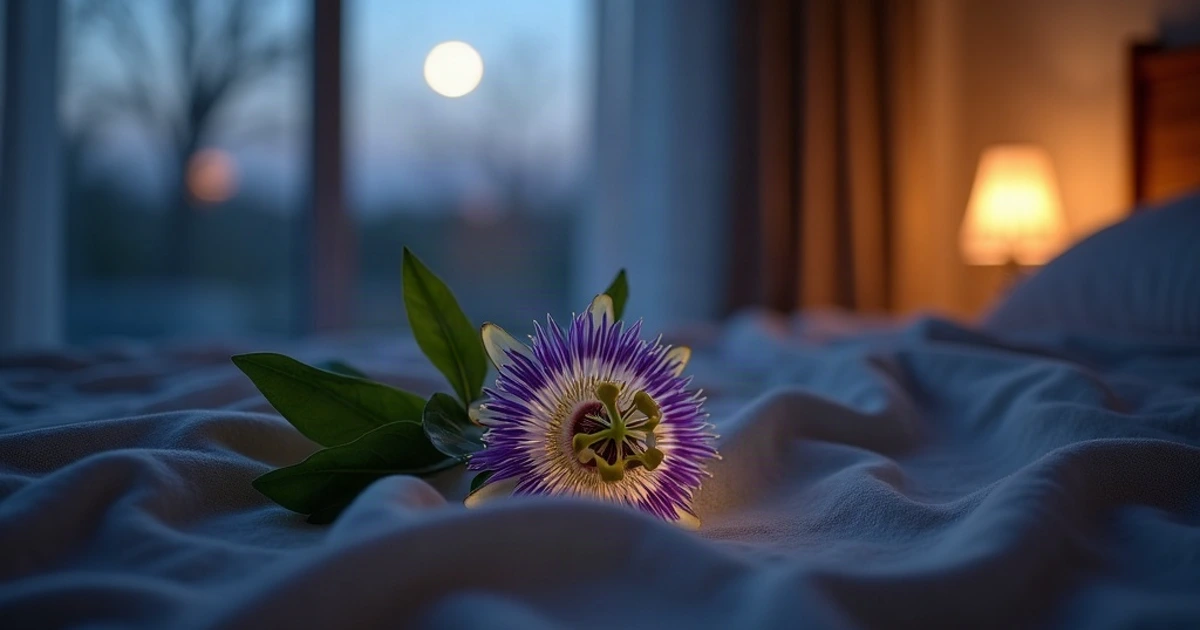
Passion flower is a genus of climbing plants with hundreds of species, but supplements and herbal teas almost always use one specific species — Passiflora incarnata. It is recognised by its white and purple flowers, and it is native to the southeastern United States, Central America and South America.
It is important not to confuse it with the edible passion fruit (Passiflora edulis), whose fruits are known as maracuja. Supplements and teas use Passiflora incarnata, and its benefits are linked to the leaves and flowers rather than the fruit. Passion fruit is tasty, but it is not the same as a calming passion flower extract.
This plant has a long history. Passion flower was traditionally used as a calming and sleep-promoting remedy, and in the 16th century Spanish explorers brought it to Europe, where it quickly entered folk medicine. Today passion flower is valued as a gentle plant that calms the nervous system, and the European Medicines Agency recognises it as a traditional herbal medicine used to relieve mild symptoms of mental stress and to support sleep.
Supplements use the above-ground parts of the plant — the leaves and flowers. They are made into tea, liquid extracts (tinctures) and standardised capsules. Standardised extracts allow the most precise dosing, because the label states the specific concentration of herbal substances rather than just the weight of the dry raw material.
Passion flower benefits for sleep
One of the most common reasons people choose passion flower is sleep quality. Small studies suggest that taking passion flower by mouth may increase total sleep time in adults who complain of insomnia. This means a person may sleep longer, although the effect on how quickly they fall asleep is not consistent across studies.
Passion flower is often combined with other calming plants — valerian, lemon balm or hops. Such combinations are also found in sleep supplements, because different plants work synergistically: some help you relax, others support deeper sleep. If you are looking for a gentle, non-habit-forming way to support evening calm, passion flower can be one of the ingredients worth considering.
It is worth noting that passion flower is not meant to treat acute insomnia — it is better suited to gentle evening support when it is hard to “switch off” your thoughts after a tense day. For many people it works best together with sleep hygiene: a calmer evening, less screen time before bed and a consistent bedtime.
Passion flower benefits for anxiety and stress
The second important property of passion flower is its effect on anxiety. A small amount of research suggests that taking passion flower by mouth may help reduce symptoms of anxiety, as well as anxiety before surgical or dental procedures. However, researchers emphasise that the conclusions are not yet definite — larger and longer studies are needed.
One of the most commonly cited studies compared passion flower extract with the medicine oxazepam for generalised anxiety disorder and found no significant difference in effectiveness, while the group taking passion flower had fewer side effects. This does not mean passion flower replaces prescribed medicines, but it shows that it may be considered a gentler alternative for mild anxiety — of course, after talking to a doctor.
In everyday practice, passion flower is often chosen by people who feel tension in specific situations — before an important conversation, a journey or a performance. Although research on these situations is limited, the gentle calming effect and the low frequency of side effects make passion flower a popular choice for those looking for a natural way to calm down briefly.
Which conditions still lack evidence for passion flower?
Although passion flower is sometimes promoted for other purposes, the evidence for these uses is weaker. The US National Center for Complementary and Integrative Health (NCCIH) notes that there is currently not enough evidence that passion flower helps with attention-deficit/hyperactivity disorder (ADHD), menopausal symptoms, fibromyalgia or chronic stress.
This does not mean passion flower is completely ineffective in these areas — there is simply a lack of sufficiently large and high-quality studies. If you are interested in these specific conditions, it is worth treating passion flower only as a supporting measure and talking to a doctor first about the most suitable solution.
How does passion flower work in the body?
Passion flower’s calming effect is thought to come from its flavonoids — plant compounds such as apigenin, chrysin and vitexin. They may increase the activity of gamma-aminobutyric acid (GABA) in the brain. GABA is the main “inhibitory” neurotransmitter: when its activity increases, the nervous system calms down, tension decreases and it becomes easier to fall asleep.
It is important to mention that passion flower does not depress the central nervous system as strongly as prescription sedatives. For this reason it is not considered habit-forming, and its effect is described as gentle and gradual. That is exactly why passion flower is often chosen when a natural support is wanted without a sharp “switch-off” feeling.
The speed of effect varies from person to person. Some people feel calmer after the first evening, while others need several days or a week of regular use. Passion flower works gradually and gently, so it is best to judge it not by a single dose or night but by overall well-being over several weeks.
How to take passion flower?
Passion flower can be taken in several forms: as tea, a liquid extract (tincture) or standardised capsules. Which form is most suitable depends on your needs and habits.
- Recommended dose. Standardised extracts are usually taken in doses of about 300–400 mg per day, divided into several doses; tea — 1 cup (about 1–2 g of dried herb) in the evening.
- When it is best to take. For sleep, take passion flower about 30–60 minutes before going to bed; for anxiety, the portion can be spread across the day.
- How long to take. Passion flower extract is considered safe for up to 8 weeks, and tea for up to 7 consecutive nights. After that, a break is recommended.
- Safe dose. Follow the dose stated on the package; there is no solid evidence that higher doses work better, and they only increase the risk of drowsiness.
Always start with a lower dose and monitor how you feel. If you take other medicines or supplements, talk to a doctor or pharmacist before starting.
Passion flower can be taken with or without food — this makes little difference to how well it works. Capsules are easier to swallow with a glass of water, while tea should be drunk slowly about 30–60 minutes before sleep so the body can calm down before you lie down.
Passion flower side effects
Passion flower is generally well tolerated, especially when used for a short time and at recommended doses. However, certain side effects may occur. The most commonly reported are drowsiness, dizziness and confusion. They occur more often when higher doses are taken or when passion flower is combined with alcohol or other calming substances.
Some people may have an allergic reaction, although this is rare. If a rash, itching or difficulty breathing appears after taking passion flower, stop using it and contact a doctor. Caution is also needed when driving or operating machinery until you know how passion flower affects you.
Passion flower interactions with medicines and precautions
Passion flower may increase the effect of other substances that depress the nervous system. This matters if you take sedatives or sleeping medicines, or if you drink alcohol — their combination with passion flower can slow the nervous system too much and cause strong drowsiness.
Two situations require special attention. First, if you take passion flower within 2 weeks of planned surgery it may interact with anaesthesia medicines, so in these cases talk to a doctor. Second, avoid passion flower during pregnancy — it is thought that it may stimulate uterine contractions. Little is known about use while breastfeeding, so it is also better to avoid it without a doctor’s advice.
Caution is also needed for children and older adults — the effect of passion flower may be stronger or harder to predict for them, so the dose and suitability should be discussed with a specialist. The safest approach is to start with the minimum dose and not rush to increase it.
How to choose a passion flower supplement?
When choosing a passion flower supplement, first look at the label. Look for a product that states the exact concentration of passion flower extract (in milligrams), not just “passion flower herb”. Standardised extracts allow more precise dosing and make the effect easier to predict.
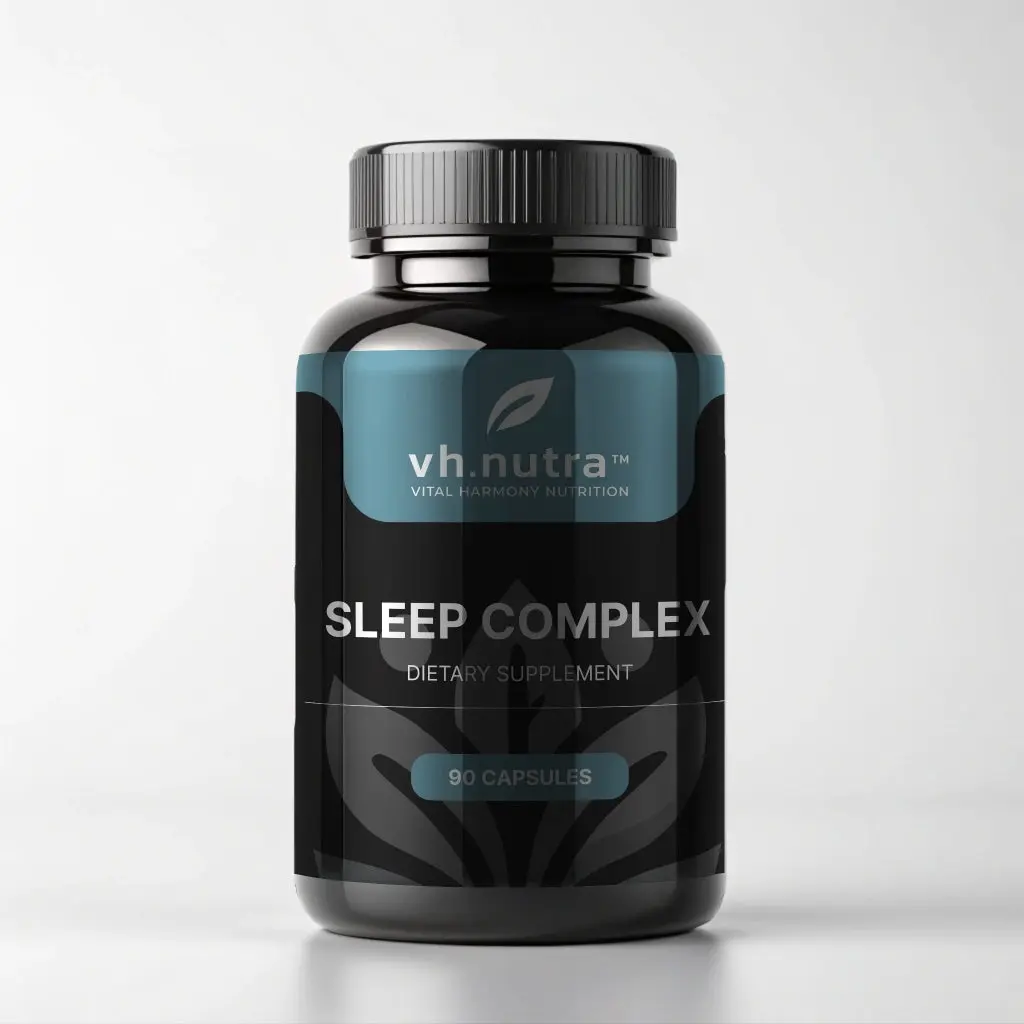
A valuable choice is passion flower combined with other calming plants. For example, VH.Nutra Sleep Complex combines passion flower, valerian and lemon balm extracts — this blend covers several calming mechanisms in one supplement. If you only want to support your sleep rhythm, you can also choose a pure passion flower tea in the evening.
Also pay attention to the purity of the product — choose supplements from reputable manufacturers without unnecessary fillers or artificial additives. A quality passion flower supplement usually states the exact composition of ingredients and the recommended daily amount, which allows you to use it consciously and safely.
Frequently asked questions
Is passion flower habit-forming?
No, passion flower is not considered a habit-forming substance, because its effect on the nervous system is gentler than that of prescription sedatives. However, it is recommended to take it for short periods and to take breaks.
How long does it take to feel the effect of passion flower?
It varies from person to person. Passion flower’s effect builds up gradually, so it is best to take it consistently for at least a few weeks and watch whether sleep or anxiety symptoms improve. If you feel no change after two weeks, talk to a doctor.
Can passion flower be taken with melatonin?
Passion flower and melatonin work through different pathways, so the combination is often considered safe, but it may increase drowsiness. If you want to combine them, start with small doses and first talk to a doctor or pharmacist.
Does passion flower cause daytime drowsiness?
It can, especially when higher doses are taken or when it is combined with other calming substances. Therefore, passion flower intended for sleep is best taken in the evening, and during the day in smaller doses while watching how the body reacts, especially before driving.
Can passion flower be taken during pregnancy?
No, passion flower should be avoided during pregnancy, because it is thought that it may stimulate uterine contractions. Little is known about use while breastfeeding, so it is also better to avoid it without a doctor’s advice.
Disclaimer: This information is for educational purposes only. Before taking supplements, talk to a doctor or pharmacist.
Related articles
- Valerian: benefits for sleep and anxiety
- Lemon balm: benefits for calm and sleep
- Melatonin: benefits for sleep