
Table of contents
In short:
- Fenugreek (Trigonella foenum-graecum) is a plant from the legume family whose seeds have been used for centuries as a spice and a traditional medicinal herb.
- The most-studied property of this plant is its effect on blood sugar: its soluble fibre may help maintain normal blood sugar levels.
- Traditionally the seeds are used to support breastfeeding and appetite, while the evidence on testosterone is limited and conflicting.
- When taking amounts larger than those found in food, it is worth talking to a doctor, especially if you have diabetes or take blood-thinning medicines.
Fenugreek is a plant that many people know as a spice from curry blends, but in recent years it has also attracted growing interest as a food supplement. If you are looking for a natural way to maintain normal blood sugar levels or simply want to understand whether this plant is worth your attention, this article will help you decide. Here we explain what fenugreek is, what benefits it may offer, how to take it and when you should be cautious.
Key takeaways
- Fenugreek is a natural spice and supplement best known for its possible effect on blood sugar.
- The seeds are rich in soluble fibre (galactomannan), which slows carbohydrate absorption and increases satiety.
- The evidence for boosting testosterone is weak, and some studies show only a modest effect on libido.
- Amounts larger than those found in food are not recommended during pregnancy; before taking it with medicines, talk to your doctor.
What is fenugreek and where does it come from?
Fenugreek (Trigonella foenum-graecum) is an annual plant from the legume (Fabaceae) family, a close relative of clover and peas. This plant originates from the Mediterranean region, southern Europe and western Asia, but today it is grown in many countries around the world, especially in India and North Africa. In Lithuania they are most often sold in health-food shops – as seeds or as supplement capsules.
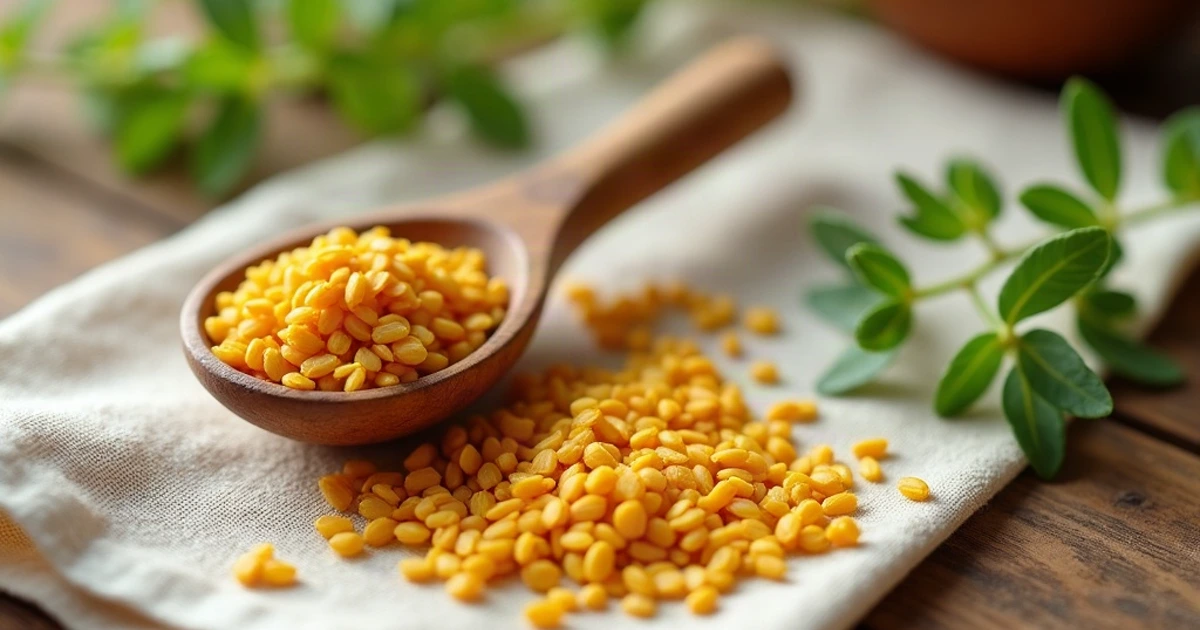
The most interesting feature of this herb is the smell and taste of its seeds, reminiscent of maple syrup. The compound sotolone is responsible for this aroma, which is why the plant has been used for centuries as a natural seasoning for curries, soups and baked goods. In traditional medicine fenugreek has been used for about 6,000 years – it was valued as a tonic and a helper for various conditions.
In the kitchen, fenugreek seeds are most often used in Indian dishes. They give curry blends their characteristic bitter, nutty note, and when lightly roasted they become more aromatic and less bitter. Syrups and teas are also made from the seeds, and in some countries the fresh leaves and sprouts are eaten as well – added to salads or stews as a vegetable.
Active compounds and nutritional profile of fenugreek
Fenugreek seeds are valued not only for their flavour but also for their nutrients. They contain protein, dietary fibre, iron, magnesium and manganese. However, the greatest interest lies in specific compounds: the soluble fibre galactomannan, the amino acid 4-hydroxyisoleucine, saponins (including diosgenin) and the alkaloid trigonelline.
It is galactomannan, which makes up a large part of the seed, that partly explains this plant’s effect. When soluble fibre comes into contact with water, it forms a viscous gel that slows stomach emptying and carbohydrate absorption. This mechanism is one of the main reasons why fenugreek is linked to blood-sugar support.
It is important to understand that all these compounds are concentrated precisely in the seeds, and their amount depends on the form: whole seeds have the most fibre, while standardised extracts have a deliberately increased amount of 4-hydroxyisoleucine or saponins. Different products can therefore act somewhat differently, even if the label carries the same plant name.
Benefits of fenugreek for blood sugar
The most-studied use of this plant is blood sugar control. According to the US National Center for Complementary and Integrative Health (NCCIH), research has examined fenugreek’s effect on blood sugar levels, but many of these studies were not of high quality, so, according to NCCIH, the evidence is not yet sufficient and the conclusions are not final.
The effect is thought to come mainly from the seed fibre and 4-hydroxyisoleucine. The fibre slows glucose absorption after a meal, which helps avoid sudden sugar spikes. 4-Hydroxyisoleucine, in turn, has been linked in research to stimulating insulin release, although the significance of this mechanism in humans is still being studied.
True, fenugreek is not a medicine and cannot replace treatment prescribed by a doctor. If you have diabetes and want to try it, talk to your doctor first – the dose of your medicine may need to be adjusted so that your blood sugar does not drop too quickly.
A similar effect on blood sugar is attributed to other substances as well, such as berberine or chromium, which are often used for the same purpose.
Fenugreek and appetite control and satiety
Because the seeds of this plant are rich in soluble fibre, they may contribute to a longer-lasting feeling of fullness. When fibre comes into contact with water, it swells and fills the stomach, so you feel less like snacking after a meal. Because of this property, fenugreek is sometimes mentioned in the context of weight control.
In practice the satiety effect is felt most strongly when the seeds are taken before a meal or mixed into a dish – once swollen they take up more room in the stomach. On the other hand, this is not a “miracle” weight-loss product, but a side effect of fibre that is shared by many other fibre products, such as psyllium husk.
If you are aiming for satiety and steady energy, fenugreek can be one of the tools, but not the only one. As with any supplement, the result depends above all on your overall diet and lifestyle, not on a single product.
Fenugreek and testosterone and libido
Online, this plant is often advertised as a way to boost testosterone in men. The reality is far more modest. Some small studies using a standardised extract noticed a possible modest positive effect on libido in men, but there is little evidence that fenugreek significantly raises testosterone, and the findings are not consistent.
Therefore this plant should not be regarded as a testosterone booster in the sense sometimes claimed in advertising. If you see a product promising a “rapid testosterone surge” from fenugreek alone, it is worth viewing critically. If you are looking for supplements to support male vitality, take a look at the broader context of testosterone support or reviews of herbal alternatives such as Tribulus terrestris.
Fenugreek for breastfeeding mothers
It is traditionally believed that this herb stimulates breast milk production during the breastfeeding period – one of its oldest uses. This practice is widespread in many cultures, and fenugreek is still a popular ingredient in “galactagogues” – products that stimulate milk production.
The results of recent research are nevertheless mixed: some studies show a modest increase in milk volume, others show no significant difference. According to NCCIH, there is still not enough data for final conclusions. Moreover, little is known about the safety of amounts larger than those found in food during breastfeeding, so before taking this plant during this period it is essential to talk to a doctor or a lactation consultant.
How to take fenugreek
Fenugreek can be taken in several ways, and the choice depends on your goal and convenience. The most popular options are whole or ground seeds, tea and standardised encapsulated extracts.
- Ground seeds: mixed into yoghurt, porridge or smoothies, or added to baked goods and curry dishes.
- Tea: a teaspoon of seeds is steeped in hot water and left to stand for a few minutes.
- Soaked seeds: a traditional method – leave the seeds in water overnight so they soften, and eat them in the morning.
- Capsules or extract: a convenient way to get a specific dose without a strong taste.
If fenugreek is new to you, start with a smaller amount and observe how your body reacts. Take capsules or extracts according to the manufacturer’s instructions on the packaging, and before combining them with medicines or other supplements, talk to a specialist.
As for timing, this herb is most convenient to take with or before a meal – this reduces the likelihood of digestive discomfort and makes better use of the fibre’s effect on post-meal blood sugar. There are no strict rules about whether to choose morning or evening: the most important thing is a consistent routine and not exceeding the recommended amount.
How much fenugreek to take: dosage and safety
There is no single officially approved daily dose of this plant, because it depends on the form and the goal. Researchers studying blood sugar most often used anywhere from a few to several tens of grams of seed powder per day, while standardised extract doses are usually around 500–600 mg per day. In food amounts (as a spice) fenugreek is considered safe.
Large doses can cause a dangerous drop in blood sugar, especially in people taking diabetes medicines. Since no clear safe upper limit has been established, it is best to stick to recommended amounts and not increase the dose on your own. If you plan to take this herb regularly over a longer period, it is worth discussing it with a doctor.
Side effects and who should be cautious
For most people fenugreek causes no problems in food amounts, but larger amounts can bring side effects. The most commonly reported are digestive upsets – diarrhoea, nausea, bloating or gas. Another characteristic but harmless effect is a maple-syrup-like smell of sweat and urine due to sotolone.
This herb can cause allergic reactions, including serious ones, in some sensitive people. Since it is a legume-family plant, people allergic to peanuts or other legumes should be especially cautious. Larger-than-food amounts are not recommended for pregnant women – research links them to an increased risk of birth defects.
Fenugreek and drug interactions
Fenugreek can interact with certain medicines, so it is important to know the main risks. When taken together with diabetes medicines or insulin, blood sugar may drop too much – if necessary, a doctor can adjust the medicine dose. It is also thought that this plant can strengthen the effect of blood-thinning medicines (such as warfarin) and increase the risk of bleeding.
If you take any prescription medicines, be sure to talk to your doctor or pharmacist before starting fenugreek. This is especially important before a planned operation, as this herb can affect blood sugar and blood clotting.
Frequently asked questions
Does fenugreek help lower blood sugar?
Research has examined fenugreek’s effect on blood sugar levels, but many studies were not of high quality. Fenugreek should not replace treatment prescribed by a doctor, and before using it for this purpose it is essential to talk to a doctor.
Does fenugreek increase testosterone?
There is little and conflicting evidence that fenugreek significantly increases testosterone. Some small studies noticed a possible modest effect on libido, but this is not reliably proven, so this plant should not be regarded as a strong testosterone booster.
How to take fenugreek seeds?
Fenugreek seeds can be ground and added to yoghurt, porridge or baked goods, brewed as tea, or taken as an encapsulated extract. Start with a smaller amount and follow the manufacturer’s recommendations.
Is fenugreek safe during pregnancy?
During pregnancy, amounts larger than those found in food are not recommended because they are linked to an increased risk of birth defects. In food amounts fenugreek is generally considered safe, but be sure to talk to your doctor about taking supplements.
Recommended products

Disclaimer: This information is for educational purposes only. Before taking supplements, consult your doctor or pharmacist.