
Contents
At a glance:
- Tribulus terrestris is a spiny plant used for centuries in traditional medicine as a tonic for vitality and urinary tract health.
- Tribulus terrestris is most often taken to support libido and energy, but the evidence for raising testosterone is mixed.
- Studies show that Tribulus terrestris may help support blood pressure, blood sugar metabolism and protect cells from oxidative stress.
- The usual dose is 500–1000 mg of standardized extract per day; talk to your doctor before use.
Tribulus terrestris is a spiny, low-growing plant that has been used in traditional medicine for hundreds of years. If you are looking for a natural way to support libido, energy and overall vitality, you have probably already come across this name. Here we review what science actually says about the benefits of Tribulus terrestris, what doses are common and which mistakes to avoid.
Key takeaways
- Tribulus terrestris is a traditional tonic with roots in Ayurveda and Chinese medicine, now most commonly used to support libido and vitality.
- Small studies suggest that Tribulus terrestris may improve sexual function, especially in women, but the evidence for raising testosterone is weak and mixed.
- Laboratory and animal studies report effects on blood pressure, blood sugar metabolism and antioxidant activity – human studies are still lacking.
- For athletes, Tribulus terrestris does not increase muscle mass or strength, but it may slightly reduce exercise-induced oxidative stress.
What is Tribulus terrestris?
Tribulus terrestris is a perennial herbaceous plant that grows in subtropical regions of East and West Asia, Southern Europe and Africa. In English it is called “puncture vine” or “caltrop” – these names come from its hard, spiky fruits that resemble small thorny balls. The plant is sometimes also known as tribulus or puncture vine.
In traditional Ayurvedic medicine, Tribulus terrestris is known as “gokshura” and is used as a tonic for the urinary tract, kidneys and general vitality. In Chinese medicine it is applied for chest pain, dizziness and skin and eye disorders. It is this long history of traditional use that has made the plant a popular food supplement.
The most important active compounds are steroidal saponins, among which protodioscin stands out. The saponin concentration is usually stated on supplement labels – for example, standardization “up to 90% saponins” means that most of the extract consists of these active compounds.
The plant produces small yellow five-petaled flowers and spiky, star-shaped fruits that easily cling to animal fur or shoes and spread this way. This spikiness gave the plant many folk names – from “puncture vine” to “goat’s head”. Today, industrially grown plants are dried and processed into standardized extracts that keep a consistent concentration of active compounds.
Libido and sexual function
The most common reason people choose Tribulus terrestris is to support libido and sexual function. Traditionally the plant has been used as an aphrodisiac for centuries, and today it is sold precisely with this promise.
What do the studies say? In animal models, Tribulus terrestris increases sperm production, but results from human studies are mixed. Interestingly, small studies show a better effect in women – improvements in sexual dysfunction and reduced hypoactive sexual desire were observed in both premenopausal and postmenopausal women. For male erectile dysfunction, the evidence is also not definitive.
It is worth noting that large-scale studies are still lacking, so the effect on libido may vary from person to person. If you are looking for a supplement to support sexual function, Tribulus terrestris deserves attention, but setting realistic expectations is important.
It is important to understand that libido is a complex process influenced by hormones, stress, sleep and overall well-being. A supplement alone is not enough if other areas of life are neglected. Tribulus terrestris works best as part of a holistic approach, not as a miracle pill.
Energy and vitality
The second common goal of taking Tribulus terrestris is to support energy and overall vitality. In traditional medicine the plant is considered a tonic – a substance that helps the body maintain strength and endurance, rather than providing a sudden caffeine-type energy burst.
This effect is often linked to the adaptogenic nature of the plant – its saponins are thought to help the body better adapt to stress. Although there are not many direct human studies on “vitality”, traditional use and some animal studies suggest that Tribulus terrestris may be useful for supporting general well-being.
If you feel tired, remember that no supplement replaces sleep, a balanced diet and physical activity. Tribulus terrestris can be an additional tool, but not the foundation.
In practice, many people combine Tribulus terrestris with other adaptogens – such as ashwagandha or maca – to support vitality and stress resistance. This combination is often chosen when the goal is not a sudden energy spike, but a steady, long-term improvement in well-being.
Heart and blood pressure
One of the better-documented properties of Tribulus terrestris in the laboratory is its effect on blood vessels. Studies show that the plant extract can relax blood vessels, which in turn may help lower blood pressure. In one study, a formulation containing Tribulus terrestris helped lower blood pressure in people with prehypertension.
In addition, studies show that Tribulus terrestris saponins can inhibit platelet aggregation, which is important for normal blood flow. However, most of these data come from laboratory and animal studies, so the effect in humans still needs to be confirmed by larger clinical trials.
In the cardiovascular context, Tribulus terrestris is often mentioned as a cardioprotective plant – meaning it may help protect the heart muscle and blood vessels from damage. However, if you have heart or blood pressure problems, never replace prescribed medication with a herbal supplement without your doctor’s knowledge.
Blood sugar metabolism
Laboratory studies show that Tribulus terrestris may have a blood sugar lowering (hypoglycemic) effect. The plant’s compounds are thought to help regulate glucose metabolism in the body, although the exact mechanisms are not yet fully understood.
It is important to emphasize that these data come mostly from preclinical studies. This means that Tribulus terrestris may be an interesting candidate for supporting blood sugar metabolism, but it should not be treated as a replacement for diabetes medication. In addition, when taken together with blood sugar lowering drugs, the effects may add up, so medical supervision is essential.
Antioxidant protection
Tribulus terrestris has antioxidant and anti-inflammatory properties. This means its compounds may help neutralize free radicals and reduce cell damage caused by oxidative stress. This mechanism is linked to many of the plant’s traditional uses.
Interestingly, one study showed that while Tribulus terrestris extract alone did not improve athletes’ androgenic status or physical performance, it may have slightly reduced exercise-induced oxidative stress, muscle damage and inflammation. This could be useful for people who train intensely, although the effect is not dramatic.
Urinary tract and kidneys
In Ayurveda, Tribulus terrestris is primarily valued as a tonic for the urinary tract and kidneys. The plant can promote urination (act as a diuretic), and laboratory studies show that it may help stop the formation of calcium compounds that cause kidney stones.
This area is particularly interesting because traditional use and laboratory data agree. However, the effect in humans has not yet been studied in clinical trials, so it should not be relied upon to treat urinary tract conditions without a doctor’s consultation.
Tribulus terrestris forms: how to choose?
On the market, Tribulus terrestris is most often found as a standardized extract in capsules, less often as a powder or tea. When choosing a supplement, the most important thing is to pay attention to the saponin concentration, because it determines the plant’s activity.
- Standardized extract: the best choice – the label states the saponin (often protodioscin) concentration, for example “up to 90% saponins”.
- Powders and raw herb: cheaper, but the amount of active compounds varies and is harder to predict.
- Tea: traditionally used in Ayurveda, but the concentration of active substances is much lower than in an extract.
Capsules with a standardized extract are the most convenient and precise way to take Tribulus terrestris, because you know how many active compounds you get with each dose. Buy from reputable manufacturers and check that the exact saponin concentration is stated on the package.
Does Tribulus raise testosterone?
This is the most frequently asked question about Tribulus terrestris, and the answer is not as simple as it may seem. Many supplements are sold with the promise to “naturally increase testosterone”, but the scientific data do not confirm this claim.
In most well-conducted studies with healthy men, Tribulus terrestris did not significantly raise testosterone levels. In some studies, a testosterone increase was observed only when the plant was taken as part of a combination supplement – so it is difficult to say whether it was responsible for the effect. In one pilot study with men who had partial androgen deficiency, changes in testosterone and erectile function were observed, but luteinizing hormone levels did not change.
In short: if you expect Tribulus terrestris to work as a steroid replacement, you will most likely be disappointed. However, for some people it may support libido and general well-being through other mechanisms not related to testosterone.
How to take Tribulus terrestris?
There is no official established dose for Tribulus terrestris, so recommendations are usually based on tradition and supplement manufacturers’ guidance. A common daily dose is 500–1500 mg of standardized extract.
- Recommended dose: 500–1000 mg per day (usually 1–2 capsules of 500 mg).
- When to take: best in the morning or before exercise, with a glass of water; take with food to reduce the risk of stomach irritation.
- How long: usually taken in cycles of 8–12 weeks, followed by a 2–4 week break.
- Maximum dose: exceeding 1500 mg per day is not recommended, as higher doses may increase the risk of side effects.
Before starting, note that Tribulus terrestris may interact with blood pressure lowering drugs, blood sugar lowering drugs and diuretics. If you take medication, be sure to consult your doctor.
Side effects and safety
For most people, Tribulus terrestris is well tolerated at recommended doses, but adverse effects are possible. The most common is gastrointestinal irritation, which may appear as stomach discomfort or nausea, especially when taken on an empty stomach.
In rare cases, more serious effects have been reported – liver, kidney and neurological toxicity, as well as priapism (a prolonged painful erection). Due to its possible hormonal activity, prostate cancer patients must consult a doctor before use.
Tribulus terrestris is not recommended for pregnant and breastfeeding women, as safety data for these groups are insufficient. Always follow the dose stated on the package and do not push your body beyond safe limits.
FAQ
Does Tribulus terrestris work immediately? No. Like most herbal supplements, the effects of Tribulus terrestris build up gradually – results usually appear after several weeks of regular use.
Is Tribulus terrestris suitable for women? Yes. Small studies show that the plant may improve sexual function in women, but avoid it during pregnancy and breastfeeding.
Can I take Tribulus terrestris with other supplements? Usually yes, but combine carefully with other hormone-affecting supplements or medications. If you take blood pressure or blood sugar lowering drugs, consult your doctor first.
Does Tribulus terrestris help build muscle? Studies do not confirm that the plant alone increases muscle strength or mass. If you aim for muscle growth, Tribulus terrestris may only be an auxiliary tool for recovery, while training and nutrition should form the foundation.
Recommended products
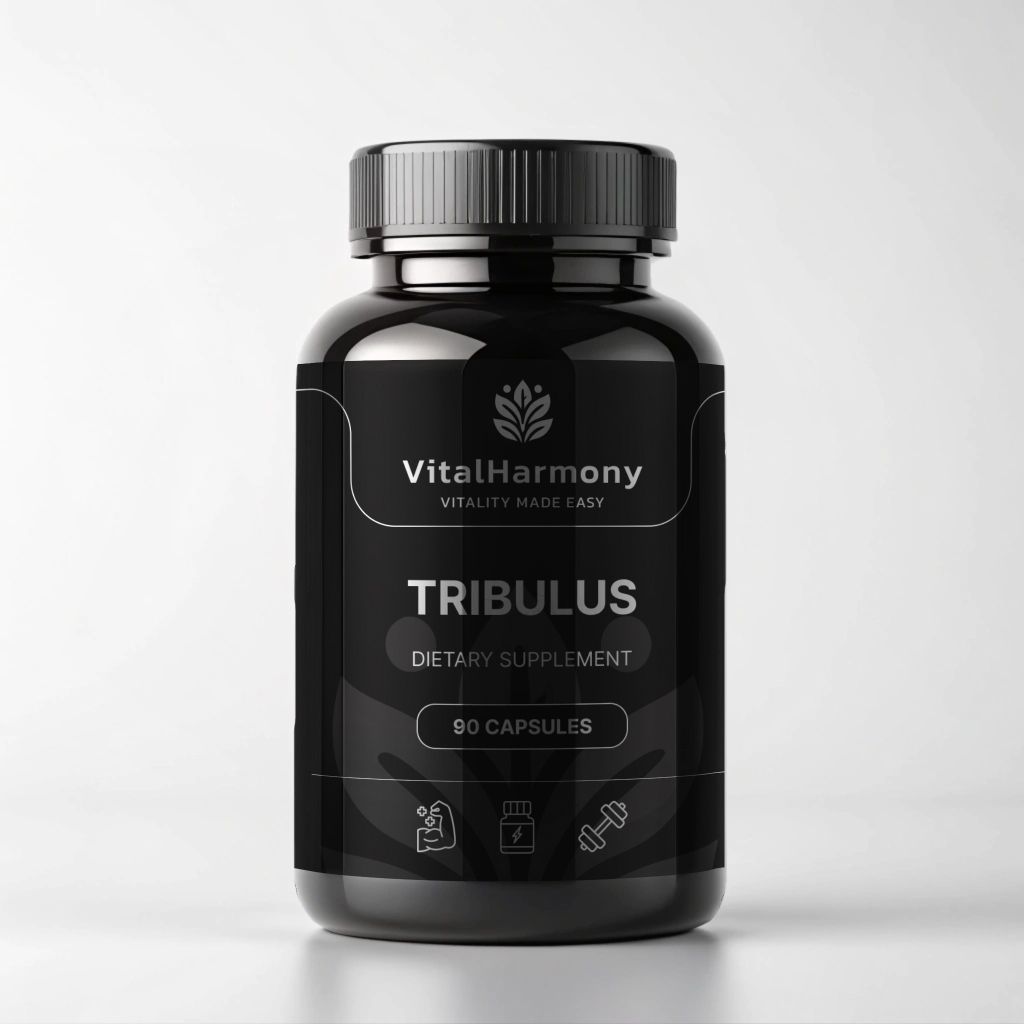

Disclaimer: This information is for educational purposes only. Before taking supplements, consult your doctor or pharmacist. You can find more about Tribulus terrestris on the Memorial Sloan Kettering Cancer Center page.