
Contents
In short:
- Vitamin D3 helps the body absorb calcium from food, while vitamin K2 directs that calcium into the bones, not the blood vessels.
- Vitamin D3 and K2 work synergistically – together they support bone density and heart and blood vessel health better than either one alone.
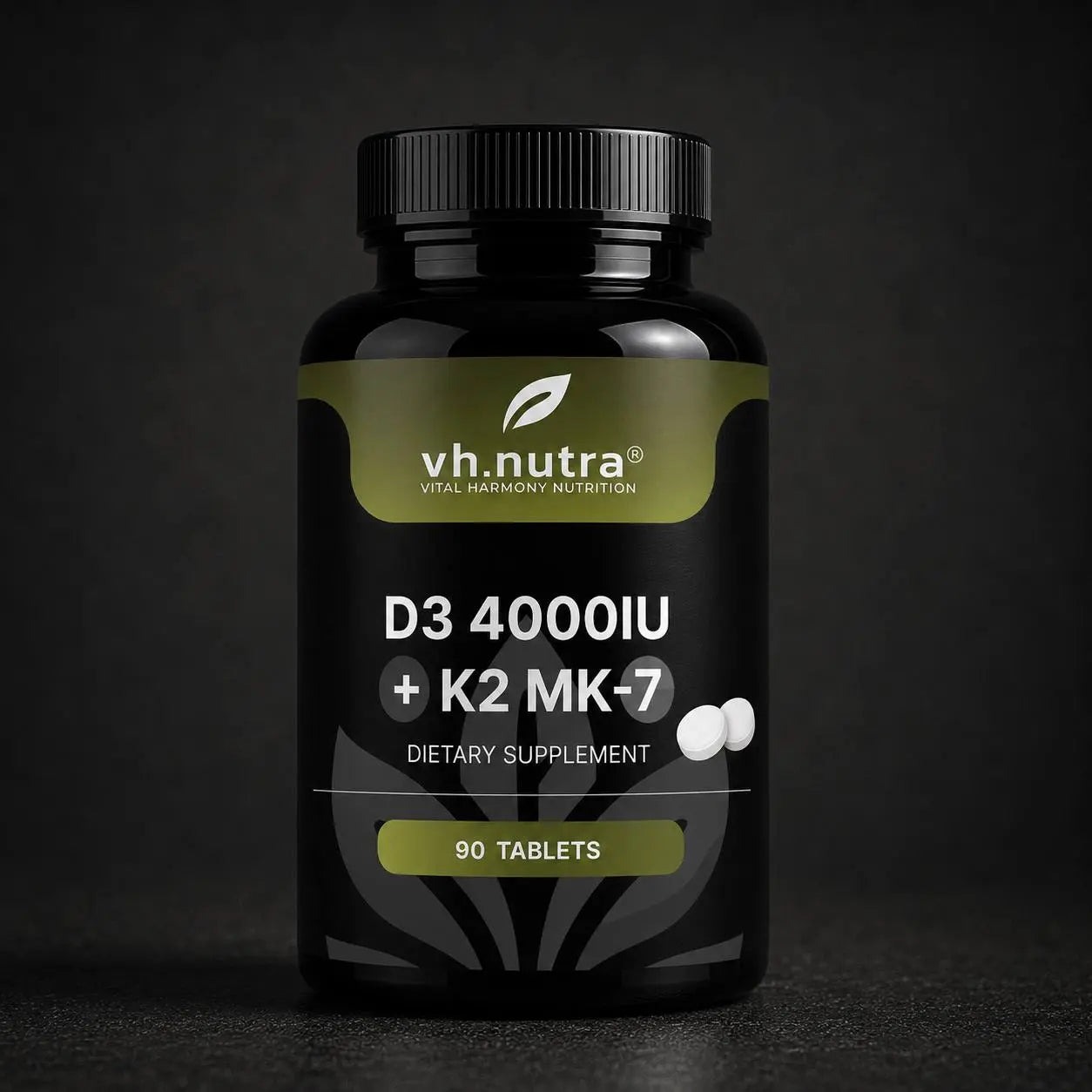
- The most common choice is D3 (4000 IU) with K2 MK-7 (50 µg) in one tablet, taken once a day with a meal that contains fat.
- Before combining with blood-thinning medicines, always consult your doctor.
Vitamin D3 and K2 is one of the most popular supplement combinations, chosen by people who care about the health of their bones, heart and immunity. These two fat-soluble vitamins naturally complement each other: vitamin D3 is responsible for absorbing calcium from the gut, while vitamin K2 makes sure the absorbed calcium reaches the bones and teeth instead of building up in the blood vessel walls. In this article we explain how this combination works, what benefits it offers and how to take it safely.
Key takeaways
- Vitamin D3 and K2 – a combination that helps direct calcium where it is really needed: into the bones and teeth.
- Vitamin D3 improves calcium absorption from the gut, while vitamin K2 activates proteins that “catch” calcium and stop it from accumulating in the arteries.
- It is recommended to take them with a meal that contains fat, and to consult a doctor before combining them with anticoagulants.
What are vitamin D3 and K2?
Vitamin D3 (cholecalciferol) is one of the two main forms of vitamin D. Some of it is produced in the skin when it is exposed to the sun’s UVB rays, and the rest comes from food – fatty fish (salmon, herring, mackerel), egg yolks and liver. Vitamin D3 is considered the most effective form of vitamin D, because it is the very form the body produces itself and it raises vitamin D levels in the blood efficiently. More on the forms, sources and recommended doses of vitamin D can be found in the US National Institutes of Health (NIH) review.
Vitamin K2 (menaquinone) belongs to the vitamin K family, but it differs from the more commonly mentioned vitamin K1 in both origin and action. Vitamin K1 is found mostly in green leafy vegetables, while vitamin K2 is found in fermented foods (especially natto – fermented soybeans), hard cheese, egg yolks and meat. Vitamin K2 has several forms, of which MK-7 stays in the body the longest. Detailed information on the vitamin K family and its sources can be found in the NIH vitamin K fact sheet.
Why take vitamin D3 and K2 together?
These two vitamins work as a pair. Vitamin D3 increases calcium absorption from the gut into the blood, but it does not tell that calcium where to go. This is where vitamin K2 steps in – it activates two important proteins: osteocalcin, which “carries” calcium into the bones, and MGP (matrix Gla protein), which prevents calcium from building up in the blood vessel walls. This division of labour is the main reason why vitamin D3 and K2 are taken together.
Therefore, when taking vitamin D3 alone in high doses, some of the calcium could theoretically stay where it is not needed. Adding vitamin K2 helps ensure that the absorbed calcium travels to the bones and teeth rather than the arteries. It is precisely because of this synergy that vitamin D3 and K2 are so often produced in a single supplement.
Vitamin D3 and K2 benefits for bones and muscles
Bones are the main place where vitamin D3 and K2 show their synergy. Vitamin D contributes to the normal absorption of calcium and phosphorus and to maintaining normal bones, while vitamin K contributes to maintaining normal bones as well. Together these vitamins help the body use dietary calcium efficiently.
- Directing calcium into bones – osteocalcin activated by K2 helps bind calcium in bone tissue.
- Muscle function – vitamin D contributes to maintaining normal muscle function.
- Teeth – vitamin D contributes to maintaining normal teeth.
This combination is especially relevant for older people, women during menopause and anyone who wants long-term bone health. Bone density changes slowly, so it usually takes several months of consistent use to see results. You will find a suitable combination in our vitamins and supplements category.
Vitamin D3 and K2 benefits for the heart and blood vessels
One of the most common arguments for taking vitamin D3 together with vitamin K2 is blood vessel protection. When there is a lot of calcium in the blood, it can start to build up in the blood vessel walls and make them stiff. Vitamin K2 activates the MGP protein, which helps prevent calcium from depositing in the arteries. In this respect vitamin D3 and K2 complement each other especially well.
This mechanism should not be understood as a treatment – it is support. The European Food Safety Authority (EFSA) has confirmed that vitamin K contributes to normal blood clotting and to maintaining normal bones. Evidence on a direct reduction in heart disease is mixed, so vitamin D3 and K2 are best viewed as part of a healthy diet and lifestyle.
Vitamin D3 and K2 benefits for immunity
Vitamin D contributes to the normal function of the immune system. It helps immune cells respond properly to pathogens, which is why vitamin D deficiency is often linked to more frequent colds, especially during the cold season when there is less sun.
The role of vitamin K2 in immunity is more modest and mostly indirect – through the general regulation of calcium metabolism and inflammation. Still, vitamin D3 and K2 together are often recommended in the autumn–winter season, when you want to support both immunity and bone health with a single combination.
Vitamin D3 and K2 together are a convenient choice for those who want to support both immunity and bone health with one daily supplement, especially when it is hard to get enough of these vitamins from food.
Vitamin K2 MK-7 – which form is best?
The forms of vitamin K2 differ in molecular structure and in how long they stay in the body. Two forms are most common in supplements: MK-4 and MK-7. MK-4 is a short-chain form that is cleared from the body quickly, so it often needs to be taken several times a day. MK-7 is a long-chain form with a half-life of about three days, so one dose a day is enough.
MK-7 is the form most often chosen in combinations with vitamin D3, because it is convenient and well studied. If the label says “K2 MK-7”, you are getting a long-acting form of vitamin K2 that only needs to be taken once a day. A typical MK-7 dose in supplements is 50 µg a day, and higher doses of up to 180–360 µg are considered safe in studies.
When choosing vitamin D3 and K2 in a single product, it is worth checking not only the dose but also the form – quality combinations usually state that MK-7 is used rather than the shorter-acting MK-4.
How to take vitamin D3 and K2?
Recommended dose. The most common vitamin D3 and K2 combination used in supplements is 4000 IU (100 µg) of vitamin D3 and 50 µg of vitamin K2 MK-7 per day. This is a typical dose that matches the safe upper daily limit of vitamin D for adults, so it is not recommended to exceed it without a doctor’s supervision.
When to take. Both vitamins are fat-soluble, so they are best taken with a meal that contains some fat – for example, with breakfast or lunch. Most people take vitamin D3 and K2 in the morning or during the day, because vitamin D can be slightly activating for some people, making it uncomfortable to take in the evening.
How long to take. The body builds up vitamin D slowly, and bone density changes even more slowly, so the combination is taken continuously rather than in courses. The first noticeable changes – better wellbeing and energy – may appear after a few weeks, while bone health markers are measured after several months.
Maximum safe dose. For adults the safe upper daily limit of vitamin D is 4000 IU (100 µg). For vitamin K2 no official upper limit is set, and doses of up to 180–360 µg a day were safe in studies, but there is no need to exceed the recommended dose without a doctor’s instruction.
Possible side effects
At recommended doses, vitamin D3 and K2 are well tolerated by most people, and side effects are rare. Problems usually arise only when the dose is greatly exceeded or the supplements are taken for a long time without supervision.
Too much vitamin D can cause hypercalcaemia – a too-high calcium level in the blood, which shows up as nausea, weakness, reduced appetite and increased thirst. Over time, excess calcium can contribute to kidney stones. Vitamin K2 taken in high doses can interact with blood-thinning medicines, so such people should take it only with a doctor’s permission.
Interactions with medicines
The most important interaction concerns anticoagulants – blood-thinning medicines such as warfarin. Vitamin K promotes blood clotting, so extra vitamin K can weaken the effect of these medicines. When taking warfarin, any vitamin K2 supplement must be agreed with a doctor.
In the case of vitamin D, it is worth being careful with thiazide diuretics and certain steroids, which can raise blood calcium levels. Before you start taking vitamin D3 and K2, consult a doctor if you take medicines or have chronic conditions.
Frequently asked questions
Is it better to take vitamin D3 and K2 in the morning or evening?
It is best to take them in the morning or during the day with a meal that contains fat. Vitamin D can be slightly activating for some people, so taking it in the evening sometimes disturbs sleep.
What dose of vitamin D3 and K2 is recommended per day?
The most commonly used dose is 4000 IU (100 µg) of vitamin D3 and 50 µg of vitamin K2 MK-7 per day. This is a typical adult dose that should not be exceeded without a doctor’s supervision.
Do vitamin D3 and K2 help with vitamin D deficiency?
Yes, vitamin D3 is one of the most effective forms for raising vitamin D levels in the blood, and taking it with vitamin K2 helps use the absorbed calcium properly. In cases of large deficiency, the dose should be chosen by a doctor.
How does vitamin D3 differ from vitamin D2?
Vitamin D3 (cholecalciferol) is the form the body produces itself from the sun, and it raises vitamin D levels in the blood more effectively. Vitamin D2 (ergocalciferol) comes from mushrooms and yeast, but D3 is more often chosen in supplements.
Are vitamin D3 and K2 suitable for vegetarians and vegans?
It depends on the product’s composition. The classic form of vitamin D3 comes from sheep’s wool lanolin, so plant-based D3 or D2 is better suited for vegans. Vitamin K2 MK-7 is usually produced by fermentation, so it may also suit vegetarians – it is important to check the label.
Disclaimer: This information is for educational purposes only. Before starting to take supplements, consult a doctor or pharmacist.
Related articles
- Vitamin D: benefits for immunity, bones and mood
- Vitamin K2: benefits for bones, heart and blood vessels
- Calcium: benefits for bones, muscles and overall health