
Maca — one of the most popular natural adaptogens, used for centuries by Andean peoples to support energy, endurance and hormonal balance. Today, maca is widely researched and more and more people are discovering the benefits of this plant for everyday life. If you are looking for a natural way to boost your energy, improve your mood or balance your hormones, maca could be an excellent choice. Read on to discover the 7 most important benefits of maca, how to take it properly and what to look for when choosing a supplement.
Key Takeaways
- Maca — an adaptogen that can increase energy and endurance by up to 20%, particularly beneficial for athletes
- Hormonal balance — maca naturally supports the balance of testosterone, estrogen and other hormones without side effects
- 1500-3000 mg per day — the recommended maca dose, best taken in the morning with food in 8-12 week cycles
Table of Contents
What Is Maca?
Maca (Lepidium meyenii) is a plant from the cruciferous family that grows naturally high in the Andes mountains, at an altitude of 3500-4500 meters above sea level. The root of this adaptogen has been used in traditional Peruvian medicine for over 2000 years to boost energy, fertility and endurance.
Maca root is rich in amino acids, minerals (calcium, potassium, iron, zinc), B vitamins, fiber and unique bioactive compounds — macamides and macaenes. It is precisely these compounds that give maca its adaptogenic properties, helping the body adapt to various forms of stress.
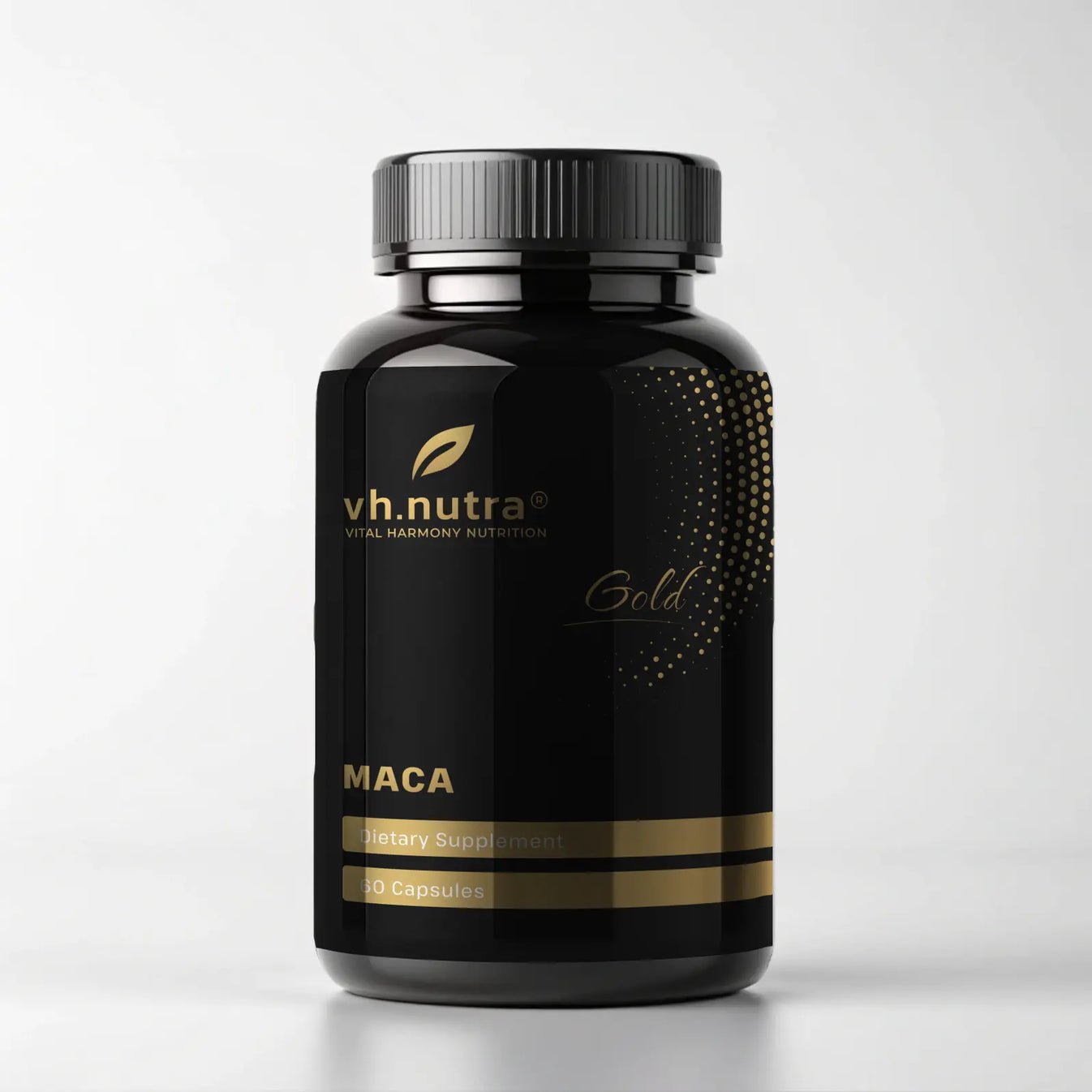
There are several varieties of maca that differ in root color: yellow maca (the most common, balanced), red maca (stronger antioxidant properties) and black maca (most associated with male fertility and muscle strength). Most maca supplements are made from yellow maca or a blend of several varieties. VH.Nutra Maca 600 mg — one of the quality options, offering a standardized maca extract.
1. Boosting Energy and Endurance
One of the main reasons people choose maca is its ability to naturally increase energy levels. Unlike caffeine, maca does not directly stimulate the central nervous system — it works as an adaptogen, helping the body use its available energy resources more efficiently.
Scientific studies available in the PubMed database confirm that maca can improve physical endurance and reduce the feeling of fatigue.
Additional research shows that participants who regularly took maca extract reported increased energy, better endurance and a reduced feeling of fatigue. Maca can also help the body adapt better to physical exertion, which is why this adaptogen is especially valued by athletes and people with an active lifestyle.
Interestingly, maca’s effect on energy is not immediate — it accumulates gradually. Most users notice results after 2-3 weeks of regular use. This is what sets maca apart from stimulants, which provide a quick but short-lived burst of energy. Quality maca supplements, such as VH.Nutra Maca 600 mg, offer a standardized dose that ensures consistent effects.
2. Supporting Hormonal Balance
Maca is unique in that it does not contain hormones itself, yet it helps the body naturally regulate the endocrine system. This adaptogen works on the hypothalamic-pituitary-adrenal axis, which is the main hormonal regulation center in the body.
For women, maca can help balance estrogen levels, reduce menopausal symptoms (hot flashes, mood swings, sleep disturbances) and support a regular menstrual cycle. Studies have shown that women who took maca reported significantly reduced menopausal symptoms after just 6-8 weeks.
For men, maca can increase testosterone levels and improve sperm quality, including sperm concentration and motility. It is important to emphasize that maca works gently and does not cause hormonal imbalance — it helps the body achieve natural balance rather than forcing it. This property of maca sets it apart from synthetic hormonal preparations, which often have significant side effects.
3. Improving Libido
Maca’s ability to improve libido is one of the most well-documented benefits of this adaptogen. Clinical studies have confirmed that maca significantly increases libido in both men and women, regardless of age.
In one study, men who took 1500-3000 mg of maca per day for 8 weeks reported a 40% increase in libido. Maca has also shown significant effects in women — especially those who experienced a decrease in libido due to antidepressants or menopause.
This adaptogen can also improve sexual function and erection quality in men. Unlike erectile dysfunction medications, maca works not through vasodilation, but by restoring hormonal balance and raising energy levels. Therefore, maca is a safer long-term alternative for those who want to naturally improve their sexual health.
4. Improving Mood and Reducing Stress
As an adaptogen, maca helps the body respond to stress more efficiently and reduces stress-related symptoms — anxiety, fatigue, irritability. Studies have confirmed that maca can lower cortisol (the stress hormone) levels and improve overall emotional well-being.
One interesting study showed that in postmenopausal women, maca not only reduced physical symptoms but also significantly improved psychological well-being — anxiety and depressive symptoms decreased, and overall quality of life improved. This effect is attributed to the flavonoids found in maca root, which have neuroprotective properties.
Maca’s effect on mood is gentle and cumulative — it is not similar to the effects of antidepressants or stimulants. With regular use of maca, many people notice a more stable mood, better stress management and increased resilience to everyday challenges. If you are also interested in other adaptogens for stress, VitalHarmony Ashwagandha is an excellent choice for stress control.
5. Supporting Bone Health
Although maca is not the first thing that comes to mind when talking about bone health, this adaptogen has significant potential in this area. Maca root is naturally rich in calcium, potassium, magnesium and other minerals essential for strong bones.
Animal studies have shown that maca extract can increase bone mineral density and reduce the risk of osteoporosis. This effect is especially important for older postmenopausal women, whose bones become more fragile due to reduced estrogen levels.
In addition, maca has anti-inflammatory properties that can help reduce joint inflammation and pain. This makes this adaptogen useful not only for bone health, but also for the overall health of the musculoskeletal system. Together with other bone-strengthening supplements, maca can become an important part of a long-term bone health strategy.
6. Enhancing Cognitive Function
More and more studies show that maca can positively affect brain function, memory and learning abilities. This adaptogen has neuroprotective properties that help protect brain cells from oxidative stress and inflammation.
Macamides — unique compounds found only in maca — can protect neurons and promote neurogenesis (the formation of new nerve cells). This effect is particularly important in older age, when the brain’s natural defenses weaken.
In addition, maca can improve concentration and attention span, especially during fatigue or stress. Students and people doing mental work often choose maca as a natural alternative to caffeine, as it provides energy without nervous agitation. This property of maca makes it a versatile helper in various life situations.
7. Increasing Physical Performance in Sports
For athletes and physically active people, maca can become an excellent helper in achieving better results. Studies have shown that maca use can increase endurance, reduce muscle fatigue after workouts and speed up recovery.
One study revealed that cyclists who took maca before a long ride showed better time results and felt less fatigue compared to placebo. Similar results were also observed among runners and strength athletes.
Maca’s ability to increase muscle endurance is linked to its adaptogenic properties — it helps the body use oxygen and energy reserves more efficiently during physical exertion. In addition, maca can lower creatine kinase (a marker of muscle damage) levels after intense exercise, which means faster muscle recovery. For those who train seriously, quality maca supplements can become an important part of their supplement strategy.
How to Take Maca?
Proper use of maca is essential to achieve the best results. Here are the main recommendations:
- Recommended dose: 1500-3000 mg (1.5-3 g) of maca powder or an equivalent extract dose per day. For beginners — 500-1000 mg, increasing gradually.
- When to take: Best in the morning or during the day, with food, to improve absorption. Not recommended in the evening due to its energizing effect.
- Duration of use: In 8-12 week cycles, after which a 2-4 week break is recommended so the body does not get used to it.
- Maximum safe dose: Up to 3000 mg per day. Higher doses may cause digestive discomfort.
When choosing a maca supplement, pay attention to the product’s purity and standardization. VH.Nutra Maca 600 mg offers a standardized maca extract in convenient capsules — this ensures accurate dosing and convenient daily use.
Possible Side Effects
Maca is considered a safe supplement, but some people may experience side effects, especially when starting with excessively high doses. The most common side effects are digestive discomfort, bloating or mild nausea, especially when taking maca powder on an empty stomach.
It is important to know that maca belongs to the cruciferous family (like broccoli or cabbage), so people with thyroid disorders should consult a doctor before starting to take maca. Although maca generally has no negative effect on the thyroid, caution is essential.
It is also recommended to avoid maca during pregnancy and breastfeeding, as there is not enough research confirming its safety during these periods. As with any other supplement, consult a doctor or pharmacist before starting maca, especially if you are taking medication or have health conditions.
Maca and Ashwagandha — What You Need to Know?
Maca and ashwagandha are two of the most popular adaptogens, but they work differently. Maca is more focused on increasing energy and endurance, supporting hormonal balance and improving libido. Ashwagandha, on the other hand, works more on reducing stress, regulating cortisol levels and improving sleep quality.
These two adaptogens complement each other perfectly. Many people choose maca in the morning for energy and ashwagandha in the evening for calm and sleep. This combination allows you to benefit from the advantages of both plants without side effects. VitalHarmony Ashwagandha — an excellent choice for balancing your stress response and improving sleep quality.
If you are wondering which adaptogen to choose, the answer depends on your goals. If the main problem is fatigue, low libido or hormonal imbalance — maca will be the better choice. If you are struggling with stress, anxiety or poor sleep — ashwagandha may be more suitable. And in the best case, you can take both, just at different times of the day.
Frequently Asked Questions (FAQ)
Is maca suitable for beginners? Yes, maca is a gentle adaptogen that is perfectly suitable for beginners. It is recommended to start with a lower dose (500-1000 mg) and gradually increase it to 1500-3000 mg while monitoring your body’s response. VH.Nutra Maca 600 mg capsules make it easy to control your dose.
How is maca different from ginseng? Both are adaptogens, but maca is gentler, has no stimulating effect and is more focused on hormonal balance and libido. Ginseng is more stimulating and can raise blood pressure, while maca has no such effect. For this reason, maca is often the better choice for sensitive people.
Does maca help build muscle? Directly, maca is not a muscle-building supplement, but it can increase testosterone levels, improve endurance during workouts and speed up recovery. All of this indirectly contributes to better athletic results and muscle growth. However, the main factors for muscle growth remain proper nutrition, adequate protein intake and a training program.
Disclaimer: This information is intended for educational purposes only and cannot replace professional medical advice. Before starting to take any dietary supplements, it is essential to consult a doctor or pharmacist.
Related Articles
- Ashwagandha: 7 Benefits for Stress, Energy and Health
- GABA: 7 Benefits for Calm, Sleep and Emotional Health
- L-Theanine: 5 Benefits for Calm and Concentration