Table of Contents
In short:
- Spirulina is a blue-green algae that contains exceptionally high amounts of protein, iron, B vitamins and antioxidants.
- The best-studied benefits of this algae are linked to immunity, energy, reducing iron deficiency and antioxidant protection.
- The recommended dose usually ranges from 1 to 3 grams per day, starting with a smaller amount and increasing it gradually.
- Spirulina is easy to mix into smoothies, juices or yogurt, but it is important to choose a tested product that is purified from heavy metals.
Spirulina is a blue-green algae that has recently been mentioned more and more often among the most nutritious foods in the world. These microscopic algae grow naturally in warm alkaline lakes, and thanks to their composition — abundant protein, vitamins, minerals and antioxidants — they have earned the name of superfood. In this article we will review their seven most important benefits, explain how to take spirulina safely, what doses are recommended and how to add this algae to your daily diet.
Key takeaways
- Spirulina contains up to 60–70 % protein — more than most meat or legume products, making it a valuable plant-based protein source.
- Scientific reviews show that this algae has antioxidant, immunomodulatory and anti-inflammatory effects (source: “Archives of Toxicology”, 2016).
- Spirulina works best when taken regularly with food, and the first changes — more energy and better well-being — are often noticed after just a few weeks.
What is spirulina?
Spirulina is a species of blue-green algae (scientifically — cyanobacteria) that has been growing in warm, alkaline freshwater bodies for millions of years. Because of the spiral shape of its cells, this algae got its name. Historically, spirulina was a food source for the Aztecs and the people of Africa’s lake regions, and today it is cultivated on controlled farms around the world and sold in the form of powder, tablets or capsules.
What sets this algae apart from many other plant products is its nutritional density — a small amount contains large quantities of protein, iron, B vitamins, beta carotene and antioxidants. It is worth mentioning that UNESCO declared spirulina one of the most promising food sources of the future as early as 1974. If you want to understand how it differs from other green superfood blends, it is useful to compare it with green powders, where this algae may appear only as one of many ingredients.
The nutritional profile of this algae is extremely diverse. Besides protein, spirulina is rich in beta carotene (provitamin A), iron, potassium and magnesium, as well as B vitamins and small amounts of the omega-6 fatty acid gamma-linolenic acid (GLA). It is phycocyanin — a blue pigment — that gives the algae its characteristic blue-green colour and is considered one of its main active compounds, to which most of its antioxidant effect is attributed.
1. A rich source of plant-based protein
Spirulina is one of the richest plant-based protein sources in nature — protein can make up to 60–70 % of its dry weight. For comparison, beef contains about 20–25 % protein and chicken about 25–30 %. Most importantly, the protein of this algae contains all the essential amino acids that the body cannot produce on its own and must obtain from food.
For this reason, spirulina is especially valuable for vegetarians, vegans and those who consume fewer animal products. That said, one or two grams is not enough to obtain a large amount of protein — a larger dose is needed, and in practice this algae usually serves as an additional rather than a primary protein source. Here it is worth remembering that your total protein needs depend on your weight, physical activity and goals.
2. Boosts immunity and helps manage inflammation
One of the best-studied properties of spirulina is its effect on the immune system. A scientific review published in the journal “Archives of Toxicology” concluded that this algae has antioxidant, immunomodulatory and anti-inflammatory activity (source: Wu et al., “The antioxidant, immunomodulatory, and anti-inflammatory activities of Spirulina: an overview”). This means that spirulina can help the body’s defence system work more smoothly.
This effect is mainly attributed to phycocyanin — the blue pigment that gives the algae its characteristic colour and has strong anti-inflammatory properties. In addition, spirulina supports the activity of natural killer (NK) cells and antibodies, which is important for resistance to infections. If you are looking for extra immune support during the cold season, this algae can be combined with vitamin C, which adds to the antioxidant protection.
3. Supports energy levels and reduces fatigue
Constant fatigue is often linked to nutritional gaps — a lack of iron, B vitamins or protein. Spirulina is naturally rich in all of these: it contains iron, vitamin B12 (although in a less easily absorbed form), other B vitamins and plenty of easily digestible protein. This very composition explains why this algae is traditionally associated with supporting energy.
Some studies with people who complained of chronic fatigue showed that regular spirulina intake can improve the subjective assessment of energy and vitality. That said, it is worth understanding that this benefit appears gradually — by filling nutritional gaps — rather than as the instant stimulating effect typical of caffeine. If you want comprehensive daily support, spirulina can be combined with a high-quality multivitamin complex.
Moreover, unlike caffeine, which gives a short-lived energy spike often followed by a wave of fatigue, spirulina works by supporting normal metabolism and blood quality. This means that energy levels rise steadily and without sudden fluctuations, which is especially valuable for those who feel constant rather than episodic fatigue.
4. A rich source of well-absorbed iron
Iron is essential for the production of haemoglobin — the protein that carries oxygen in the blood — and its deficiency is one of the most common causes of fatigue and anaemia. Spirulina stands out because it contains a relatively large amount of iron that, unlike in many plant sources, is better absorbed, since this algae does not contain phytates — compounds that hinder iron absorption.
Studies show that taking this algae can help raise haemoglobin levels and improve iron stores, especially in women and vegetarians, for whom the risk of iron deficiency is higher. To help plant-based iron absorb even better, spirulina is worth taking together with a source of vitamin C — for example, squeeze lemon juice into your smoothie. Read more about the importance of this mineral in the article about iron.
5. Antioxidant protection for your cells
Oxidative stress is the damage caused to cells by free radicals, which over time is linked to ageing and various chronic diseases. Spirulina is a rich source of natural antioxidants: it contains phycocyanin, beta carotene, vitamin E and chlorophyll, which help neutralise free radicals and protect cells from oxidative damage.
Phycocyanin is considered the main antioxidant of this algae — studies show that it can inhibit oxidative processes and protect cell membranes. In addition, antioxidants help maintain healthy skin, eyes and the body’s overall resistance to environmental factors. Although antioxidant protection is not visible “immediately”, it works over the long term, building up cell protection day after day.
In this context, beta carotene is also worth mentioning — spirulina contains significantly more of it than most fruits or vegetables. The body converts beta carotene into vitamin A, which is important for vision, skin condition and immune function. Together with phycocyanin, these compounds form a natural antioxidant network that helps the body withstand the daily oxidative load.
6. Supports healthy cholesterol and heart health
Cardiovascular health is closely linked to lipid metabolism, and spirulina has received considerable scientific attention in this area. Several reviews of clinical studies have shown that regular intake of this algae can help lower total cholesterol, LDL (“bad”) cholesterol and triglycerides, while raising HDL (“good”) cholesterol.
This effect is thought to be driven by phycocyanin and other bioactive compounds in spirulina that contribute to the regulation of fat metabolism. It is important to stress that these results are seen when the algae is taken regularly, as part of a healthy lifestyle, rather than as a one-off measure. Heart health also benefits from adequate movement, sleep and a diet lower in saturated fats.
7. Helps remove heavy metals
One of the most interesting, though less often discussed, properties of spirulina is its ability to bind heavy metals and help the body remove them. The cell walls of this algae contain compounds that can bind metals such as lead, arsenic or cadmium and reduce their absorption in the digestive tract.
Studies with people living in arsenic-contaminated areas showed that taking spirulina extract helped reduce arsenic levels in the body and soften the damage it causes. Of course, this algae is not a “detox miracle” — it works as a supportive measure, and the most important condition is choosing a clean product purified from heavy metals, because spirulina grown in contaminated water can accumulate harmful substances itself.
How to take spirulina?
The recommended daily dose of spirulina usually ranges from 1 to 3 grams, although studies have used higher amounts — up to 5–10 grams per day. It is worth starting with a smaller dose (about 1 gram per day) and increasing it gradually so that the body gets used to it and the risk of digestive discomfort decreases.
The best time to take it is in the morning or midday, with food, because protein and iron are better absorbed together with other food components. Taking it in the evening is not recommended for those sensitive to its energising effect. Since the taste of this algae is specific — slightly “earthy” and sea-like — it is most convenient to mix spirulina into a smoothie, juice, yogurt or porridge. A convenient option is a green superfood blend with spirulina and chlorella that you can simply stir into a drink.
Side effects and safety
Spirulina is considered safe and well tolerated when taken at recommended doses. The most common side effects are mild — bloating, nausea, headache or slight digestive discomfort may occur, especially at the start of use or at excessive doses.
The most important safety rule is to choose a reliable, laboratory-tested product, because algae grown in contaminated water can accumulate heavy metals, microcystins and other harmful substances. If you have an autoimmune disease, take immunosuppressants or blood thinners, or are pregnant or breastfeeding, be sure to consult a doctor before starting this supplement. As with any supplement, follow the stated dose.
Diet: how to add spirulina to your daily routine
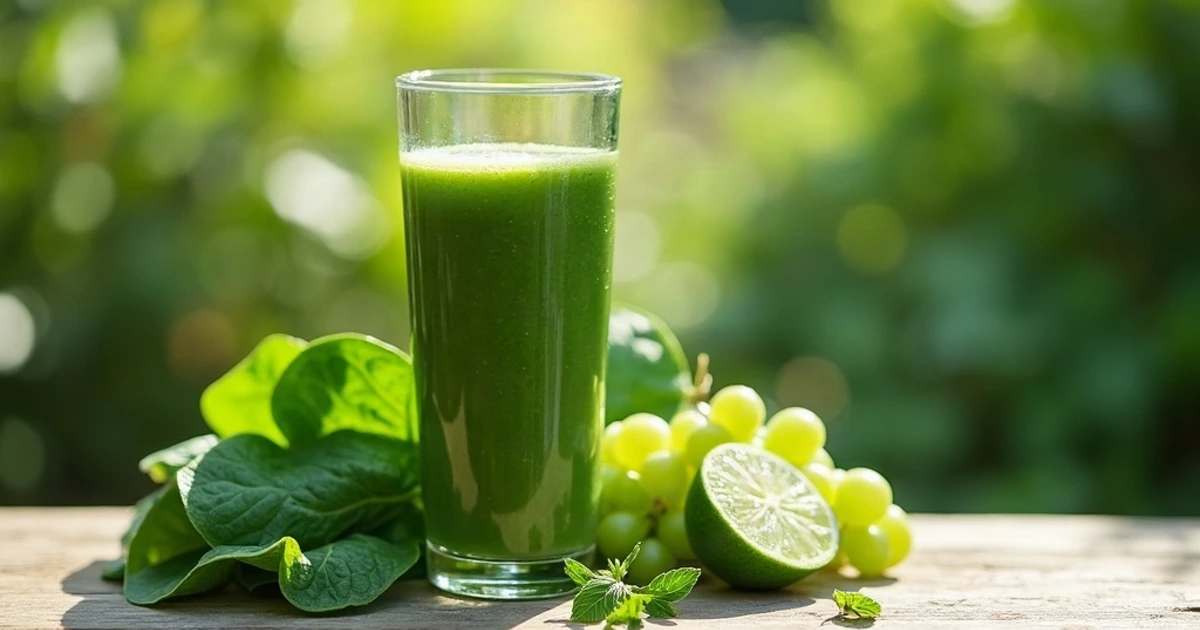
Adding spirulina to your daily routine is easy, because in powder form it hardly changes the texture of the dish you are making. The most popular way is a green smoothie: blend a handful of spinach, a banana, half an apple, a teaspoon of spirulina and a glass of water or plant milk. Citrus fruits or lemon juice not only mask the specific taste but also improve iron absorption.
This algae can also be stirred into yogurt, oatmeal, soups or energy bars. The only rule is that spirulina is best not heated at high temperatures, because heat can reduce the amount of some sensitive nutrients, such as certain vitamins and antioxidants. For this reason, it is best to add the algae to already prepared, slightly cooled dishes.
If you want an even simpler option, you can stir a teaspoon of spirulina into warm (but not boiling) water with lemon juice and drink it as a morning drink. That said, it is worth starting with half a teaspoon and observing how your body reacts to the specific taste of this algae — some barely notice it, while others may need time to get used to it.
FAQ: frequently asked questions
Does spirulina work immediately? No, the benefits of this algae build up gradually. Most people notice the first changes — more energy or better well-being — after a few weeks of regular use, so it is worth being patient and taking it consistently.
When is the best time to take spirulina? It is recommended to take it with food, preferably in the morning or at midday. In the evening it is better to avoid this algae if you are sensitive to its energising effect and have trouble falling asleep.
Is spirulina suitable for vegans? Yes, it is a plant-based product, so it is perfectly suitable for vegans and vegetarians. Because of its high protein and iron content, it is especially useful for those who do not consume animal products.
Disclaimer: This information is for educational purposes only. Before taking supplements, consult your doctor or pharmacist.
Related articles
- Green powders – 7 benefits for energy, immunity and digestion
- Iron – 7 benefits for energy, immunity and health
- Vitamin C – 7 benefits for immunity, skin and energy