Contents
In short:
- Silicon is a trace element that concentrates mostly in bones, hair, skin, nails and connective tissue.
- The best-absorbed form of silicon is orthosilicic acid (OSA), found naturally in horsetail, bamboo and whole-grain products.
- The typical daily silicon intake from food is 20–50 mg, while supplements usually recommend 10–40 mg per day.
- Silicon is most studied for its benefits for hair, skin, nails and bone density – first results are often seen after 3–6 months.
Silicon is the second most abundant element in the Earth’s crust, yet only small amounts of it are found in the human body. Nevertheless, this trace element plays an important role wherever the body builds and maintains connective tissue: bones, cartilage, skin, hair and nails. With age, the body’s silicon reserves naturally decline, which makes diet and targeted supplements increasingly relevant. In this article we will look at the seven most important benefits of silicon, explain how to take it correctly, which doses are considered safe and where to get this mineral naturally. Whether you are aiming for stronger hair, smoother skin or stronger bones – silicon can become a simple yet valuable addition to your daily routine.
Key takeaways
- Silicon supports collagen synthesis and connective tissue health, which is why it is linked to stronger hair, skin and nails.
- The most natural silicon sources are horsetail, bamboo, oats, brown rice and green beans; the best-absorbed form is orthosilicic acid.
- Silicon is a very safe trace element – at usual doses side effects occur extremely rarely.
What is silicon?
Silicon is a chemical element and trace mineral, of which an adult body contains roughly 1–2 grams. The highest silicon concentrations are found in bones, the aorta, tendons and skin, as well as in hair and nails. In the body, silicon does not act alone, but as the so-called orthosilicic acid (OSA) ion – it is this water-soluble form that is biologically active and absorbed in the gut.
In scientific literature, silicon was long regarded as an “unrecognized” trace element, as no official daily intake had been established for it. Nevertheless, research shows that silicon takes part in the synthesis of collagen and glycosaminoglycans, helps bones mineralize and contributes to connective tissue strength. This is why silicon’s benefits are most often linked to beauty and musculoskeletal health.
Interestingly, the need for silicon attracted scientific attention relatively recently. Although this element has been known for centuries, its biological role only began to be seriously studied in recent decades, when it was noticed that silicon levels in tissues are closely linked to connective tissue health. Today silicon is regarded as a valuable trace mineral whose importance becomes especially evident with age, when natural silicon reserves decline.
1. Supporting hair strength and growth
Hair structure is made of the protein keratin, and the connective tissue around the hair follicle must be strong for the hair to hold well and grow healthily. Silicon contributes to supporting this connective tissue, so it can help hair become stronger, denser and more resistant to breakage.
In a classic 2005 study involving women with thin, easily breaking hair, nine months of taking choline-stabilized orthosilicic acid increased hair tensile strength and thickened hair diameter. Later reviews confirmed similar results, which is why silicon is often included in hair-strengthening supplements alongside biotin. In addition, silicon can contribute to hair shine by helping maintain a healthy hair surface structure.
2. Supporting skin elasticity and youthfulness
Skin is the body’s largest organ, whose elasticity is determined by collagen and elastin fibers. Silicon acts as a participant in collagen synthesis, so sufficient silicon levels help maintain skin firmness and smoothness. With age, silicon levels in the skin decrease, which coincides with the appearance of wrinkles and loss of elasticity.
In the study mentioned above, women taking orthosilicic acid noticed improved skin roughness and reduced wrinkle depth. Silicon does not act here by directly “moisturizing” the skin, but by supporting its structural proteins – in this respect it pairs well with hyaluronic acid, which is responsible for retaining moisture. Silicon also contributes to the synthesis of glycosaminoglycans, which help the skin retain moisture and firmness.
3. Supporting nail strength and resilience
Brittle, splitting nails often signal a trace-mineral deficiency, and silicon is one of the minerals most commonly linked to nail health. Silicon is incorporated into the nail plate structure and helps keep it strong and resistant to breakage.
In the same choline-stabilized orthosilicic acid study, participants noticed significantly reduced nail brittleness after several months. This is why silicon is often recommended for people whose nails break or flake easily, especially when combined with collagen and biotin. Incidentally, silicon deficiency often shows up first precisely through the nails – they become soft, thin and prone to splitting.
4. Supporting bone density and mineralization
The highest silicon concentration in the body is found precisely in the bones – more specifically, at sites of active bone mineralization. Silicon contributes to the incorporation of calcium and other minerals into bone tissue, so it can help maintain bone density and strength.
Observational studies link higher dietary silicon intake with greater bone mineral density, especially in the thigh bone. This is particularly relevant for older women, whose risk of bone loss increases after menopause. Together with calcium and vitamin D, silicon can be a valuable addition to a bone-health routine.
5. Supporting joint and cartilage health
Cartilage is a connective tissue rich in collagen and glycosaminoglycans, and silicon takes part in the synthesis of precisely these structural components. This is why silicon is linked to supporting cartilage elasticity and joint mobility.
Research shows that silicon, together with other joint-relevant compounds, can contribute to maintaining normal cartilage condition. In this respect silicon complements joint-health elements such as glucosamine and chondroitin, which help maintain joint mobility and comfort. Animal studies show that silicon deficiency can lead to poorer cartilage structure, once again confirming silicon’s importance for joint health.
6. Supporting collagen synthesis
Collagen is the most abundant protein in the human body, forming the basis of the structure of skin, bones, cartilage, tendons and blood vessels. Silicon is regarded as one of the participants in collagen synthesis: it helps the body create and correctly cross-link collagen fibers.
When silicon is lacking, collagen synthesis can slow down, which shows up as weaker connective tissue – duller skin, brittle nails or less elastic blood vessels. This is why silicon is often combined with collagen – the two components complement each other, supporting beauty and musculoskeletal health from within. This is precisely why silicon and collagen are often taken together – silicon helps the body use dietary or supplemental collagen more efficiently.
7. Supporting blood vessel elasticity
Silicon is found in significant amounts in the aorta and the walls of other large blood vessels, where it contributes to maintaining the structure of elastin and collagen. Elastic blood vessels adapt better to changes in blood pressure, so sufficient silicon levels are linked to normal blood vessel function.
Interestingly, silicon levels in the aorta decrease with age – younger people have far more of it in their blood vessels than older people. This correlation has prompted researchers to investigate silicon’s role in cardiovascular health, although more confirmatory research is still needed in this area. Nevertheless, existing data allow silicon to be considered a valuable element of a vascular-health routine, especially at older ages.
How to take silicon?
The daily silicon dose depends on the form and the goal. From food, an adult usually gets 20–50 mg of silicon per day, but a large part of it is excreted. Supplements usually recommend 10–40 mg of silicon per day, while choline-stabilized orthosilicic acid (ch-OSA) requires a smaller dose – around 10 mg – because this form is absorbed more efficiently.
Silicon supplements are best taken with or after a meal, at any time of day – they have neither a stimulating nor a calming effect, so they work both in the morning and in the evening. The most important thing is consistency: silicon’s benefits accumulate gradually, so it is recommended to take it regularly rather than occasionally. Silicon supplements are convenient to wash down with plain water, and if you drink mineral water, you also get some silicon from it.
Most people notice the first changes – stronger nails, healthier hair or smoother skin – after 3–6 months of consistent use. No separate maximum safe dose has been established because silicon has very low toxicity, but it is always worth sticking to the dose stated on the label and not increasing it on your own.
Side effects and precautions
Silicon supplements are considered very safe – at usual recommended doses side effects occur extremely rarely. Most often only mild digestive complaints are possible, which usually disappear after reducing the dose or taking the supplement with food.
Pregnant and breastfeeding women should be cautious, as safety data for these groups are scarce – it is worth consulting a doctor before use. Very high doses of silicon dioxide (as the food additive E551) are theoretically linked to a risk of kidney stones, but this is unrelated to usual supplement doses. More reliable information on silicon’s role in health can be found in the latest scientific review of silicon, lithium and boron.
Diet: natural sources of silicon
The richest natural source of silicon is horsetail (Equisetum arvense) – this plant can accumulate silicon directly from the soil, so its extracts have been used for centuries to support beauty and bones. Silicon is also abundant in bamboo, whose extracts are often included in hair and nail supplements.
Among everyday foods, the most silicon is obtained from whole-grain products – oats, brown rice, barley – as well as green beans, bananas, cucumbers and bell peppers. It is worth knowing that silicon absorption from plant sources depends on its form, so it is best absorbed not in all plants, but where silicon is in the form of soluble orthosilicic acid. It is also worth knowing that refining grains removes most of the silicon, so white bread and white rice contain far less silicon than whole-grain versions.
A surprising silicon source is beer, because barley and hops naturally accumulate silicon. Silicon is also found in mineral water, from which we get an easily absorbed portion when drinking it. If you want to get more silicon from food, prefer whole-grain rather than refined products.
FAQ: common questions
How much silicon do you need per day? No official daily silicon intake has been established, but an adult is thought to get 20–50 mg of silicon per day from food. Supplements usually recommend 10–40 mg of silicon per day.
Which form of silicon is absorbed best? Orthosilicic acid (OSA) is absorbed best, and especially its stabilized form ch-OSA. Organic silicon forms from plant sources such as horsetail or bamboo are also well absorbed.
Does silicon help hair and nails? Yes, research shows that taking orthosilicic acid can increase hair tensile strength and reduce nail brittleness. Results usually require several months of consistent use.
Is it safe to take silicon daily? Yes, silicon is considered a very safe trace mineral, and at usual doses side effects almost never occur. Pregnant and breastfeeding women should consult a doctor before use.
When does silicon’s effect appear? Silicon’s benefits accumulate gradually, so most people notice the first changes – stronger nails, healthier hair or smoother skin – after 3–6 months of regular use.
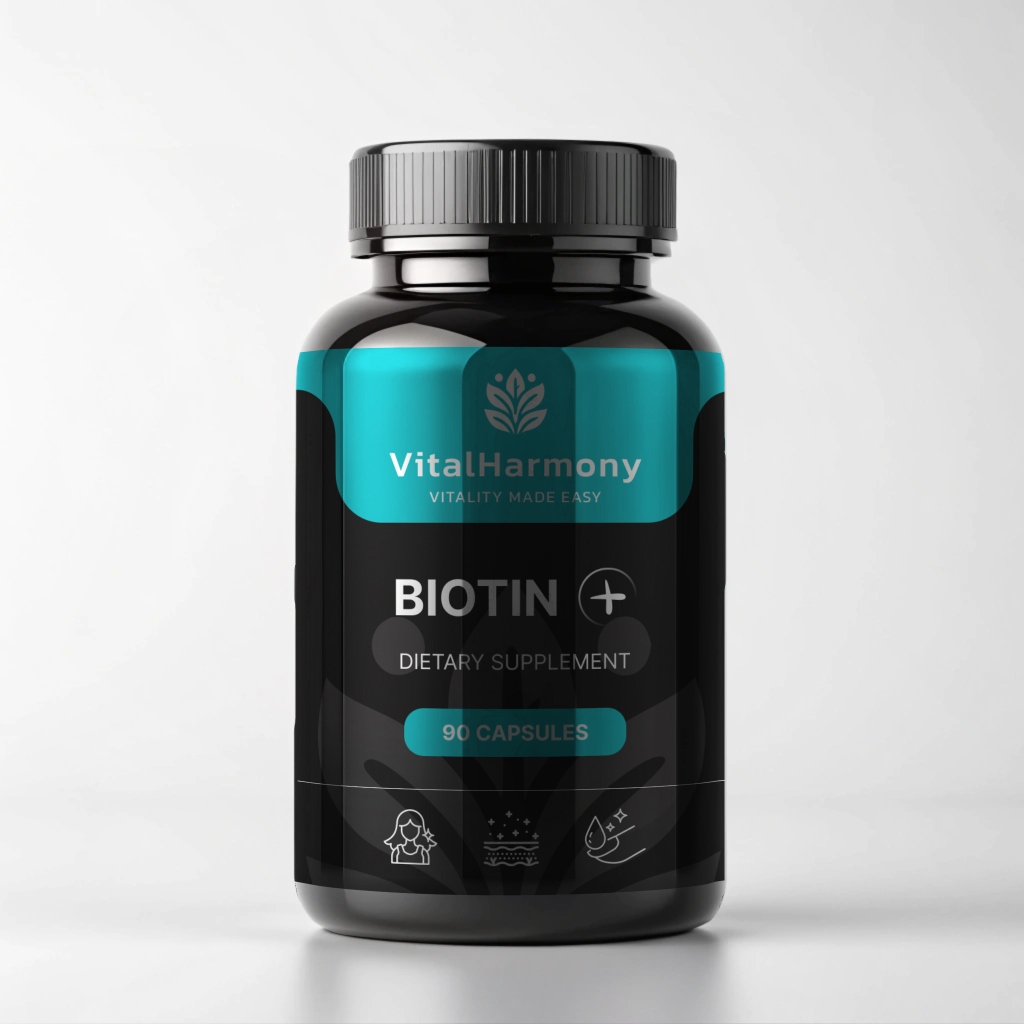
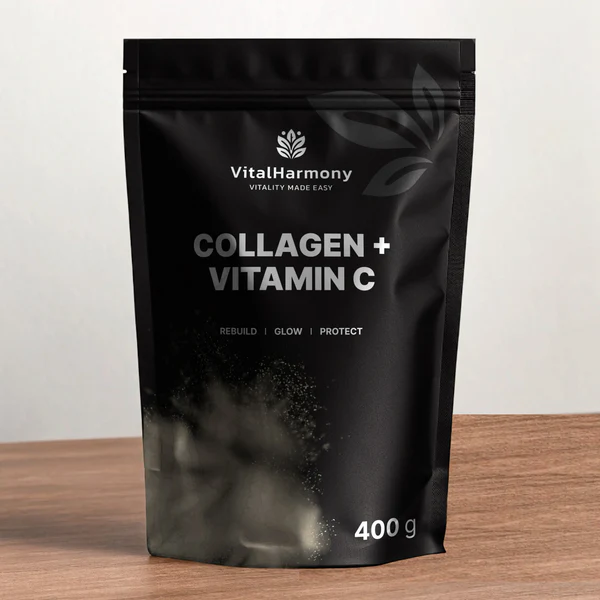
Silicon’s beauty benefits are well complemented by other elements important for hair, skin and nails. For example, VitalHarmony Biotin Plus combines high-concentration biotin with vitamin C, zinc and selenium – one of the most popular choices for strengthening hair and nails. And if you want to support collagen synthesis and skin elasticity, VH.Nutra Collagen + Vitamin C is worth considering – it combines hydrolyzed collagen with vitamin C.
Disclaimer: This information is for educational purposes only. Before starting to take supplements, consult a doctor or pharmacist.
Related articles
- Collagen – 7 benefits for skin, joints and beauty
- Biotin – 7 benefits for hair, skin and nails
- Vitamin E – 7 benefits for skin, immunity and antioxidant protection