Quercetin is a natural plant pigment from the flavonoid group, abundant in onions, apples, berries and green tea. This compound has attracted growing attention in recent years for its antioxidant, anti-inflammatory and immune-supporting properties. In this article you will learn what benefits quercetin can bring to your health, which foods contain the most of it, how to take it safely and what to look for when choosing supplements.
Key Takeaways
- Quercetin is a natural flavonoid found in onions, apples, berries and green tea.
- Quercetin acts as an antioxidant and helps ease chronic inflammation.
- Quercetin supports the immune system and may help relieve seasonal allergy symptoms.
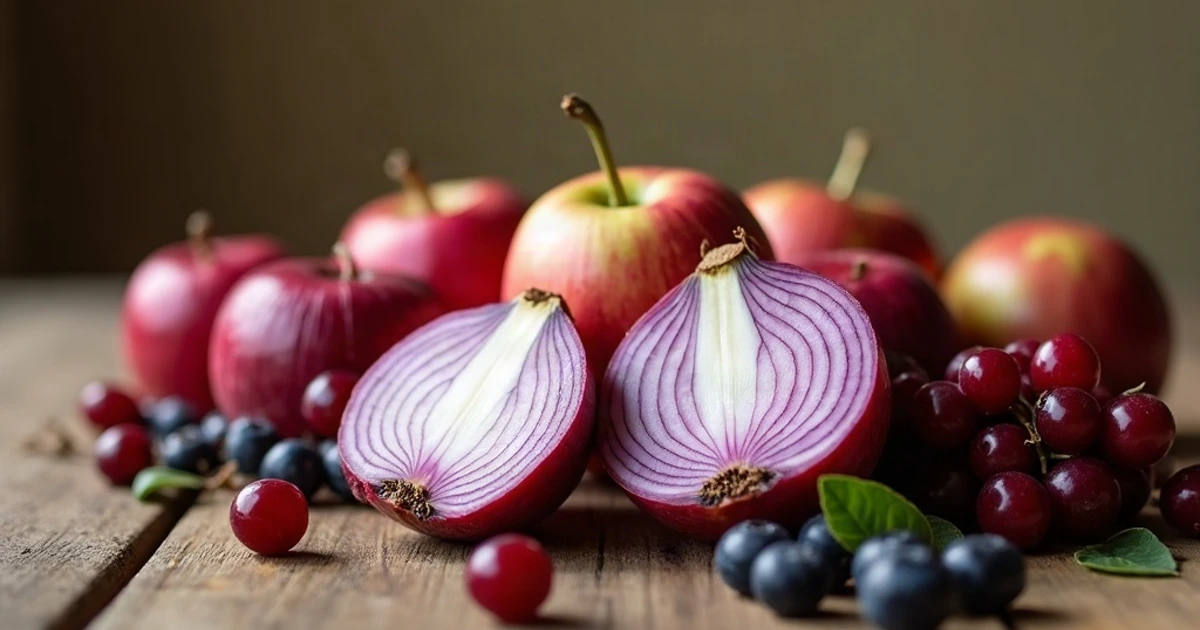
- The best sources are capers, red onions, apple peels and dark berries.
Table of Contents
What Is Quercetin and Where Is It Found?
Quercetin is a natural plant pigment belonging to the flavonoid – more precisely flavonol – group. Flavonoids are a large family of plant compounds responsible for the bright colours of many fruits, vegetables and flowers, and in the body they act as antioxidants. Quercetin is one of the most widespread flavonoids in the human diet, so you naturally get it almost every day from various plant foods.
In nature quercetin is usually found bound to sugar molecules – this form is called a glycoside and is better absorbed than free quercetin. For example, quercetin glycosides in onions and tea are absorbed more efficiently than pure quercetin from some supplements. For this reason scientists pay a lot of attention to improving quercetin absorption – often by combining it with vitamin C or other substances.
The name of this plant pigment comes from the Latin word “quercus”, meaning oak – it was in oak bark that this compound was first described. Today it is known as one of the most widely studied flavonoids, and the number of scientific studies on its health effects grows every year. Although supplements are popular, most people get enough quercetin from an ordinary plant-based diet.
Quercetin Strengthens the Immune System
Immunity is one of the areas where quercetin has been studied most thoroughly. Quercetin supports immune system balance: it helps the body respond properly to challenges, regulates the release of inflammatory signalling molecules and supports the activity of natural defence cells. This means that quercetin not only stimulates but also balances the immune response, preventing it from becoming too intense.
Interestingly, quercetin pairs very well with other antioxidants – vitamin C and zinc – which together form the so-called immunity support team. Vitamin C not only strengthens defences itself but also helps regenerate quercetin after it neutralises free radicals. Read more about this partner in the article Vitamin C: 7 Benefits for Immunity, Skin and Energy.
Quercetin Helps Ease Allergy Symptoms
Quercetin is often mentioned as a natural aid during seasonal allergies, and this has a scientific basis. Quercetin acts as a natural antihistamine-like compound: it helps stabilise mast cells – the cells that release histamine during an allergic reaction, causing sneezing, nasal congestion, watery eyes and itching. By inhibiting histamine release, quercetin can help reduce these symptoms.
Research shows that quercetin can be especially useful for those who experience mild to moderate seasonal allergy symptoms, for example when trees bloom in spring or grasses spread in summer. Still, it is important to understand that quercetin is not a medicine for allergies and does not replace treatment prescribed by a doctor – it works best as a supportive measure combined with a healthy routine.
In practice, it is worth starting to take this flavonoid a little before the allergy season begins – this way the body has time to adapt and symptoms are often milder. As with other plant compounds, results are individual, so it is worth monitoring how you feel and adjusting the dose or timing if needed.
Quercetin Acts as a Powerful Antioxidant
The antioxidant effect of quercetin is one of the main reasons this flavonoid is so highly valued. Quercetin neutralises free radicals – unstable molecules that can damage cells, proteins and DNA, a process known as oxidative stress. Long-term oxidative stress is linked to earlier ageing and various chronic conditions, so getting antioxidants regularly through food is an important part of maintaining health.
Quercetin is particularly interesting in this area because it not only scavenges free radicals itself but also helps regenerate other antioxidants – vitamin C and vitamin E – after they have done their work. This “team” effect means that quercetin strengthens the activity of the entire antioxidant system. Another plant antioxidant works in a similar way – read about it in the article Resveratrol: 7 Benefits for Health, Antioxidant Protection and Longevity.
Within the flavonoid family, this plant pigment stands out because it is found in food especially abundantly and in many forms – from onions to berries – so antioxidant reserves are easy to replenish naturally. The second advantage is stability: the compound remains active even after heat treatment, so cooked vegetables also supply a useful amount.
Quercetin Reduces Chronic Inflammation
Chronic inflammation is a low-intensity, long-lasting inflammatory state that can quietly strain the body and contribute to many health problems. Quercetin works through several mechanisms that help reduce this inflammation: it inhibits the production of pro-inflammatory molecules and supports anti-inflammatory signalling pathways. For this reason quercetin is often studied in the context of inflammatory conditions.
Together with quercetin, omega-3 fatty acids also help ease inflammation, acting through similar but slightly different pathways. Combining these two compounds – plant quercetin and omega-3 – can provide additional synergy. Read more about the effect of omega-3 on inflammation in the article Omega-3: 7 Benefits for the Heart, Brain and Health.
Quercetin Supports Heart and Blood Vessel Health
Heart and blood vessel health is another area where quercetin shows promising results. Quercetin helps protect blood vessels from oxidative stress, supports their elasticity and contributes to the normal function of the endothelium – the inner lining of blood vessels. A healthy endothelium is important because it regulates the widening and narrowing of blood vessels, which is directly linked to blood pressure.
In addition, quercetin can help protect the so-called “bad” LDL cholesterol from oxidation – a process considered one of the steps in the development of atherosclerosis. In this respect quercetin complements other heart-friendly compounds such as coenzyme Q10 or omega-3, which together help maintain comprehensive protection of the heart and blood vessels.
Quercetin Helps Maintain Normal Blood Pressure
Several scientific review articles link quercetin intake to a small but noticeable reduction in blood pressure. Quercetin is thought to affect blood pressure in several ways: by supporting the elasticity of blood vessels, improving the availability of nitric oxide – a molecule that relaxes blood vessels – and reducing oxidative stress in the vessels.
It is important to emphasise that the effect of quercetin on blood pressure is mild and shows itself best when combined with other healthy habits – a balanced diet, regular exercise and enough sleep. If you take blood pressure medication, be sure to consult your doctor before starting quercetin, as combinations can interact.
Most studies in this area used daily doses of 500–1000 milligrams, and the observed change was usually at the level of a few millimetres of mercury – a modest but still meaningful contribution to maintaining normal blood pressure. The best results are achieved when supplements are combined with a DASH-type diet and sufficient physical activity.
Quercetin Contributes to Physical Performance and Recovery
For those who exercise, quercetin can also be useful. Some studies show that quercetin can support endurance and help reduce exercise-induced oxidative stress and muscle fatigue. After an intense workout the body produces more free radicals, so a sufficient amount of antioxidants helps you recover faster.
Still, the results in this area are mixed – some studies show a small positive effect on endurance, others find no significant difference. For athletes, quercetin is most likely useful as part of overall antioxidant protection and recovery, rather than as a separate “performance booster”. For full recovery, protein, sleep and proper nutrition remain the most important.
How to Take Quercetin: Dosage, Timing and Duration
Typical quercetin doses in supplements range from 500 to 1000 milligrams per day, and some studies used higher doses divided into several intakes. Because quercetin is only partially fat-soluble, it is best taken with a meal containing some fat – this improves absorption and reduces the risk of stomach discomfort.
Quercetin is often combined with vitamin C, because the latter not only enhances the antioxidant effect but also helps quercetin absorb better. If you want to strengthen this antioxidant pair, quercetin can be combined with a vitamin C supplement, for example VitalHarmony Vitamin C. The duration of use depends on the goal – for maintenance, a steady moderate intake is enough, while for short-term goals, such as allergy season, quercetin can be taken for several weeks.
When choosing supplements it is worth paying attention to the form: some manufacturers use phytosome or liposome technologies that improve the absorption of this compound, because plain quercetin aglycone is absorbed more poorly. If absorption matters to you, look for products with quercetin phytosome or combine the supplement with bromelain – an enzyme that also supports absorption.
Quercetin Side Effects and Safety
Quercetin is considered safe when taken in normal doses with food or in supplements up to about 1000 milligrams per day. The most common side effects are mild – headache, stomach discomfort or tingling in the hands and feet may occur, but they usually pass after reducing the dose. Very high doses, especially when taken for a long time, are linked to rare cases of kidney function problems.
It is important to know that quercetin can interact with certain medications – blood thinners, antibiotics and drugs processed by the liver. In a review published by the National Library of Medicine (PubMed), quercetin is described as a multifunctional compound whose effect depends on the dose and the individual body (source). Therefore, before taking quercetin together with medication, it is worth consulting a doctor or pharmacist.
Quercetin in Your Diet: Best Food Sources
The best way to get quercetin is a varied plant-based diet. Quercetin is abundant in many everyday foods, and among the richest sources capers stand out, containing more of this flavonoid than any other known food. Here are the main sources of quercetin:
- Capers – the richest known source of quercetin.
- Red onions – an everyday and easily accessible source.
- Apples, especially with the skin – quercetin is concentrated precisely in the peel.
- Dark berries – blueberries, cranberries and cherries.
- Green and black tea – a flavonoid-rich drink.
- Broccoli, cabbage and kale – vegetables containing quercetin.
To get more quercetin, it is worth eating fruits and vegetables with the skin, where this flavonoid is usually concentrated, and choosing a colourful, varied diet. Although the amounts of quercetin obtained from food are smaller than in supplements, they are well absorbed because quercetin in food is in the form of glycosides. Therefore a varied diet is the best first step, and supplements are worth choosing only when you want a higher concentration. Another practical tip – eat red onions raw and do not peel apples, because it is precisely in the outer layer that this pigment is most concentrated.
Frequently Asked Questions About Quercetin
Does quercetin help with allergies? Quercetin can help ease seasonal allergy symptoms because it stabilises mast cells and reduces histamine release. However, it is not a medicine and works best as a supportive measure.
What is the recommended dose of quercetin? Usually 500 to 1000 milligrams per day is taken, divided into several intakes and taken with food. It is worth starting with a smaller dose and increasing it gradually.
Which foods contain the most quercetin? Quercetin is most abundant in capers, red onions, apple peels, dark berries and green tea.
Does quercetin go well with vitamin C? Yes, this combination is popular because vitamin C helps quercetin absorb better and strengthens the overall antioxidant effect.
Does quercetin have side effects? In normal doses quercetin is safe; in rare cases mild stomach discomfort or headache may occur. Very high doses are linked to rare kidney problems.
Can quercetin interact with medications? Yes, quercetin can interact with blood thinners, antibiotics and some other medications, so it is worth consulting a doctor when taking them together.
Disclaimer: This information is for educational purposes only. Before starting to take supplements, consult a doctor or pharmacist.
Related Articles
- Vitamin C: 7 Benefits for Immunity, Skin and Energy
- Resveratrol: 7 Benefits for Health, Antioxidant Protection and Longevity
- Omega-3: 7 Benefits for the Heart, Brain and Health