
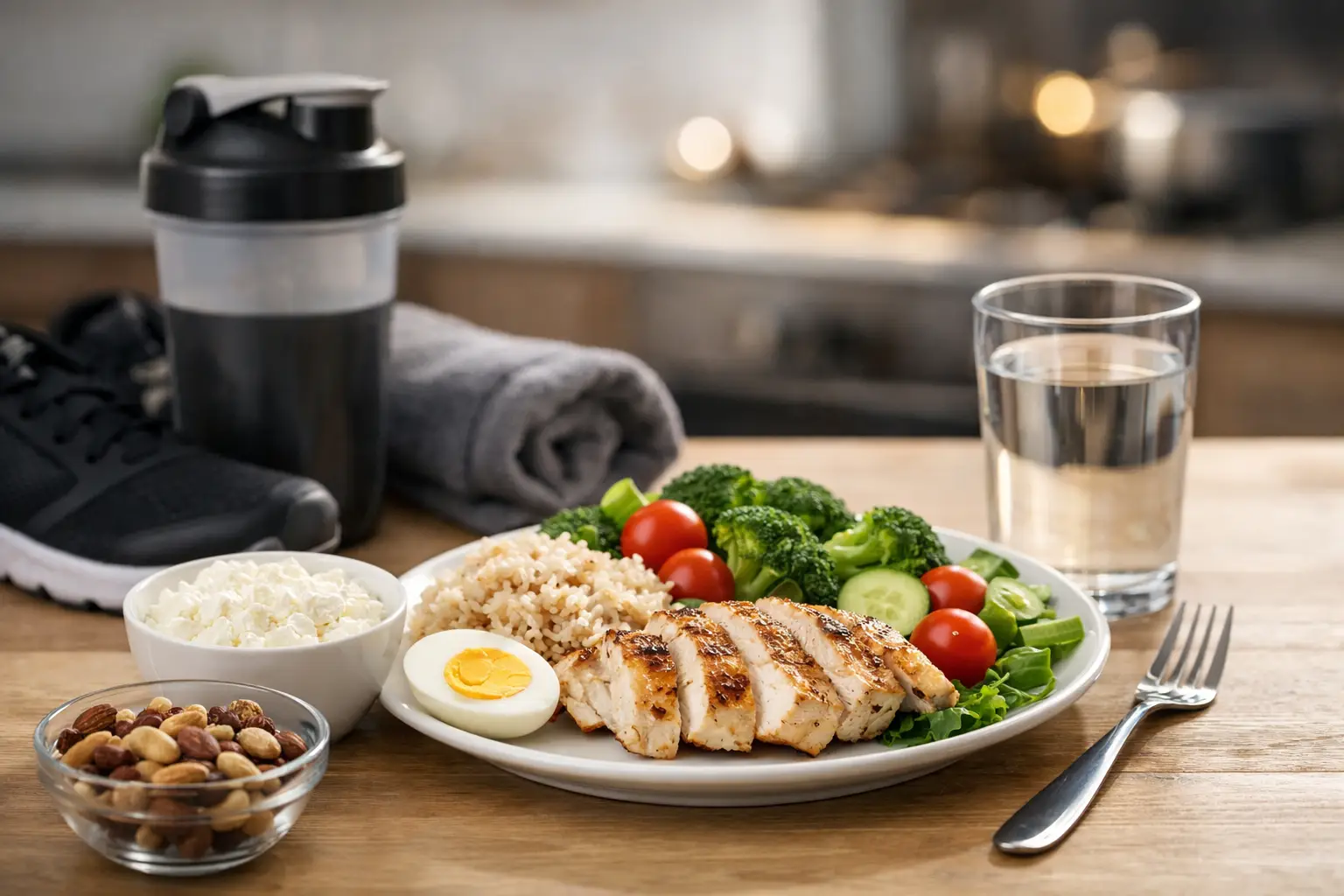
Evening sports often end with the same question – what to eat after an evening workout so the body recovers and sleep isn’t affected? If you return from the gym at 8 or 9 PM, the choice is definitely important. A dinner that is too heavy can be burdensome, while not eating at all often affects energy, hunger, and recovery the next morning.
There’s no need for extremes here. After an evening workout, your goal is simple – give your body protein for muscle recovery, some carbohydrates to replenish energy stores, and avoid overloading digestion before sleep. Exactly how much you need depends on the workout intensity, your goal, and when you plan to go to bed.
What to eat after an evening workout based on your goal
If you exercise for muscle growth or want to maintain muscle mass, it’s worth choosing a complete snack or light dinner with sufficient protein after the workout. For many people, a good guideline is 20-40 g of protein, depending on body weight and total daily diet. Suitable options include low-fat cottage cheese, Greek yogurt, eggs, chicken, or a protein shake.
If your goal is fat loss, the logic doesn’t change. You still need protein. The difference is that portion size and total calorie intake should be more controlled. In that case, a filling but not heavy choice works best – for example, yogurt with berries, an omelet with vegetables, or cottage cheese with a bit of fruit.
If the workout was very intense – weightlifting, longer running, intervals, or team sports – protein alone may not be enough. In that case, it’s worth adding easily digestible carbohydrates. They help restore glycogen stores, which is important not only for athletic performance but also for how you feel the next day.
What to eat after an evening workout if you’re going to bed soon
Here, the most important criterion is not just nutritional value, but also how you feel after the meal. If you have 30-90 minutes until sleep, it’s usually better to choose a lighter option. Your body doesn’t need a large, fatty, and hard-to-digest meal just because “you worked out.”
At such times, good options include cottage cheese, natural or Greek yogurt, kefir, a protein shake with water or milk, a few eggs, a rice cake with cottage cheese, or a small portion of chicken with rice. It’s important that the food is simple, familiar to your digestion, and not too fatty.
If you feel very hungry after an evening workout, it’s a sign that you may have eaten too little during the day. Evening eating shouldn’t have to fix the day’s dietary mistakes. When this happens regularly, it’s better to review your pre-workout meal and overall daily routine.
Best food choices after an evening workout
Practically, the best choice is one you can eat without stress and that suits your evening. You don’t always feel like cooking. You don’t always want to bake chicken or boil rice when you get home. So it’s worth having a few simple options.
Cottage cheese is one of the most convenient choices. It has a lot of protein, is quite filling, and works well for many in the evening. If you want more flavor, you can add berries, cinnamon, or half a banana. If your goal is more calorie control, a single serving without additions will suffice.
Greek yogurt or natural yogurt works well when you want a lighter option. If the workout was intense, you can add fruit or a bit of oats. If you exercised more lightly, just a protein source will be enough.
Eggs are also a good solution. An omelet with vegetables or boiled eggs with a small slice of whole-grain bread provides both protein and sufficient satiety. This is especially convenient for those who want “real food” after a workout, rather than a liquid option.
Chicken, turkey, or lean meat with rice, potatoes, or vegetables works well if you have at least 1.5-2 hours until sleep after the workout. Here, you can choose a more normal dinner, just avoid very fatty sauces and huge portions.
When time is short or appetite is low, a protein shake can be a convenient solution. It’s especially useful when you know you otherwise simply won’t eat anything. In that case, quality whey protein can help you conveniently get the needed protein without feeling heavy. It’s not a miracle or a necessity, just a practical tool for your routine.
What is better not to eat after an evening workout
The biggest mistake is thinking that anything goes after sports. Yes, a workout increases energy needs, but it’s not a free pass for very fatty, heavy, and random choices late in the evening.
After an evening workout, fast food, very fatty dishes, large amounts of sweets, or huge portions often don’t pay off. Such choices can worsen sleep, cause a feeling of heaviness, and it’s not just about calories – they often also impair recovery quality. In other words, you might feel full but not recovered.
It’s also worth being cautious with very spicy food if it irritates your stomach in the evening. This is very individual. For one person, dinner after 9 PM works perfectly; for another, even yogurt too late causes discomfort. Your routine needs to work for you, not just look good on paper.
Do you need carbohydrates after an evening workout?
The short answer is – sometimes yes, sometimes no. If the workout was long, hard, or you’ll exercise again the next morning, carbohydrates can definitely be beneficial. They help restore energy stores and reduce feelings of fatigue the next day.
If the workout was short, of moderate intensity, and your overall daily food is already balanced, huge portions of carbohydrates in the evening are not necessary. In that case, a small amount from fruits, oats, rice, or potatoes may be enough.
It’s important not to fear carbohydrates just because it’s evening. A common myth says they automatically “turn into fat” at night. In reality, the overall daily calorie balance, activity level, and food quantity matter much more than just the clock.
Supplements after an evening workout – when they actually help
If your diet is in order, supplements are not the first step. First, simple food, rhythm, and sufficient total protein intake per day should work. But in certain situations, supplements can greatly simplify your routine.
Whey protein is useful when you have no time or appetite after a workout. Instead of skipping a meal, you can quickly get quality protein. High-protein bars can also be a convenient choice when traveling or on the way home, although for daily use, simpler food is often preferable.
If you notice that a late workout worsens your ability to fall asleep, it’s worth evaluating not just food but also your overall evening routine – caffeine timing, screens, stress levels, workout intensity. Sometimes the problem isn’t what you ate after sports, but that your body is still “running on high revs.”
A simple rule that works for most
If you want clarity without calculations, follow this logic. After an evening workout, eat a protein source. If the workout was hard or a busy day awaits tomorrow, add a small portion of carbohydrates. If there’s little time until sleep, avoid fatty and very filling food.
This approach works for most – from beginners to regular exercisers. It helps not only with recovery but also with maintaining discipline without unnecessary complexity. And when a routine is simple, it’s much easier to stick to.
Your evening meal doesn’t have to be perfect. It just has to be good enough to support progress, sleep, and well-being. Sometimes it will be cottage cheese, sometimes an omelet, sometimes a shake after a long day. The most important thing is that each choice leads you to a stronger tomorrow.