Vitamin B6 is a water-soluble vitamin the body needs for more than a hundred enzyme reactions, especially those related to protein metabolism, nervous system function and red blood cell production. Because the body does not store it in large amounts, vitamin B6 must be obtained regularly – through food or supplements. In this article you will learn what benefits vitamin B6 provides, how to take it correctly and which foods contain the most.
Key Takeaways
- Vitamin B6 – a water-soluble vitamin essential for more than 100 enzyme reactions in the body.
- Vitamin B6 is needed for the production of serotonin, dopamine and haemoglobin – it supports mood, the nervous system and blood formation.
- Recommended intake for adults is about 1.3–1.7 mg per day; higher doses come from supplements.
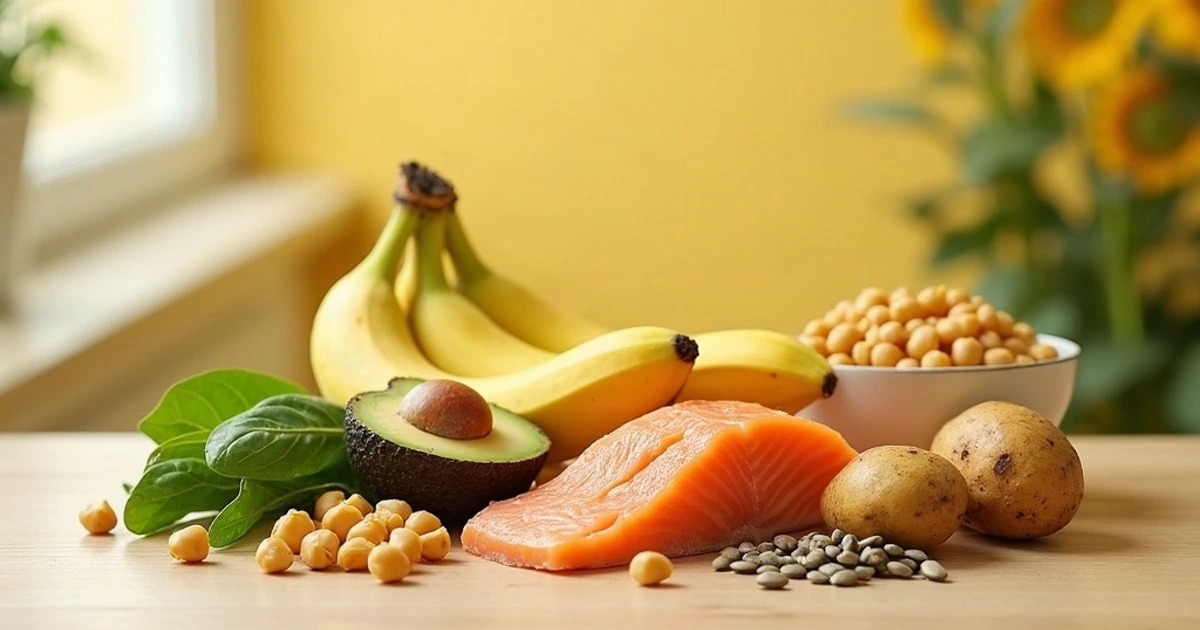
- Best sources – chicken, salmon, potatoes, bananas, chickpeas, spinach and sunflower seeds.
Table of Contents
What Is Vitamin B6 and Why Is It Important?
Vitamin B6, also known as pyridoxine, is one of the eight B-group vitamins that together help the body turn food into energy. Like other vitamins in this group, vitamin B6 is water-soluble, so the body does not store it as a reserve – any excess is excreted in urine, which means vitamin B6 must be obtained every day.
In the body, vitamin B6 is converted into its active form – pyridoxal-5-phosphate (PLP) – which acts as a coenzyme. This means that without it, many enzymes simply could not do their work. PLP takes part in protein, carbohydrate and fat metabolism, in the synthesis of neurotransmitters and in haemoglobin production.
Because vitamin B6 has so many roles, its deficiency can show up in very different ways – from fatigue and irritability to skin problems or impaired blood formation. Fortunately, this vitamin is easy to get from an ordinary diet, and supplements come in handy when the need increases or the diet is not varied enough.
Vitamin B6 Supports Nervous System Function
The nervous system is one of the biggest consumers of vitamin B6 in the body. Vitamin B6 is needed to form myelin – the protective sheath around nerve fibres – so it helps nerve signals travel quickly and smoothly. Without enough vitamin B6, nerve transmission can slow down, and tingling or numbness may appear in the hands and feet.
This vitamin also takes part in producing several important neurotransmitters – the chemical substances with which nerve cells “communicate” with each other. These include serotonin, dopamine and GABA, all of which help regulate mood, attention and calmness. That is why vitamin B6 is often linked to better emotional well-being and mental health.
Research shows that older people whose diet lacks vitamin B6 more often experience a decline in cognitive function. An adequate amount of vitamin B6 helps maintain clear thinking and memory, which is why it matters not only for the young but also for the mature body.
Vitamin B6 Contributes to Mood and Serotonin Production
Serotonin – often called the “happiness hormone” – is produced from the amino acid tryptophan, and this process requires vitamin B6. Without enough vitamin B6, tryptophan cannot be converted into serotonin, which may harm mood, sleep and appetite regulation.
Vitamin B6 is also needed to produce dopamine – the neurotransmitter that regulates motivation and the feeling of pleasure. Low dopamine levels are linked to apathy, lack of motivation and low mood. By ensuring proper synthesis of these substances, vitamin B6 helps maintain a more stable emotional state.
In scientific literature, vitamin B6 deficiency is linked to a higher risk of depression symptoms. Although vitamin B6 is not a medicine, an adequate amount of it is an important part of mental health, especially when the diet is poor or the body’s needs are increased.
Vitamin B6 Helps Support Heart Health
Together with vitamin B12 and folic acid, vitamin B6 helps regulate the level of homocysteine – an amino acid whose elevated amount in the blood is linked to the risk of heart and blood vessel diseases. Homocysteine is broken down in the body precisely with the help of vitamin B6, so a deficiency of this vitamin can lead to homocysteine accumulation.
Some studies show that people who get more vitamin B6 from food have a lower risk of heart disease. Although supplements alone cannot replace a healthy lifestyle, an adequate amount of vitamin B6 is an important factor in supporting heart and blood vessel health.
According to the US National Institutes of Health (NIH), vitamin B6 can be easily obtained from an ordinary diet, and its deficiency is quite rare in developed countries. Nevertheless, certain groups – older people, pregnant women and those taking certain medications – may be more prone to deficiency.
Vitamin B6 Is Needed for Haemoglobin Production
Haemoglobin is the protein in red blood cells that carries oxygen from the lungs to all body tissues. Its production requires not only iron but also vitamin B6 – it is precisely vitamin B6 that takes part in the synthesis of heme, the main component of haemoglobin.
When vitamin B6 is lacking, haemoglobin production can slow down, which over time leads to a certain type of anaemia – microcytic anaemia, when red blood cells become smaller than usual. The symptoms of this condition are fatigue, weakness, paleness and shortness of breath.
Vitamin B6 also helps the body absorb and use iron better, which is why these two substances work together. For this reason, people at risk of anaemia are often advised to ensure an adequate intake of both vitamin B6 and iron.
Vitamin B6 Contributes to Energy Metabolism
Although vitamin B6 is not an “energy source” on its own, it is essential for the body to extract energy from the food you eat. Vitamin B6 takes part in breaking down glycogen – the carbohydrate reserve stored in the liver and muscles – into glucose, which the body uses as fuel.
Vitamin B6 is also needed for amino acid metabolism. Since proteins are made of amino acids, this vitamin helps the body use protein for muscle recovery and growth. That is why vitamin B6 is especially important for physically active people, whose protein needs are higher.
Feeling tired and weak is one of the most common signs of vitamin B6 deficiency. Together with magnesium, vitamin B6 helps maintain normal energy metabolism and reduces the general feeling of fatigue, which is why these two substances are often combined in the same supplements.
Vitamin B6 Helps Ease PMS Symptoms
Premenstrual syndrome (PMS) can cause mood swings, irritability, bloating and fatigue. Vitamin B6 is one of the most studied supplements for easing PMS symptoms – it is thought to work through serotonin and dopamine metabolism, which is directly related to mood regulation.
Some studies show that taking vitamin B6 may help reduce the emotional symptoms of PMS, such as irritability, anxiety and low mood. The effect is usually mild, but many women notice it, especially when vitamin B6 is combined with magnesium.
If PMS symptoms are severe and interfere with daily life, it is worth talking to a doctor. Vitamin B6 can be a useful supporting tool, but it does not replace professional help when symptoms are serious.
Vitamin B6 Supports Immune System Function
To produce antibodies and white blood cells, the immune system needs a lot of protein – and protein metabolism requires vitamin B6. Therefore, a deficiency of this vitamin can weaken the immune response and increase susceptibility to infections.
Research shows that vitamin B6 deficiency can reduce the number and activity of T lymphocytes – the cells that recognise and destroy infected cells. An adequate amount of vitamin B6 helps the immune system work efficiently and respond faster to challenges.
It is especially important to ensure vitamin B6 intake in older people, because immune functions naturally weaken with age. A balanced diet with enough vitamin B6 is one of the simplest ways to maintain strong immunity all year round.
How to Take Vitamin B6: Dose, Timing and Duration
The recommended daily intake of vitamin B6 for adults is about 1.3 mg, and for people over 50 – about 1.5–1.7 mg. For pregnant women the need rises to roughly 1.9 mg per day. These amounts can usually be obtained from a varied diet alone.
When vitamin B6 is taken in supplement form, the dose depends on the goal. To support mood and the nervous system, 10–50 mg per day is usually enough, while 50–100 mg per day has been used in some studies to ease PMS symptoms. Always follow the dose stated on the package and do not exceed it.
Vitamin B6 is best taken in the morning or in the first half of the day, because it takes part in energy metabolism and may increase alertness in some people. Since it is water-soluble, it can be taken with or without food – but it is usually better tolerated with food.
A supplement course usually lasts 1–3 months, after which it is worth taking a break and assessing how you feel. The maximum safe dose for adults is considered to be 100 mg per day – long-term use of higher doses can damage the nervous system.
Vitamin B6 Side Effects and Precautions
Taken in recommended doses, vitamin B6 is safe and well tolerated. Side effects are rare and usually occur only when very high doses are taken for a long time.
The main risk is linked to the long-term use of extremely high doses – more than 100 mg per day. In that case peripheral neuropathy may develop: tingling, numbness or sensory disturbances in the hands and feet. This effect usually disappears after stopping the supplement, but very high doses can leave long-term consequences.
People with kidney disease should use vitamin B6 with caution, as should those taking levodopa preparations for Parkinson’s disease, because vitamin B6 can weaken their effect. High doses are not recommended during pregnancy, so it is always worth talking to a doctor or pharmacist before taking supplements.
Vitamin B6 in Your Diet: Best Food Sources
Vitamin B6 is found in a variety of foods, so a balanced diet usually meets the daily requirement. Some of the best sources are poultry – chicken breast – and fish, especially salmon and tuna. Beef and liver also contain a lot of vitamin B6.
Among plant foods, vitamin B6 is abundant in potatoes (especially with the skin), bananas, chickpeas, spinach, avocados and sunflower seeds. Interestingly, potatoes and bananas are among the most accessible sources of this vitamin – one medium banana provides about 0.4 mg of vitamin B6.
To preserve as much vitamin B6 as possible, cook food briefly and with less water – this vitamin is sensitive to heat, and long boiling can destroy a large part of it. Steaming, baking or brief stewing help retain more nutritional value.
Frequently Asked Questions About Vitamin B6
How much vitamin B6 do I need per day? Adults are recommended to get about 1.3–1.7 mg of vitamin B6 per day. This amount is easiest to reach by eating a varied diet – poultry, fish, potatoes, bananas and legumes.
What are the signs of vitamin B6 deficiency? The most common signs are fatigue, irritability, low mood, skin rashes, cracked lips and tingling in the hands or feet. If the deficiency persists, anaemia may develop.
Does vitamin B6 help with PMS? Some studies show that vitamin B6 may help reduce the emotional symptoms of PMS – irritability, anxiety and mood swings. The effect is mild, so vitamin B6 is considered a supporting tool.
Can you overdose on vitamin B6? Yes, but only when very high doses are taken for a long time. Doses above 100 mg per day can damage the nervous system and cause tingling in the hands or feet. When taken in recommended doses, vitamin B6 is safe.
Disclaimer: This information is for educational purposes only. Before taking supplements, talk to your doctor or pharmacist.