Vitamin B2, also called riboflavin, is a water-soluble B vitamin that the body cannot store in large amounts, so it must be obtained daily through food or supplements. This vitamin takes part in energy production, helps maintain healthy skin and mucous membranes, and contributes to normal nervous system function and iron metabolism. In this article you will learn what benefits vitamin B2 can bring to your health, which foods are richest in it, how to take it safely and what to look for when choosing supplements.
Key Takeaways
- Vitamin B2 – a water-soluble vitamin essential for energy production and the metabolism of fats, proteins and carbohydrates.
- Vitamin B2 helps maintain healthy skin, mucous membranes and normal nervous system function.
- Vitamin B2 contributes to normal iron metabolism and the protection of red blood cells.
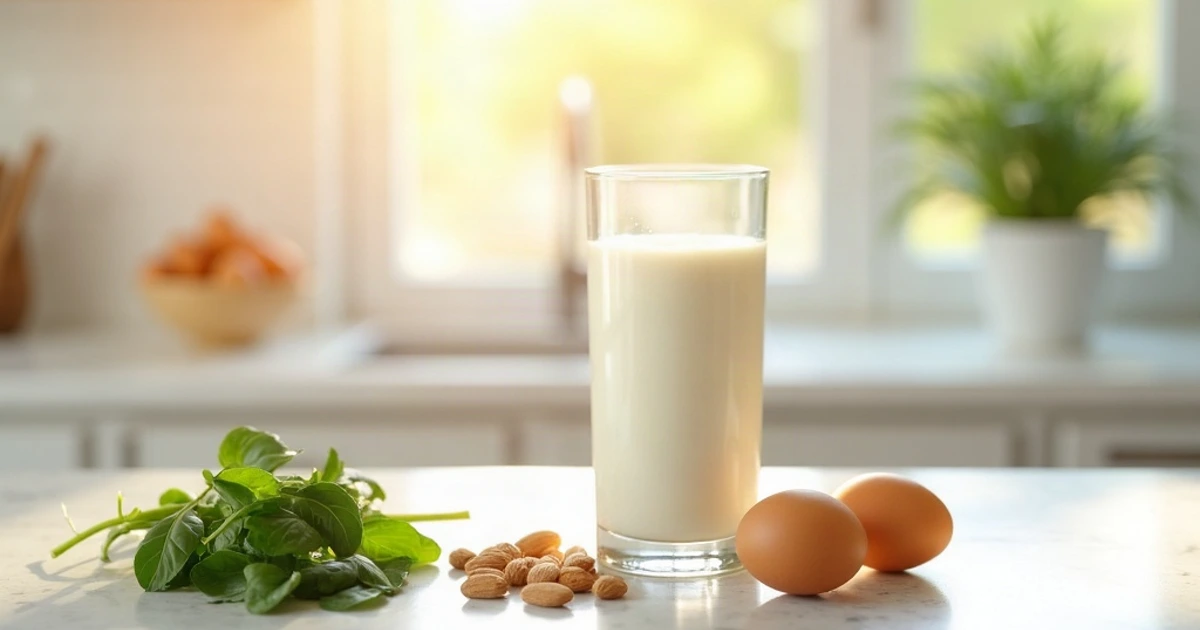
- Best sources – milk and dairy products, eggs, liver, almonds, spinach and mushrooms.
Table of Contents
What Is Vitamin B2 (Riboflavin) and Why Is It Important?
Vitamin B2 is a water-soluble vitamin belonging to the B vitamin family, and it is known by two names – vitamin B2 and riboflavin. The name riboflavin comes from the Latin word “flavus”, meaning yellow, because this vitamin has a characteristic yellow-orange colour and even glows under ultraviolet light.
In the body, vitamin B2 is converted into two active forms – flavin adenine dinucleotide (FAD) and flavin mononucleotide (FMN). These molecules act as coenzymes involved in numerous biochemical reactions related to energy production, cell growth and the metabolism of fats, proteins and carbohydrates.
Because vitamin B2 is water-soluble, the body does not store it in large amounts – the excess is excreted in urine, which this vitamin turns bright yellow. This means that riboflavin stores must be replenished regularly, and a deficiency can show up as skin changes, cracks at the corners of the mouth and general fatigue.
This vitamin is especially important for tissues that divide rapidly and use a lot of energy – the skin, mucous membranes, nerves and muscles. For this reason, vitamin B2 is an integral part of a balanced diet, and getting enough of it is particularly important for active people and athletes.
Vitamin B2 Helps Convert Food into Energy
One of the main functions of vitamin B2 is to help the body convert food into energy. Riboflavin is a component of the coenzymes FAD and FMN, and these coenzymes take part in the electron transport chain – the process by which cells produce adenosine triphosphate (ATP), the main energy source of cells.
Without enough vitamin B2, this energy production process slows down, which can lead to fatigue, reduced physical performance and poorer concentration. This is especially relevant for people who consume a lot of carbohydrates and fats – athletes, physically active individuals and those whose diet is dominated by fast food.
The European Food Safety Authority (EFSA) has confirmed that vitamin B2 contributes to normal energy-yielding metabolism and reduces feelings of tiredness and fatigue. This means that a sufficient amount of riboflavin helps maintain normal energy levels throughout the day.
It is worth noting that vitamin B2 works together with other B vitamins – they all take part in the energy production chain and complement each other. For this reason, complex B vitamin supplements such as VH.Nutra B complex are often a more convenient choice than riboflavin alone.
Vitamin B2 Supports Healthy Skin and Mucous Membranes
Vitamin B2 plays an important role in maintaining healthy skin and mucous membranes. Riboflavin helps cells divide and renew themselves, which is especially important for the skin, which constantly renews itself, as well as for the mucous membranes of the mouth, nose and intestines.
The European Food Safety Authority has confirmed that vitamin B2 contributes to the maintenance of normal skin and mucous membranes. A riboflavin deficiency can show up as cracks at the corners of the mouth, inflammation of the tongue, dry and flaky skin and skin rashes.
This vitamin is also important for protecting skin cells from oxidative stress – together with other antioxidants, riboflavin helps neutralise free radicals that damage skin cells and accelerate ageing.
If you notice that your skin has become dry and irritated, your lips are chapping, and sores appear at the corners of your mouth, it is worth considering a higher amount of vitamin B2 in your diet or in B vitamin supplements.
Vitamin B2 Supports Nervous System Function
Vitamin B2 contributes to normal nervous system function. Nerve cells use a lot of energy, and riboflavin takes part in the energy production processes on which the transmission of nerve impulses and brain activity depend.
The European Food Safety Authority has confirmed that vitamin B2 contributes to normal nervous system function and normal psychological function. This means that a sufficient amount of riboflavin helps maintain concentration, memory and a good mood.
Vitamin B2 is closely related to other B vitamins, such as vitamin B6 and vitamin B12, which are also important for the nervous system. Together these vitamins take part in the production of neurotransmitters and the protection of nerve cells.
For people who experience a lot of psychological stress, do a lot of mental work or have difficulty concentrating, a sufficient amount of vitamin B2 can help maintain nervous system balance.
Vitamin B2 Contributes to Normal Iron Metabolism
Vitamin B2 plays an important role in iron metabolism. Riboflavin helps the body absorb and use iron, which is especially important for the production of red blood cells and the transport of oxygen around the body.
The European Food Safety Authority has confirmed that vitamin B2 contributes to normal iron metabolism and the protection of red blood cells. A riboflavin deficiency can disrupt iron absorption and contribute to the development of anaemia.
This function of vitamin B2 is especially important for women, who lose more iron through menstruation, as well as for vegetarians and vegans, whose diets may be low in iron. Combining vitamin B2 with iron-rich food or supplements can improve iron absorption.
It is worth knowing that vitamin B2 and folic acid (vitamin B9) together take part in the production of red blood cells, so both of these vitamins are important for normal blood formation.
Vitamin B2 Supports Eye Health
Vitamin B2 is important for eye health. Riboflavin takes part in the regeneration of glutathione – one of the body’s most important antioxidants – and glutathione protects the lens of the eye from oxidative damage.
Scientific research shows that a sufficient amount of vitamin B2 can help reduce the risk of cataracts. Riboflavin is also important for corneal health and helps maintain normal vision.
According to the US National Institutes of Health (NIH), riboflavin takes part in the processes that protect eye tissues and is essential for maintaining normal vision. This vitamin is often included in eye health supplements together with lutein and zeaxanthin.
For people who spend a lot of time in front of screens or have eye health problems, a sufficient amount of vitamin B2 in the diet can be a simple and effective protective measure.
Vitamin B2 Acts as an Antioxidant
Vitamin B2 indirectly acts as an antioxidant. Riboflavin is essential for the activity of glutathione reductase – the enzyme that restores active glutathione. Glutathione is one of the body’s main antioxidants, protecting cells from free radical damage.
Free radicals are produced during normal metabolism, as well as under the influence of stress, pollution, ultraviolet radiation and an irregular diet. If the body cannot neutralise them in time, cells are damaged, which accelerates ageing and increases the risk of chronic disease.
A sufficient amount of vitamin B2 helps maintain glutathione stores and, with them, the body’s antioxidant protection. This function of vitamin B2 is important not only for the skin and eyes but also for the liver, which is the main detoxification organ.
Combining vitamin B2 with other antioxidants – vitamin C, vitamin E and selenium – can strengthen the body’s overall protection against oxidative stress.
Vitamin B2 May Help Reduce Migraine Frequency
Vitamin B2 is one of the few supplements with a scientific basis for migraine prevention. Research shows that high doses of riboflavin – around 400 milligrams per day – can reduce the frequency and duration of migraine attacks.
It is believed that this effect of vitamin B2 is related to improving mitochondrial function in brain cells. Migraine is linked to disturbances in mitochondrial energy production, and riboflavin, by taking part in energy production, can help restore normal brain cell function.
It is important to stress that such high doses of vitamin B2 are used only for therapeutic purposes and should be taken after consulting a doctor. Regular supplement doses are much lower and are intended for daily prevention.
If you suffer from frequent migraine attacks, it is worth discussing with your doctor the possibility of trying riboflavin therapy – it is a relatively inexpensive and well-tolerated option.
How to Take Vitamin B2: Dosage, Timing and Duration
The recommended daily amount of vitamin B2 for adult men is 1.3 milligrams and for women 1.1 milligrams per day. For pregnant women 1.4 milligrams is recommended, and for breastfeeding women 1.6 milligrams per day.
Vitamin B2 is best taken in the morning or during the day, together with food, because fats help absorb this vitamin better. Since riboflavin takes part in energy production, taking it in the morning helps maintain energy levels throughout the day and does not disturb sleep.
Vitamin B2 can be taken for a long time and regularly, because it does not accumulate in the body and the excess is excreted in urine. It is a good idea to take supplements every day at the same time to build a steady habit.
No upper safe limit for vitamin B2 has been established, because even very high doses are well tolerated. Doses of 400 milligrams are used in migraine prevention studies, but they should only be taken after consulting a doctor.
Vitamin B2 Side Effects and Safety
Vitamin B2 is one of the safest vitamins, and side effects are very rare. The most common and completely harmless effect is a bright yellow colour of the urine, which appears because of the riboflavin pigment being excreted in urine.
Very high doses of vitamin B2 can cause mild diarrhoea or increased urination, but these symptoms pass once the dose is reduced. Allergic reactions to riboflavin are extremely rare.
Despite its safety, it is worth consulting a doctor before starting to take any supplements, especially if you take medication or have chronic conditions. This is important for pregnant and breastfeeding women.
It is worth knowing that some medications – for example, certain antidepressants and anticonvulsants – can reduce the amount of vitamin B2 in the body, so taking them for a long time may require additional riboflavin.
Vitamin B2 in the Diet: Best Food Sources
Vitamin B2 is found in a variety of foods, but the richest sources are milk and dairy products, eggs, liver and other organ meats. A normal balanced diet usually provides a sufficient amount of riboflavin.
Here are the foods richest in vitamin B2:
- Milk and dairy products – one of the main sources of riboflavin, especially milk and yoghurt.
- Eggs – especially egg whites, which are rich in riboflavin.
- Liver and organ meats – a highly concentrated source of vitamin B2.
- Almonds – one of the best plant sources of riboflavin.
- Spinach and green leafy vegetables – a good plant source.
- Mushrooms – especially white button and portobello mushrooms.
It is worth remembering that vitamin B2 is sensitive to light – ultraviolet radiation destroys it. Therefore, milk and dairy products are best stored in dark, opaque packaging, and prolonged storage in direct light should be avoided.
Frequently Asked Questions about Vitamin B2
What is the difference between vitamin B2 and riboflavin? They are the same vitamin with two names. Riboflavin is the chemical name, while vitamin B2 is the more popular, everyday name. Both terms refer to the same substance.
What is the recommended daily amount of vitamin B2? For adult men the recommendation is 1.3 milligrams and for women 1.1 milligrams per day. This amount is usually obtained through a balanced diet.
Which foods contain the most vitamin B2? The most riboflavin is found in milk and dairy products, eggs, liver, almonds, spinach and mushrooms.
Can you get too much vitamin B2? It is almost impossible, because riboflavin is water-soluble and the excess is excreted in urine. No upper safe limit has been established for it.
Why does urine turn yellow after taking vitamin B2? The bright yellow colour of urine is a completely harmless effect caused by the riboflavin pigment being excreted in urine. It shows that the body has absorbed the vitamin.
Disclaimer: This information is for educational purposes only. Consult a doctor or pharmacist before starting to take supplements.
Related Articles
- Vitamin B1 (Thiamine): 7 Benefits for Energy, Nervous System and Heart
- Vitamin B6: 7 Benefits for Mood, Heart and Nervous System
- Vitamin B12: 7 Benefits for Energy, Brain, and Nervous System