Vitamin B1, also called thiamine, is a water-soluble B vitamin that the body cannot store in large amounts, so it must be obtained daily. This vitamin takes part in energy production, helps convert carbohydrates into fuel, supports the nervous system and the heart, and contributes to normal psychological function. In this article you will learn what benefits vitamin B1 can bring to your health, which foods are richest in it, how to take it safely and what to look for when choosing supplements.
Key Takeaways
- Vitamin B1 – a water-soluble vitamin essential for energy production and carbohydrate metabolism.
- Vitamin B1 helps maintain the nervous system, heart and normal psychological function.
- Vitamin B1 is not stored in the body, so it must be obtained regularly through food or supplements.
- Best sources – pork, whole grains, legumes and sunflower seeds.
Table of Contents
What Is Vitamin B1 (Thiamine) and Why Is It Important?
Vitamin B1 is a water-soluble vitamin that belongs to the B vitamin family and is known by two names – vitamin B1 and thiamine. It was the first B vitamin to be discovered, which is where the number “1” in its name comes from. In the body, thiamine is converted into its active form, thiamine pyrophosphate (TPP), which acts as a coenzyme in hundreds of enzymatic reactions.
Because vitamin B1 is water-soluble, the body does not store it in large amounts – the excess is excreted in urine. This means its reserves must be replenished daily through food or supplements. A thiamine deficiency can appear within just a few weeks as fatigue, irritability and concentration problems.
This vitamin is especially important for tissues that use a lot of energy – the brain, the heart, nerves and muscles. That is why vitamin B1 is often called the “energy vitamin” and is an essential part of a balanced diet and an active lifestyle.
Historically, thiamine deficiency was known as beriberi, a disease that spread in Asia when people began eating large amounts of polished white rice from which the thiamine-rich husk had been removed. Today severe deficiency is rare in developed countries, but a mild deficiency can occur in people who eat a lot of processed food or drink a lot of alcohol.
Vitamin B1 Helps Convert Food into Energy
One of the main functions of vitamin B1 is to help the body convert food into energy. Thiamine takes part in carbohydrate metabolism, where glucose is turned into the cellular fuel adenosine triphosphate (ATP). Without enough vitamin B1, this process slows down and energy production becomes less efficient.
This is especially relevant for people who eat a lot of carbohydrates – athletes, physically active people and those whose diet is dominated by grains and sugar. The more carbohydrates you consume, the more thiamine the body needs to convert them properly into energy.
The European Food Safety Authority (EFSA) has confirmed that vitamin B1 contributes to normal energy-yielding metabolism. This means that an adequate amount of thiamine helps maintain normal energy levels and reduces feelings of tiredness and exhaustion.
It is worth noting that vitamin B1 works together with other B vitamins – they all take part in the energy production chain and complement each other. For this reason, a complex B vitamin supplement is often a better choice than thiamine alone.
If you notice that you get tired quickly, struggle to concentrate or feel a constant lack of energy, it is worth paying attention to your diet – one possible cause may be an insufficient amount of B vitamins, including thiamine. A balanced diet or a complex supplement often helps restore energy levels.
Vitamin B1 Supports the Nervous System
Vitamin B1 plays an important role in the functioning of the nervous system. Thiamine is needed for the transmission of nerve impulses and for protecting nerve cell membranes. The nervous system uses a lot of energy, and thiamine helps ensure that this energy never runs out.
Thiamine also takes part in the production of acetylcholine – an important neurotransmitter that is essential for muscle contraction, memory and attention. When vitamin B1 is lacking, the nervous system is the first to feel the consequences: numbness, tingling in the limbs, weakness and coordination problems appear.
EFSA has confirmed that vitamin B1 contributes to the normal functioning of the nervous system. Regular thiamine intake helps maintain healthy nerve function, and you can read about other vitamins that are important for the nervous system in the article about B vitamins.
Vitamin B1 Supports Heart Health
The heart is one of the organs that consumes the most energy, so it is especially dependent on an adequate amount of vitamin B1. Thiamine helps the heart muscle produce energy efficiently and maintain a normal heart contraction rhythm.
Research shows that thiamine deficiency can affect heart function – in some cases it is linked to heart failure, especially in people who take diuretics or suffer from chronic conditions. Patients with heart failure often have lower thiamine reserves.
EFSA has confirmed that vitamin B1 contributes to normal heart function. An adequate amount of thiamine helps the heart work efficiently and supports healthy heart and blood vessel function.
In addition, thiamine helps the body produce the energy needed for the heart muscle to work continuously without breaks. Unlike skeletal muscles, the heart cannot rest, so a constant energy supply is vital for it, and thiamine plays a key role here.
Vitamin B1 Supports Brain Function and Concentration
The brain uses about a fifth of the body’s total energy, so it needs a constant supply of thiamine. Vitamin B1 helps ensure that brain cells receive enough energy and perform their functions properly.
Thiamine deficiency can show up as poor memory, confusion, lack of concentration and mood swings. Severe and long-term deficiency can cause Wernicke encephalopathy – a condition that damages the areas of the brain responsible for coordination and memory. Read more about a vitamin that is important for the brain and energy in the article about vitamin B12.
EFSA has confirmed that vitamin B1 contributes to normal psychological function. This means that an adequate amount of thiamine helps maintain clear thinking, better concentration and a more stable mood.
In older people, thiamine absorption can be less efficient, so they are more likely to experience a mild deficiency. Research links adequate vitamin B1 levels with better cognitive function in older age, which is why thiamine is important for keeping a clear mind longer.
Vitamin B1 Supports Muscle Function
Muscles are the largest energy consumer in the body, so they need an adequate amount of vitamin B1. Thiamine helps muscles use glucose efficiently as an energy source, which is especially important during physical activity.
During exercise and intense work, the need for thiamine increases because the body burns more carbohydrates. An adequate amount of vitamin B1 helps maintain muscle endurance, reduces fatigue and helps you recover faster after a workout.
Thiamine deficiency can show up as muscle weakness, cramps and rapid fatigue. That is why active people and athletes should pay special attention to getting enough vitamin B1.
Although vitamin B1 does not directly increase muscle mass, it ensures that carbohydrates are efficiently converted into energy during training. This helps athletes train harder and longer, and together with other B vitamins it contributes to better recovery.
Vitamin B1 Contributes to Normal Psychological Function
Vitamin B1 takes part in the production of neurotransmitters – the chemical substances that carry signals in the brain. An adequate amount of thiamine helps maintain a stable mood, calmness and well-being.
Research shows that thiamine deficiency can be linked to irritability, anxiety and poor emotional well-being. People whose diet lacks thiamine more often complain of fatigue, apathy and reduced stress tolerance.
Because vitamin B1 is water-soluble and is eliminated quickly, its need increases during times of stress. Regular thiamine intake helps the body cope better with everyday stress and supports emotional balance.
Some researchers call thiamine the “mood vitamin” because it is essential for the synthesis of serotonin and other neurotransmitters linked to the feeling of well-being. Although vitamin B1 is not a medicine for depression, an adequate amount helps maintain a normal emotional state.
Vitamin B1 Supports Carbohydrate Metabolism
Vitamin B1 is essential for carbohydrate metabolism – it helps the body break down carbohydrates into glucose, which cells use as an energy source. Without thiamine this process would be inefficient and part of the energy would be lost.
This is especially important for people who eat a lot of grains, fruit and sugary products. The larger the amount of carbohydrates in the diet, the more vitamin B1 the body needs to process these carbohydrates properly.
Thiamine also takes part in the pentose phosphate cycle – a process in which the building blocks of DNA and RNA are produced. That is why vitamin B1 is important not only for energy but also for cell division and renewal.
Alcohol consumption especially increases the need for thiamine, because alcohol interferes with thiamine absorption and speeds up its elimination. Therefore people who regularly drink alcohol should pay special attention to getting enough vitamin B1 in their diet.
How to Take Vitamin B1: Dosage, Timing and Duration
The recommended daily allowance of vitamin B1 for adult men is 1.2 milligrams and for women 1.1 milligrams per day, according to the National Institutes of Health (NIH). For pregnant and breastfeeding women this amount is slightly higher. This amount is usually obtained through a balanced diet, but in supplements thiamine is often found in doses of 1.4–100 milligrams.
Vitamin B1 is best taken with food, preferably in the morning or in the first half of the day, because it contributes to energy production. Since thiamine is water-soluble and is not stored in the body, regular daily intake is more important than a single large dose.
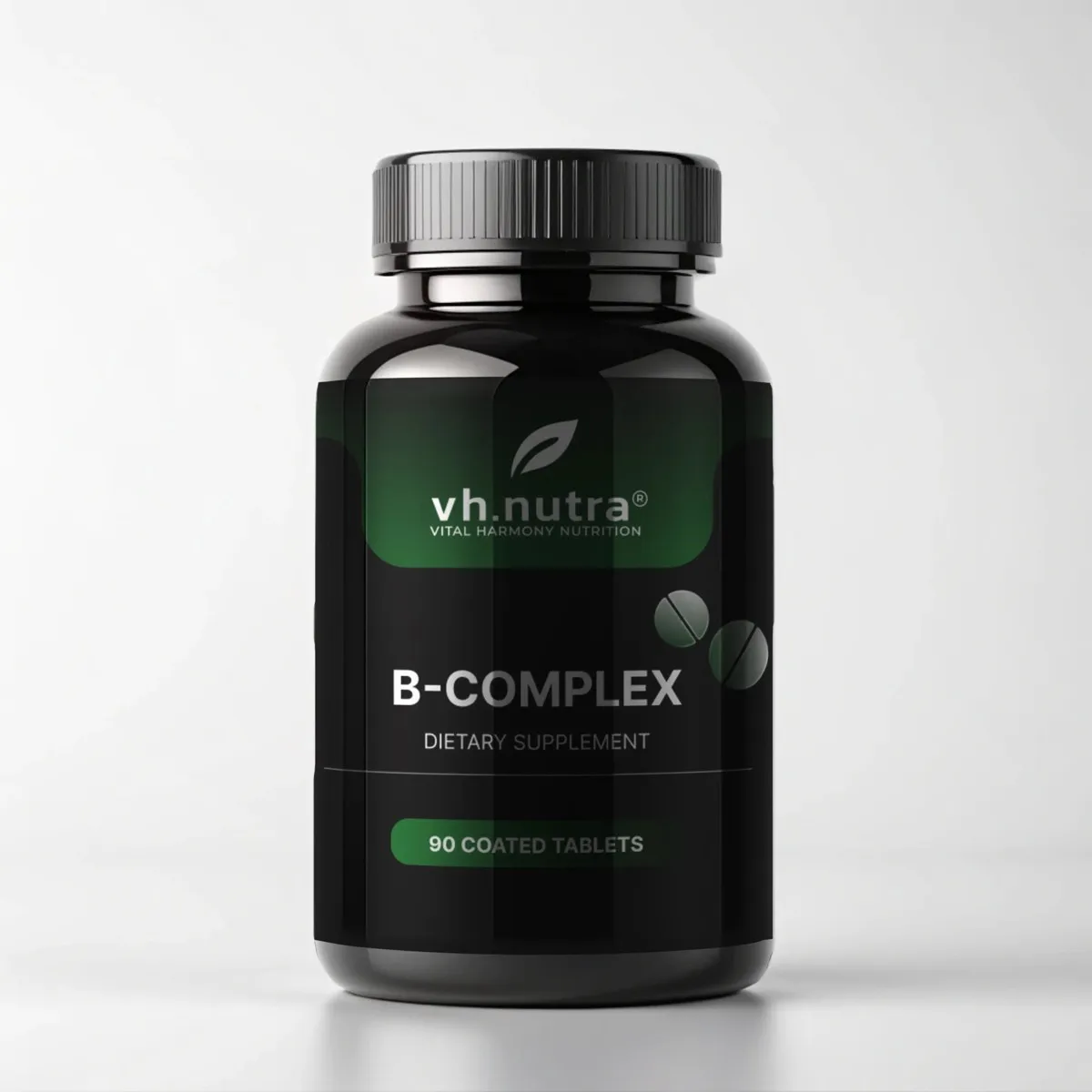
The duration of use depends on your goal – for maintenance, continuous moderate intake is enough. If you want to get vitamin B1 together with other B vitamins, a convenient choice is VH.Nutra B complex, in which thiamine is combined with eight other B vitamins and works synergistically.
Vitamin B1 Side Effects and Safety
Vitamin B1 is considered very safe because it is water-soluble and the excess is excreted in urine. No upper safe limit has been established for it, and side effects occur extremely rarely, usually only at very high doses.
In rare cases, very high doses of thiamine can cause stomach discomfort or an allergic reaction, which most often occurs with thiamine injections rather than oral intake. At normal supplement doses, side effects practically do not occur.
Despite its safety, it is worth consulting a doctor before starting any supplement, especially if you take medication or have chronic conditions. This is important for pregnant and breastfeeding women and for people with kidney or liver disease.
It is also worth knowing that thiamine can interact with some medications, such as diuretics, which speed up the elimination of thiamine in urine. If you take diuretics for a long time, your doctor may recommend monitoring vitamin B1 levels in the body.
Vitamin B1 in Food: Best Dietary Sources
Vitamin B1 is found in a variety of foods, but its richest sources are pork, whole grains, legumes and seeds. A normal balanced diet usually provides an adequate amount of thiamine.
Here are the foods richest in vitamin B1:
- Pork – one of the richest sources of thiamine, especially lean cuts.
- Whole grains – oats, brown rice and whole-grain bread.
- Legumes – lentils, beans and peas.
- Sunflower seeds and nuts – especially sunflower seeds and macadamia nuts.
- Brewer’s yeast – an extremely concentrated source of thiamine.
- Fish and seafood – tuna, salmon and other fish.
It is worth remembering that thiamine is sensitive to heat and water, so long boiling can destroy part of the vitamin B1 in food. To preserve more thiamine, it is better to cook vegetables and grains for a shorter time, steam them or stew them with less water.
Frequently Asked Questions about Vitamin B1
What is the difference between vitamin B1 and thiamine? They are the same vitamin with two names. Thiamine is the chemical name, while vitamin B1 is the more popular, everyday name. Both terms refer to the same substance.
What is the recommended daily allowance of vitamin B1? For adult men the recommendation is 1.2 milligrams and for women 1.1 milligrams per day. This amount is usually obtained through a balanced diet.
Which foods contain the most vitamin B1? The most thiamine is found in pork, whole grains, legumes, sunflower seeds and brewer’s yeast.
Can you get too much vitamin B1? It is almost impossible, because thiamine is water-soluble and the excess is excreted in urine. No upper safe limit has been established for it.
Does vitamin B1 help with fatigue? Vitamin B1 contributes to normal energy-yielding metabolism and reduces feelings of tiredness. If fatigue is caused by thiamine deficiency, supplements can help, but they do not remove other causes of fatigue.
Disclaimer: This information is for educational purposes only. Before starting to take supplements, consult your doctor or pharmacist.
Related Articles
- Vitamin B6: 7 Benefits for Mood, Heart and Nervous System
- Vitamin B12: 7 Benefits for Energy, Brain and Nervous System
- B Vitamins: 7 Benefits for Energy, Nervous System and Health