Tryptophan is an essential amino acid that the body cannot produce on its own, so it must be obtained from food or high-quality supplements. This amino acid is the main precursor of serotonin, and serotonin is often called the “happiness hormone” because it directly affects mood, sleep and emotional well-being. If you feel constant tension, sleep poorly or find it hard to relax, a tryptophan supplement can become a valuable helper in your daily routine.
Key Takeaways
- Tryptophan is an essential amino acid and the main precursor of serotonin, directly affecting mood and sleep.
- Research shows that taking L-tryptophan can shorten the time it takes to fall asleep and improve sleep quality.
- The recommended dose is 500–2000 mg per day, best taken in the evening before bed.
- The most valued effect of this amino acid is a more stable mood, deeper sleep and less tension.
Table of Contents
What Is Tryptophan?
Tryptophan is one of nine essential amino acids — this means the human body cannot synthesize it on its own. This amino acid must be obtained from outside sources, and the best natural sources are turkey, chicken, eggs, dairy products, oats, bananas and nuts. However, it is not always possible to get enough tryptophan from food every day, so many people choose concentrated supplements.
In the body, L-tryptophan plays a very important role — it is precisely from it that serotonin is produced, which can later turn into melatonin. This means that this amino acid participates in the two most important processes that govern mood and sleep. According to international scientific reviews, tryptophan metabolism disorders are linked to poorer emotional well-being and sleep quality, so a sufficient amount of this amino acid is essential for good well-being.
Besides serotonin production, tryptophan performs other important functions. This amino acid participates in protein synthesis, contributes to the production of niacin (vitamin B3) and helps maintain normal nervous system function. Therefore, a tryptophan deficiency can manifest not only as low mood but also as general fatigue, reduced performance and weaker resistance to stress.
Tryptophan is often compared with 5-HTP, but these are somewhat different substances. 5-HTP is an intermediate product between tryptophan and serotonin, so it acts faster but can affect the digestive system more. Tryptophan is a gentler and more natural choice for long-term use, because the body processes it gradually according to its own needs.
1. Supports Serotonin Production
Serotonin is a neurotransmitter often called the “happiness hormone,” responsible for good mood, emotional stability and a sense of satisfaction. Tryptophan is the direct precursor of this hormone, so without a sufficient amount of the amino acid the body simply cannot produce the required amount of serotonin. It is important to understand here that this amino acid not only supports mood but also helps prevent mood swings throughout the day.
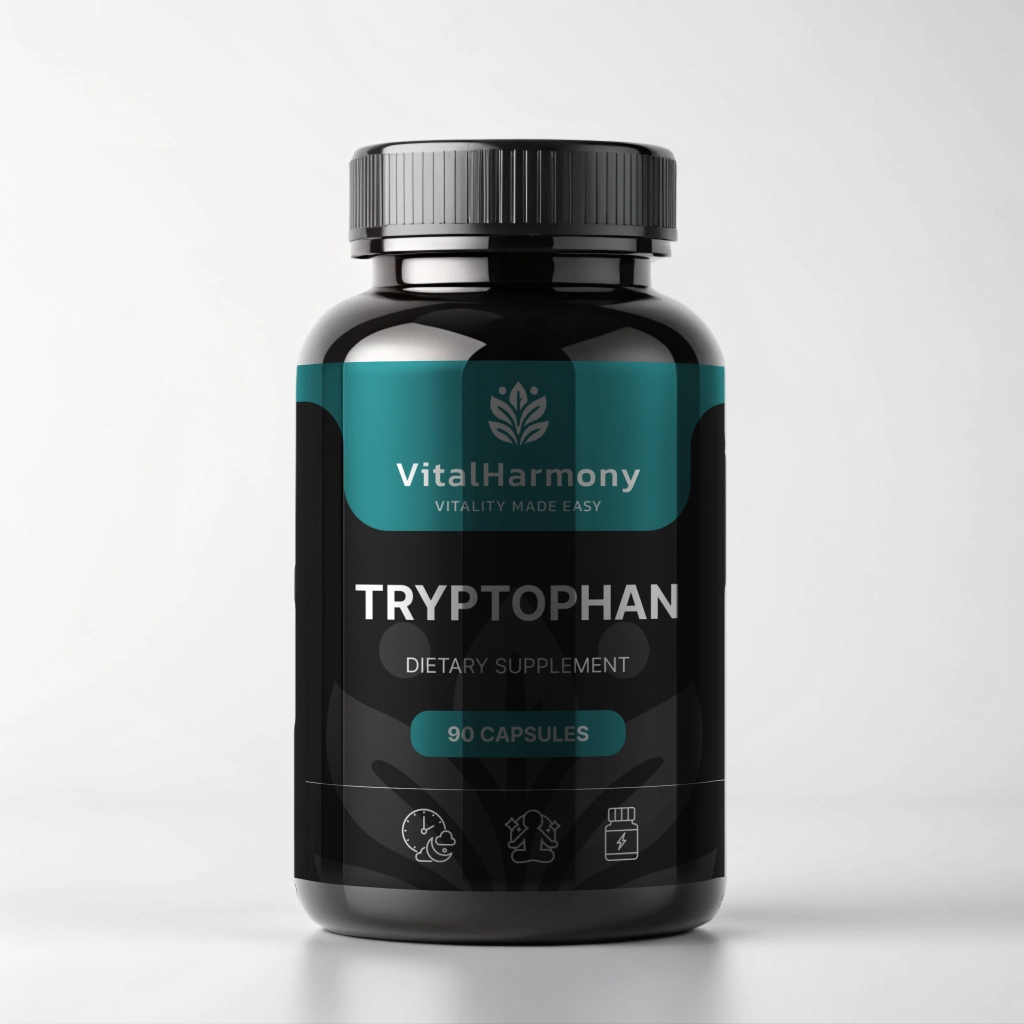
A high-quality tryptophan supplement, such as VitalHarmony Tryptophan, ensures a convenient and consistent amount of this amino acid in every capsule. It is especially useful for those whose diet lacks protein-rich products or who feel constant fatigue and low mood for no apparent reason. Taken regularly, tryptophan helps maintain a stable serotonin level, which is directly reflected in emotional well-being.
2. Improves Sleep Quality
One of the most valued properties of tryptophan is its ability to improve sleep. This amino acid turns into serotonin, and serotonin is later converted into melatonin — the hormone that regulates the sleep-wake cycle. A sufficient amount of L-tryptophan helps the body naturally prepare for sleep and fall asleep faster, without requiring artificial stimulants.
Research shows that taking tryptophan before bed can shorten the time it takes to fall asleep and increase sleep duration and depth. In addition, this amino acid does not cause dependence, making it a safer long-term alternative to synthetic sleeping pills. If you struggle with difficulty falling asleep or frequent night awakenings, it is worth trying a tryptophan supplement in the evening, about an hour before bed.
It is also important that tryptophan helps not only fall asleep but also sleep better throughout the night. Deeper and higher-quality sleep allows the body to recover fully, which in the morning shows up as better mood, more energy and a clearer mind. That is why this amino acid is especially valued by those who suffer from constant sleep deprivation and want a natural solution.
3. Reduces Stress and Anxiety
Serotonin is involved not only in regulating mood but also stress responses. When tryptophan is lacking, serotonin levels can drop, which often manifests as increased anxiety, irritability and tension that is harder to manage. Therefore, a sufficient amount of this amino acid helps you stay calm even on tense days, when the environment demands constant focus.
L-tryptophan can be especially useful for people who experience chronic stress at work or train intensively. This amino acid helps the nervous system recover and better withstand psychological load, which reduces the risk of burnout. Together with a healthy diet and sufficient rest, a tryptophan supplement can become a natural aid in the daily fight against tension.
4. Supports Healthy Appetite Control
Serotonin also regulates appetite and the feeling of satiety, so sufficient tryptophan can help you better control eating habits. When serotonin levels are optimal, the urge to snack out of boredom or stress decreases, and the satiety signal reaches the brain faster and becomes clearer.
It is important to emphasize that tryptophan is not a weight-loss product, but this amino acid can be a useful aid for those who want to maintain a stable appetite and avoid emotional eating. By combining a tryptophan supplement with a balanced diet and regular physical activity, it becomes easier to maintain healthy habits over a longer period without constant temptations.
5. Supports Memory and Cognitive Function
Serotonin affects not only emotions but also cognitive functions, including memory, attention and learning ability. A sufficient amount of tryptophan ensures that the brain has the required amount of serotonin to support these processes. Therefore, this amino acid can contribute to better concentration and mental clarity, especially on a day full of tasks.
In addition, L-tryptophan indirectly contributes to brain health through serotonin and melatonin metabolism, which is important not only for alertness but also for the recovery processes that take place at night. Quality sleep and a stable mood together form the basis for better memory and mental performance, so a tryptophan supplement can be valuable for those who do mental work.
6. Contributes to Niacin (Vitamin B3) Production
Few people know that tryptophan can be converted in the body into niacin, also called vitamin B3. This vitamin is essential for energy metabolism, nervous system function and skin health. Although niacin can also be obtained directly from food, tryptophan is an important additional source, especially when the diet is not varied.
Tryptophan’s ability to turn into niacin once again confirms how versatile this amino acid is. L-tryptophan participates not only in serotonin production but also in the production of other vital substances, so a sufficient amount of it contributes to maintaining overall energy, healthy skin and good well-being throughout the day.
7. Supports Emotional Balance and Mood
All the benefits of tryptophan come together into one essential result — a more stable emotional balance. When serotonin levels are sufficient, it is easier to maintain calm, a positive attitude and the ability to cope with daily challenges. This amino acid helps prevent sudden mood swings and supports overall psychological resilience even during more difficult periods.
A tryptophan supplement taken regularly can become a reliable part of your daily emotional well-being routine. Together with a healthy lifestyle, this amino acid helps maintain a good mood even when the pace of life becomes intense and stress is a constant companion. It is a long-term investment in your psychological well-being and overall quality of life.
How to Take Tryptophan?
Recommended dose: for adults, 500–2000 mg of tryptophan per day is usually recommended. It is best to start with 500 mg and gradually increase the dose if needed, while monitoring your body’s reaction and changes in well-being.
When to take: tryptophan is best taken in the evening, 30–60 minutes before bedtime, so that the body has time to convert it into serotonin and melatonin. The amino acid is better absorbed when taken with a small amount of carbohydrate-rich food, such as a banana or oatmeal.
Duration of use: the effect is not immediate — the first results are usually felt after 2–4 weeks of regular use. For sleep and mood support, the course can be continued for several months. The maximum safe dose is up to 3000 mg per day, but higher doses should only be taken after consulting a doctor.
A tryptophan supplement is best suited for people who feel constant tension, have difficulty falling asleep or notice frequent mood swings. It is also useful for those whose diet lacks protein-rich products or who follow a vegetarian or vegan diet, because plant-based sources may contain noticeably less of this amino acid.
StayStrong offers VitalHarmony Tryptophan — a convenient capsule format in which tryptophan is provided in a consistent concentration. This is a simple way to ensure you get enough of this important amino acid every day without complicated meal planning.
Possible Side Effects
Tryptophan is considered a safe supplement and most people tolerate it well. However, some may experience mild nausea, headache, dizziness or increased drowsiness, especially when taking higher doses. These symptoms are usually short-lived and disappear on their own once the body gets used to the supplement.
The most important precaution is not to take tryptophan together with antidepressants (SSRI or MAOI), as this can lead to an excessive amount of serotonin in the body. Pregnant and breastfeeding women, as well as people with liver or kidney disease, should consult a doctor before use. This amino acid is also not recommended to be combined with alcohol, as alcohol can increase drowsiness.
When starting a tryptophan supplement, it is worth beginning with the lowest recommended dose and monitoring how you feel. For most people, side effects do not occur at all, and if mild symptoms do appear, they usually disappear within a few days as the body adapts to the new amino acid routine.
Tryptophan and Melatonin — What You Should Know?
Tryptophan and melatonin are closely related, because it is precisely from tryptophan that the body produces serotonin, and later melatonin. This relationship means that a tryptophan supplement can naturally increase the amount of melatonin in the body, which is especially beneficial for improving sleep without additional synthetic means.
However, these are different supplements with different effects. Melatonin acts faster and directly signals the brain that it is time to sleep, while tryptophan acts gradually, supplying the body with raw material. Read more about the benefits of melatonin in the article Melatonin: 7 Benefits for Sleep, Health and Relaxation, and about natural calming — GABA: 7 Benefits for Calm, Sleep and Emotional Health.
If you want to try both supplements together, it is best to start with tryptophan and observe the results for a few weeks, adding melatonin only when sleep is still not good enough. This gradual approach helps you better understand what works best for your body and avoid unnecessary supplement overload.
Frequently Asked Questions
Does tryptophan help you fall asleep?
Yes, tryptophan is a precursor of melatonin, so taking it in the evening can help you fall asleep faster and improve sleep quality. The effect is not immediate, so the best results are achieved by taking it regularly for several weeks.
Which foods contain the most tryptophan?
The most tryptophan is found in turkey, chicken, eggs, dairy products, oats, bananas and nuts. However, to get a consistent and sufficient dose, it is often more convenient to choose a concentrated supplement, such as VitalHarmony Tryptophan.
Is tryptophan suitable for athletes?
Yes, tryptophan can be useful for athletes, because intense training increases the need for amino acids and can deplete serotonin reserves. This amino acid helps the nervous system recover and improves sleep quality, which is important for muscle recovery and overall well-being.
Can tryptophan be taken long-term?
Tryptophan does not cause dependence, so it can be taken for a longer period. However, it is recommended to take breaks every few months and observe whether the body still needs an additional amount of this amino acid. As with any supplement, it is worth periodically consulting a specialist.
Does tryptophan interact with other supplements?
Generally, tryptophan combines well with most vitamins and minerals, but it should not be taken together with other serotonin-raising supplements, such as 5-HTP or St. John’s wort, because this can lead to an excessive amount of serotonin. It is always worth leaving a gap between different supplements and consulting a specialist if in doubt.
Disclaimer: This information is for educational purposes only and cannot replace professional medical advice. Before starting any dietary supplements, always consult a doctor or pharmacist.