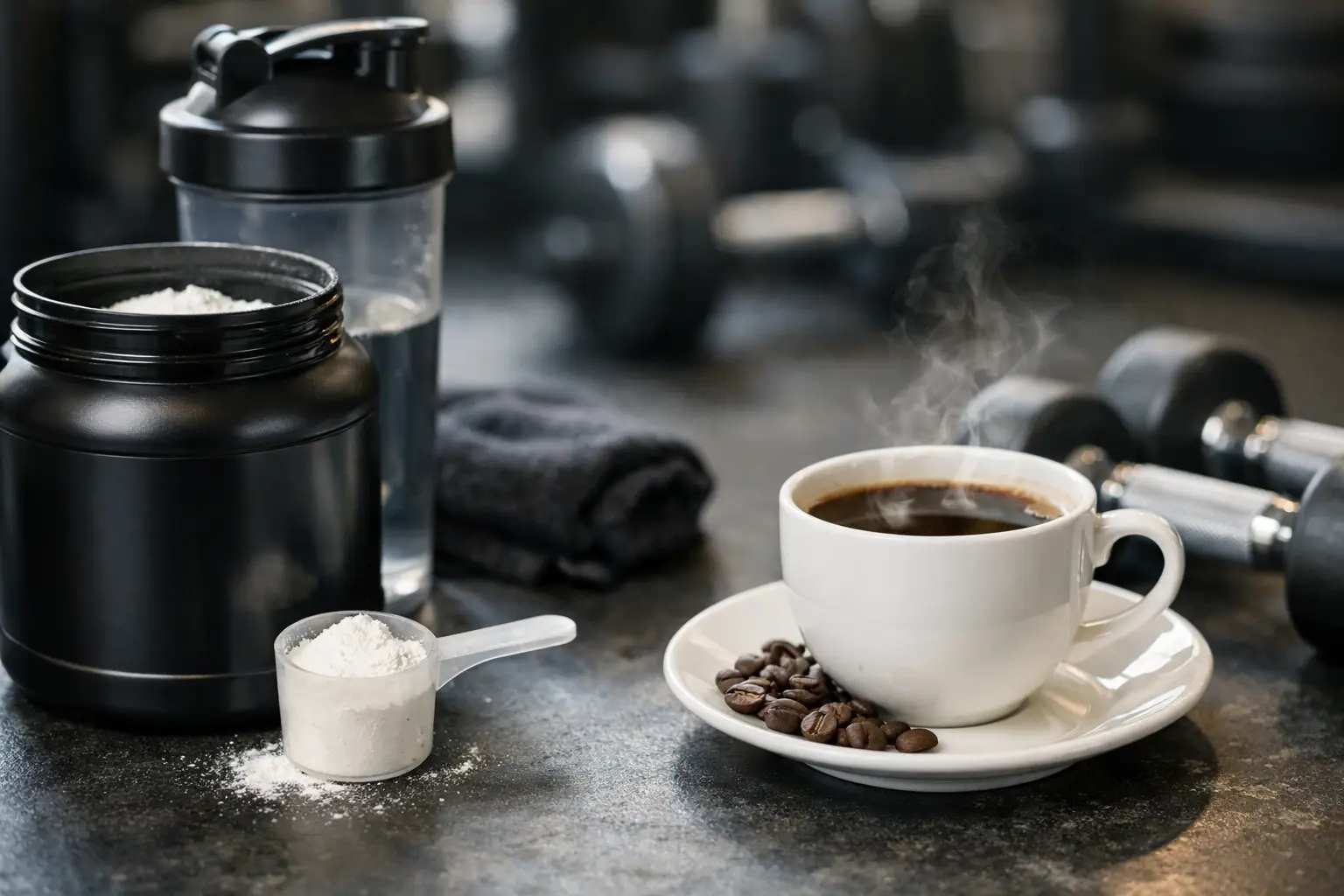
Sometimes everything is decided 20 minutes before the gym — do you grab a cup of coffee or choose a pre-workout? If you’re asking yourself, pre-workout or coffee before a workout, the answer isn’t the same for everyone. It all depends on your goal, caffeine sensitivity, type of training, and even what time of day you train.
For some, coffee is a simple and completely sufficient choice. Others feel that caffeine alone isn’t enough — they want stronger focus, better “ignition,” and less fatigue during the workout. That’s why it’s worth not guessing, but clearly understanding how these two options differ.
Pre-workout or coffee before a workout — how are they different?
Coffee is usually a single-active-direction choice. Its main active substance is caffeine, which can help you feel more alert, more active, and more focused. If you feel drowsiness or lack of energy before a workout, coffee often delivers a quick and clear effect.
A pre-workout supplement typically works more broadly. It often contains not only caffeine but also other substances designed to improve energy, concentration, endurance, or the workout sensation. The formula may include, for example, citrulline, beta-alanine, taurine, tyrosine, or B vitamins. In other words, coffee is usually a simple stimulant, while a pre-workout is more of a targeted workout support blend.
This doesn’t mean pre-workout is always better. It means it’s more often designed for a specific purpose, while coffee is a more universal, simpler, and often cheaper option.
When is coffee before a workout a good choice?
If you train recreationally, work out 2–4 times a week, and your goal is simply to have more energy, coffee may be all you need. It’s convenient, easily accessible, and familiar to most. You don’t need to spend time figuring out formulas, servings, or additional ingredients.
Coffee is especially suitable when your workouts aren’t very long or very intense. For example, if you’re heading to a strength session after work, a short cardio session in the morning, or just want to “wake up” before moving, coffee is often enough.
Another plus of coffee is clarity. You sense fairly well how your body reacts to it. If you drink coffee daily, you likely already know whether it gives you a pleasant tone or, on the contrary, causes anxiety, jitters, or stomach irritation.
However, there is a downside too. Coffee’s effect isn’t always stable. One day the same cup works great, the next — almost nothing. Much depends on the bean variety, brewing method, cup size, and whether you’ve eaten.
When is it worth choosing a pre-workout?
A pre-workout more often pays off when you go into a workout with a clear goal and want a more predictable effect. If you’re aiming for better focus, greater work capacity in the gym, a better “pump” sensation, or simply want the workout start to be faster and sharper, a pre-workout can be more useful than coffee.
It’s often chosen before heavier strength sessions, high-volume leg days, longer sessions, or when you have to train after a long workday. In such situations, caffeine alone sometimes isn’t enough, because you want not just to wake up but to better maintain pace throughout the entire workout.
An important advantage is dosing. In a quality pre-workout supplement, you can usually clearly see how much of each active ingredient it contains. This lets you more accurately assess how much caffeine you’re getting and how your body reacts to it. With coffee, that’s harder to do.
The flip side — not everyone needs such a strong solution. If the workout is lighter and your daily energy is normal, a strong pre-workout can simply be too much. Especially if you’re sensitive to caffeine.
Caffeine isn’t the only criterion
A common mistake is comparing coffee and pre-workout solely by which one “picks you up more.” In reality, what matters more isn’t just the energy burst, but the quality of the workout you do afterward.
For some people, coffee delivers a clean, calm alertness. Others feel a sharp spike followed by an equally sharp crash. A pre-workout sometimes helps you prepare for the workout more evenly thanks to the additional ingredients, but in some cases it can be too intense — causing tingling, anxiety, heart palpitations, or overstimulation.
That’s why it’s worth observing not just whether it “works,” but how you feel afterward. Do you perform exercises better? Do you maintain focus? Does technique quality not drop? After an evening workout, can you still fall asleep normally? That’s exactly where the real difference emerges.
Pre-workout or coffee before a workout in the morning and evening
A morning workout often forgives more. If you train early, both coffee and pre-workout can work better because you have more time to “walk it off” by evening. In the morning, people more often choose coffee for simplicity — one cup and you’re ready to move.
In the evening, the situation is more sensitive. If you’re sensitive to caffeine, even an afternoon coffee can worsen sleep, and a stronger pre-workout’s effect may be felt even longer. And when sleep suffers, eventually so does progress, recovery, and motivation.
If you train in the evening, a lower caffeine dose or a stimulant-free option altogether may suit you better. What matters here isn’t maximum effect for one workout, but making your routine sustainable week after week.
How to figure out what’s best for you specifically?
The best way is to assess your real situation, not what others choose. If you’re just starting out, it’s usually logical to begin with the simpler option. Coffee lets you understand your caffeine tolerance and see whether you even need extra help before a workout.
If you already have experience and feel that coffee no longer delivers the effect you expect, then it’s worth looking into a pre-workout. Especially if your training goal is performance, concentration, and clearer preparation for work in the gym.
A few practical questions help. Do you often come to the workout tired? Are your workouts long and hard? Do you want just more alertness, or also a better workout sensation? Do you feel good after caffeine? The answers usually point the direction fairly clearly.
The most common mistakes when choosing
One of the most common mistakes is thinking that more is always better. A higher caffeine dose doesn’t necessarily mean a better workout. Sometimes it just worsens well-being, disrupts breathing, raises anxiety, and interferes with focusing on technique.
Another mistake is drinking coffee and taking a pre-workout at the same time without accounting for total caffeine intake. This combination seems logical to some, but in reality it can be too strong. Especially if you’ve already had energy drinks or several cups of coffee that same day.
Yet another mistake is ignoring nutrition and rest. Neither coffee nor pre-workout will replace lack of sleep, chaotic eating, or excessive load. They can help at a specific moment, but they won’t work miracles if the basics are weak.
What to choose if you want progress without extremes?
If you want a simple answer, it would sound like this: coffee works when you need a light and familiar boost, while a pre-workout is for when you need more targeted training support. Neither option is automatically right for everyone.
For some people, the best solution isn’t “either-or” but smart use based on the situation. For lighter or morning workouts, coffee is enough, and for heavier strength sessions, a pre-workout is chosen. This approach lets you maintain balance and avoid overloading the body unnecessarily.
If you’re choosing supplements, it’s worth paying attention to the formula, the caffeine amount per serving, and your overall daily routine. In the StayStrong community, it’s always worth looking not at the loudest label, but at what actually fits your goal, tolerance, and rhythm.
Most importantly — don’t chase the strongest sensation. The best choice is the one after which you complete the workout with quality, recover normally, and can move forward again the next day. A stronger tomorrow most often starts with a smarter decision today.