
Contents
In short:
- Phosphorus is the second most abundant mineral in the body – it makes up about 1% of body mass, and as much as 85% of phosphorus is found in bones and tooth enamel.
- The best-studied benefits of phosphorus relate to bone strength, energy production and cell membrane structure.
- The recommended daily intake of phosphorus for adults is 700 mg, and the safe upper limit is 4000 mg per day.
- The richest natural sources of phosphorus are dairy products, meat, fish, eggs, nuts, seeds and legumes.
Phosphorus is the second most abundant mineral in the human body, yet it is discussed far less often than calcium or magnesium. This mineral is involved in almost every vital function in the body: from bone strength to energy production in cells and the structure of genetic material. Although phosphorus deficiency is quite rare in developed countries, the role of phosphorus in health is so broad that it is worth knowing how this mineral works and where to get it naturally. In this article we will review the seven most important benefits of phosphorus, explain what dose of phosphorus is recommended, what side effects are possible, and which foods contain the most phosphorus.
Key takeaways
- Phosphorus, together with calcium, forms hydroxyapatite – the main mineral component of bones and teeth, so it directly contributes to their strength.
- Phosphorus is part of the ATP molecule – without phosphorus, cells could not store and transfer the energy needed by muscles and nerves.
- Although phosphorus deficiency is rare, too much phosphorus from processed food may be more harmful than a shortage.
What is phosphorus?
Phosphorus is a chemical element and a macromineral that is found in the human body in greater quantities than any other mineral except calcium. The adult body contains about 600–700 grams of phosphorus, and as much as 85% of this amount is stored in bones and tooth enamel. The remaining phosphorus is distributed in muscles, internal organs and body fluids, where this mineral performs numerous regulatory functions.
Unlike trace elements, which the body needs only in milligram amounts, phosphorus is classified as a macromineral – it is needed in fairly large quantities. Phosphorus almost never works alone in the body: it constantly cooperates with calcium, vitamin D and magnesium, and the balance of these substances is one of the most important conditions for bone and metabolic health.
In the body, phosphorus exists mainly in the form of phosphate – the form of phosphorus that is easiest to use in biochemical processes. It is phosphates that are involved in energy storage, the composition of cell membranes and the storage of genetic information, which is why phosphorus is considered one of the most versatile minerals in the entire body.
1. Supporting bone and tooth strength
The largest share of phosphorus in the body is found in bones and tooth enamel, where phosphorus together with calcium forms hydroxyapatite – a hard mineral substance that gives bones and teeth their strength and resistance. Without a sufficient amount of phosphorus, calcium cannot properly settle into bone tissue, so bones become more fragile and weaker.
The ratio of phosphorus to calcium is very important here: these two minerals must be in balance, because an excess of one can interfere with the absorption of the other. This is why phosphorus is usually assessed together with calcium and vitamin D – this trio is the foundation of bone health. A properly balanced amount of phosphorus, calcium and vitamin D helps keep bones strong throughout life.
2. Supporting energy production (ATP)
Phosphorus is an inseparable part of the adenosine triphosphate molecule, or ATP for short. ATP is the main energy currency of cells: when a cell needs energy, ATP breaks down and releases a phosphate group, and it is precisely in this process that energy is released for muscle contraction, nerve signals and all other activities of the body.
Without phosphorus, the ATP molecule simply could not exist, which would mean that cells would have nothing from which to produce energy. This function of phosphorus explains why phosphorus deficiency first manifests as fatigue, muscle weakness and reduced endurance – the body simply lacks the substance needed to store and transfer energy. Phosphorus works together with other substances involved in energy metabolism, which is why it is important for daily well-being and physical performance.
3. Supporting cell membrane structure
The outer wall of every body cell – the cell membrane – is made of phospholipids, and the name of these molecules already contains the word “phospho”. Phospholipids form a double layer in which phosphate groups make up the “head” of the membrane and fatty acids make up the “tail”. This structure allows the membrane to be both firm and flexible at the same time.
Phosphorus’s contribution to membrane structure means that this mineral is involved in the activity of virtually all cells – from the transmission of nerve cell signals to the entry of nutrients into cells and the removal of waste from them. Healthy cell membranes are one of the reasons why phosphorus is associated with the overall condition and resilience of the body, not just bone health.
4. Supporting DNA and RNA structure
Phosphorus is part of the “backbone” of DNA and RNA molecules. The molecules of genetic information are made up of sequentially arranged nucleotides, and each nucleotide is linked to the next by phosphate groups. These phosphate bonds form a long, stable chain in which all of the body’s genetic information is stored.
Without phosphorus, DNA and RNA chains could not hold together, which would mean that cells could not divide, renew themselves and produce proteins. This function of phosphorus is especially important for rapidly dividing cells – for example, skin cells, intestinal lining cells or blood cells, which constantly renew themselves and need to continuously copy genetic material.
5. Regulating acid-base balance
The body’s fluids must maintain a very precise acid-base balance, because enzyme activity and the efficiency of many processes depend on it. Phosphates act as buffers – they can bind or release hydrogen ions, thus helping to maintain a stable blood pH level.
This function of phosphorus often goes unnoticed, but it is vital: even small pH deviations can disrupt organ function. Phosphorus works here together with other electrolytes, which is why the balance of phosphorus and electrolytes is often discussed in the same context, especially when it comes to sport and hydration.
6. Supporting muscle function and nerve signaling
Muscle contraction and nerve signal transmission require energy, and this energy, as already mentioned, is provided by ATP – the phosphorus-containing molecule. In addition, phosphate participates in calcium regulation within muscle cells, which directly affects the cycle of muscle contraction and relaxation.
Phosphorus deficiency can manifest as muscle weakness, cramps and reduced physical endurance. Although most people get enough phosphorus from food, athletes and physically active people should ensure that their diet does not lack phosphorus or other minerals important for muscle function, such as magnesium.
7. Activating enzymes and proteins through phosphorylation
Phosphorylation – the process by which a phosphate group attaches to proteins or enzymes – is one of the main ways in which the body switches its proteins on or off. This mechanism regulates almost all cellular processes: from hormone activity to cell division and the response to stress.
It is thanks to phosphorylation that the body can react quickly to changing conditions – for example, switching on energy production when it is needed, or activating the enzymes responsible for metabolism. This function of phosphorus once again shows that this mineral is not only a building material for bones but also an active participant in cellular regulation.
How to take phosphorus?
The recommended daily intake of phosphorus for adults is 700 mg, and most people get this amount from a normal diet without any supplements. Phosphorus is abundant in protein-rich foods – meat, fish, eggs and dairy products – so people who eat a varied diet are practically not at risk of phosphorus deficiency.
Phosphorus supplements are usually needed only in specific cases, when phosphorus absorption is impaired or its requirement is increased, and they should be prescribed by a doctor. For a healthy person, it is far more important to maintain the balance of phosphorus and calcium – for example, by ensuring an adequate amount of vitamin D and calcium, which help balance phosphorus metabolism in the body.
How long should you take it? Phosphorus supplements, if they are needed at all, are usually taken in short courses and only on a doctor’s recommendation. The maximum safe limit of phosphorus for adults is considered to be 4000 mg per day, and 3000 mg for those over 70. It is best not to exceed this limit, because too much phosphorus can over time burden the kidneys and blood vessels. Always follow the recommendations on the packaging and do not increase the dose on your own.
Side effects and precautions
Phosphorus deficiency is rare in healthy people, but it can manifest as loss of appetite, fatigue, muscle weakness and bone pain. Deficiency usually occurs not because of diet but because of certain health conditions – for example, prolonged starvation, alcoholism or medications that reduce phosphorus absorption.
A far more common problem in developed countries is excess phosphorus. Processed foods are rich in phosphate additives, and a persistently high phosphorus level is associated with the risk of cardiovascular disease and declining kidney function. People with kidney disease often have to limit their phosphorus intake according to a doctor’s recommendations. You can find more reliable information about the role of phosphorus in health in the official US National Institutes of Health (NIH) phosphorus fact sheet.
Diet: natural sources of phosphorus
It is best to get phosphorus from natural, minimally processed food, because in such products the ratio of phosphorus to calcium is most favourable for the body. If your diet is varied and contains enough protein-rich foods, additional phosphorus supplements are usually unnecessary.
- Dairy products – milk, cheese and yogurt are among the richest and best-absorbed sources of phosphorus.
- Meat and poultry – beef, pork and chicken are rich in easily absorbed phosphorus.
- Fish and seafood – salmon, tuna, sardines and other fish are an excellent source of phosphorus.
- Eggs – the phosphorus concentration is especially high in egg yolks.
- Nuts and seeds – almonds, sunflower seeds and pumpkin seeds also contribute to the daily intake.
- Legumes – lentils, beans and chickpeas are a good plant-based source of phosphorus.
- Whole-grain products – oats, buckwheat and brown rice add to the overall phosphorus intake.
FAQ: common questions
How much phosphorus do you need per day? The recommended daily intake of phosphorus for adults is 700 mg. Most people get this amount from a normal diet, so phosphorus supplements are usually unnecessary.
Which foods contain the most phosphorus? The richest sources of phosphorus are dairy products, meat, fish, eggs, nuts, seeds and legumes. Dairy products and protein-rich foods are especially high in phosphorus.
Is phosphorus deficiency common? No, phosphorus deficiency is rare in healthy people, because phosphorus is abundant in many everyday foods. Deficiency is usually linked to specific health conditions rather than to diet.
Is excess phosphorus dangerous? Yes, too much phosphorus, especially from processed products with phosphate additives, is linked to the risk of cardiovascular disease and kidney strain. It is recommended not to exceed the upper limit of 4000 mg per day.
Should phosphorus and calcium be taken together? Phosphorus and calcium work together in the body – their balance is important for bone health. The key is not to take supplements at the same time, but to maintain a balanced amount of both minerals in the diet and an adequate vitamin D level.
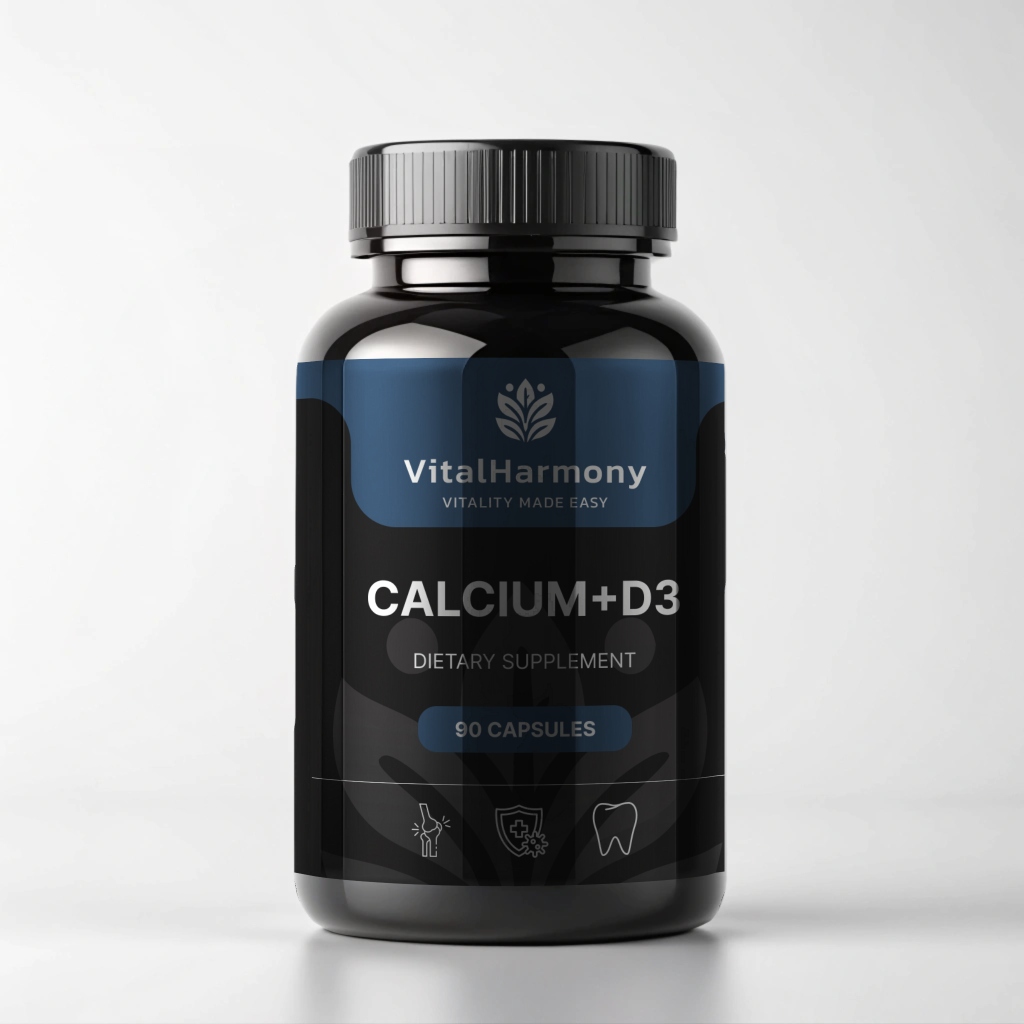
Phosphorus works closely with calcium and vitamin D for bone strength. For example, VitalHarmony Calcium + D3 combines the two main bone-strengthening substances that phosphorus helps to embed in bone tissue. And if you want to support cellular energy production, it is worth considering VH.Nutra Coenzyme Q10, which helps mitochondria produce ATP – the very energy molecule that contains phosphorus.
Disclaimer: This information is for educational purposes only. Consult a doctor or pharmacist before starting to take supplements.
Related articles
- Calcium – 7 benefits for bones, muscles and overall health
- Vitamin D – 7 benefits for immunity, bones and mood
- Magnesium – 7 benefits for sleep, muscles and health