Table of Contents
In short:
- Phosphatidylserine is a natural phospholipid that forms an important part of brain nerve cell membranes and helps transmit signals between neurons.
- The best-studied benefits of this compound relate to memory, focus, lowering the stress hormone cortisol, and brain health as we age.
- The recommended dose typically ranges from 100 to 300 mg per day, taken with food, as this phospholipid is fat-soluble.
- It is naturally obtained from soy, fish, organ meats and white beans, but the highest amounts are found in the brain, where it does its most important work.
Phosphatidylserine is a phospholipid found naturally in the body that is increasingly mentioned in the context of memory, focus and stress resilience. This compound is part of the membrane of every cell in the body, but its highest concentrations are found in the brain, where it helps maintain the fluidity of nerve cell membranes and ensures smooth signal transmission between neurons. In this article, we will review the seven most important benefits of phosphatidylserine, explain how to take it safely, what doses are recommended, and where to get this phospholipid naturally.
Key takeaways
- Phosphatidylserine makes up to 15% of all brain phospholipids and is crucial for the integrity of neuron membranes and signal transmission.
- Clinical studies show that 300 mg per day can help lower cortisol – the main stress hormone – after stressful situations.
- This phospholipid works best when taken regularly with food, and the first changes are usually noticed after a few weeks of daily use.
What is phosphatidylserine?
Phosphatidylserine is a phospholipid – a compound of fatty acids and phosphorus that is an essential building block of the membrane of every cell in the body. Phospholipids arrange themselves in a double layer and form a semi-permeable cell wall that controls what enters and leaves the cell. Unlike many other phospholipids, this compound is highly concentrated in the brain – it makes up a significant part of nerve cell membranes and is involved in synaptic transmission, the process by which neurons exchange signals with each other.
The body can produce the required amount on its own, but this production tends to decline with age, while demand increases under high stress or intense mental work. That is why phosphatidylserine has become one of the most popular nootropics – substances that support brain function. Today, its supplements are made mostly from soy lecithin or sunflower, because plant sources contain the most of this phospholipid.
1. Supporting brain cell membrane health
The first and most important function of phosphatidylserine is maintaining the structure of brain cell membranes. Nerve cell membranes must be fluid and flexible enough for receptors, ion channels and proteins to move freely and do their job properly. When membranes become too rigid or damaged, signal transmission slows down, which can show up as memory or concentration problems.
This phospholipid contributes to membrane fluidity and integrity, and also takes part in cell repair processes. Research shows that sufficient amounts of it help preserve healthy neuron membrane condition even as we age, when the body’s natural production begins to weaken. The key thing to understand here is that phosphatidylserine is not a fast-acting stimulant – its benefit builds up gradually, supporting cell health day after day.
2. Improving memory and cognitive function
This compound is one of the most studied natural substances for memory. In several clinical trials with older adults who reported memory decline, 300 mg of phosphatidylserine per day significantly improved word recall, face recognition and overall cognitive assessment compared to the placebo group.
This effect is thought to be linked to its role in the release of acetylcholine – the neurotransmitter responsible for learning and memory. In addition, phosphatidylserine helps maintain glucose metabolism in the brain, ensuring a constant supply of energy to nerve cells. If you notice that you forget names more and more often or find it harder to remember new information, this phospholipid can be a valuable support tool – together with measures such as Lion’s Mane, which is also traditionally associated with brain and nerve health.
3. Helping lower the stress hormone cortisol
One of the most interesting and best-documented properties of phosphatidylserine is its ability to soften the body’s response to stress. When you experience tension, the body releases cortisol – a hormone that helps gather strength in the short term, but over time, when its level stays constantly high, can harm sleep, mood and even brain function.
Studies with athletes and healthy adults showed that this phospholipid, taken before stressful situations or intense workouts, can reduce cortisol release and soften the tension it causes. A review published in the scientific journal “Nutrition” concluded that phosphatidylserine helps normalize the stress axis and may be useful in chronic stress (source: Glade & Smith, “Phosphatidylserine and the human brain”). If stress is your everyday companion, this compound can help the body react more calmly to tension.
4. Improving focus and attention
Maintaining attention and the ability to focus on one task is a daily challenge for many, especially for those doing mental work or studying. Phosphatidylserine can contribute to supporting these functions because it is directly involved in neuron signal transmission and the regulation of neurotransmitters.
Some studies with young adults showed that taking it can improve reaction speed, working memory and the ability to maintain attention longer during complex tasks. In practice, this means fewer “lost thoughts” and easier focus at work or while studying. Here phosphatidylserine pairs beautifully with L-theanine, which supports calm focus without drowsiness – these two compounds are often mentioned together when talking about supporting concentration.
5. Supporting a good mood
Mood is closely linked to the brain’s chemical balance, and phosphatidylserine plays a supporting but important role in this chain. Because this phospholipid contributes to healthy neuron membranes, it indirectly helps maintain the normal activity of dopamine and serotonin – the “feel-good” neurotransmitters.
Moreover, by lowering cortisol levels, this compound helps break the vicious circle in which chronic stress leads to worse mood, and worse mood leads to even greater tension. In studies with people experiencing high emotional load, phosphatidylserine supplements helped reduce perceived stress and improve overall well-being.
Still, it is worth emphasizing that this substance is not a medicine for depression or anxiety disorders – it is a support measure that works best as part of a healthy lifestyle, together with sufficient sleep, movement and a balanced diet. If emotional difficulties last a long time or interfere with daily life, the most important step is to see a specialist.
6. Helping recover after physical exertion
The benefits of phosphatidylserine are not limited to the brain – it is also valued in the sports world. An intense workout is a source of stress for the body, to which it reacts by releasing cortisol. Too much cortisol after training can slow recovery, hinder muscle growth and increase the feeling of fatigue.
Several studies with athletes showed that taking this phospholipid before high-intensity exertion helped reduce the cortisol response and improved subjective recovery ratings. This is especially relevant for those who train often and intensely, as well as when combining sport with a demanding job or studies. In this case, phosphatidylserine acts as a “stress buffer” that helps the body return to balance more quickly after exertion.
Sports studies most often use somewhat higher doses – from 400 to 800 mg per day, divided into several portions and taken before workouts. However, such doses are usually unnecessary for amateurs: in an ordinary sports routine, the standard 100–300 mg daily dose is enough, and higher amounts are worth considering only with a specialist when loads are truly heavy and recovery is stalling.
7. Supporting brain health as you age
As we age, the brain undergoes natural changes – the amount of phosphatidylserine in neuron membranes decreases, signal transmission slows down and cognitive functions weaken. This is the area where this compound has been studied most extensively, because most of its early research focused on age-related memory decline.
Long-term studies show that its supplements can help preserve memory, learning ability and overall cognitive activity in older age. Although phosphatidylserine is not a miracle pill against aging, it is one of the few natural compounds whose benefit for aging brains has a sufficiently solid scientific basis.
The best results are achieved when this phospholipid is combined with other brain-healthy habits – regular physical activity, quality sleep, mental activity and a diet rich in omega-3 fatty acids and antioxidants. Such a comprehensive approach delivers far more than supplementation alone.
How to take phosphatidylserine?
The recommended dose in most studies ranges from 100 to 300 mg per day, most often taken as 100 mg three times a day or 200–300 mg once. Since phosphatidylserine is fat-soluble, it is best taken with food that contains at least a little fat – this improves its absorption.
The effect is not immediate: the first changes are usually noticed after 2–4 weeks of regular use, so this phospholipid is worth taking for at least a few months to assess its benefit. The best time is morning or midday, with the first or second meal. The maximum safe dose for short-term use in studies reached up to 600–800 mg per day, but increasing the dose without a clear reason is not recommended. If you want to support focus and stress resilience with one convenient solution, take a look at the set for stress control and concentration, where the effect of this compound is complemented by L-theanine, magnesium and ashwagandha.
Side effects and safety
Phosphatidylserine is considered a safe and well-tolerated compound when taken at recommended doses. The most common side effects are mild and temporary – stomach discomfort, bloating or sleep disturbances may occur, especially if it is taken in the evening or in excessive doses.
If you take blood-thinning medication, have kidney or liver disorders, or are pregnant or breastfeeding, be sure to consult your doctor before taking this supplement. It is also worth knowing that the soy-based version may not suit people allergic to soy – in this case, choose a product made from sunflower lecithin. As with any supplement, stick to the stated dose and do not boost the effect with more than recommended.
Diet: natural sources of phosphatidylserine
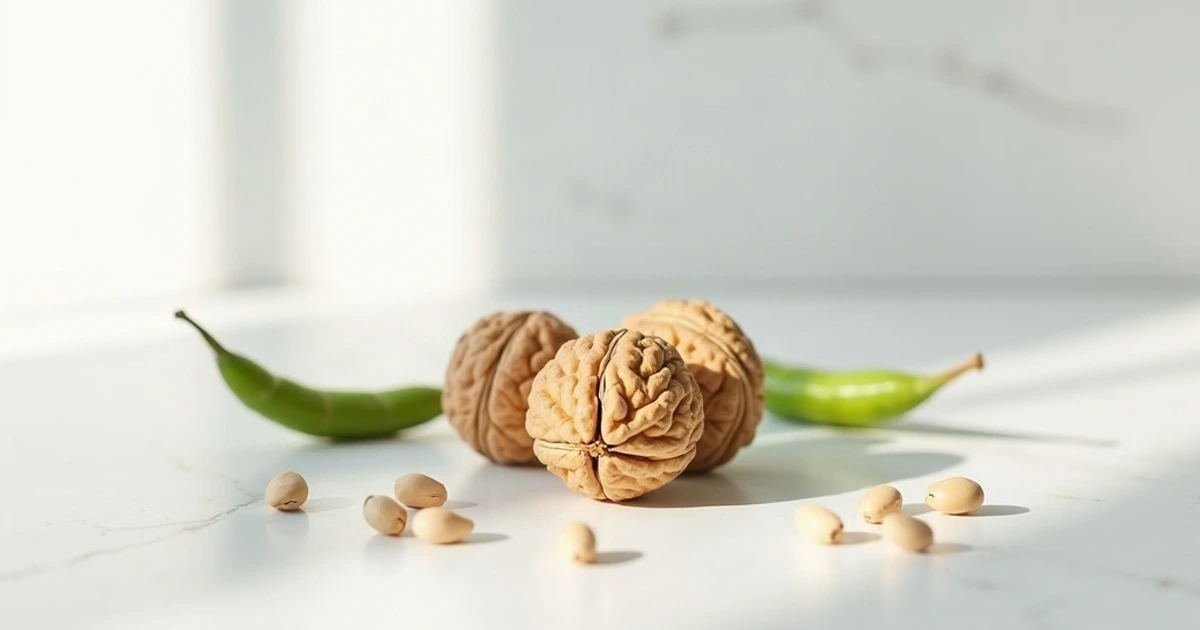
Phosphatidylserine is naturally present in many foods, although the amounts are far lower than in supplements. The richest sources are soy and soy lecithin, from which most supplements are made. This phospholipid is also found in white beans, fish (especially mackerel and herring), organ meats and egg yolks.
It is important to understand that getting therapeutic doses from diet alone is practically very difficult – for example, to get 300 mg, you would have to eat a very large amount of soy products or fish. Soy lecithin, the main raw material for supplements, usually appears in food only in small amounts, and part of the phospholipids also breaks down during cooking.
That is why, when aiming for a specific effect, supplements are a more convenient and reliable way, while diet serves as an additional natural source for daily support. A balanced diet with soy, fish and eggs will help maintain the baseline phospholipid level, and a supplement will fill the gap when the need is higher.
FAQ: common questions
Does phosphatidylserine work immediately? No, its effect builds up gradually. Most people notice the first changes after 2–4 weeks of regular use, so it is worth being patient and taking it consistently.
When is the best time to take it? This phospholipid is best taken with food, ideally at the beginning of the day or after lunch. Taken in the evening, it can slightly interfere with falling asleep for some people, so if you have sensitive sleep, choose morning or daytime use.
Is it suitable to combine with other supplements? Yes, it is often combined with L-theanine, magnesium or omega-3 fatty acids, because these compounds complement each other’s effect on the brain and nervous system. Still, before combining several supplements it is worth consulting a specialist.
Disclaimer: This information is for educational purposes only. Before starting to take supplements, consult your doctor or pharmacist.
Related articles
- Lion’s Mane – 7 benefits for the brain and focus
- Choline – 7 benefits for the brain, liver and memory
- L-theanine – 5 benefits for calm and focus