If you feel “stuck” – a foggy head, breathing not yet free after illness, and energy dropping faster than you’d like – it’s very likely you’re not looking for another stimulant, but for a solution from within. NAC (N-acetylcysteine) often appears precisely in this context: when you want to help your body deal with oxidative stress, mucus in the respiratory tract, or liver load.
The NAC supplement is not an “overnight miracle.” But its value lies in the fact that it is based on clear biochemistry and has a fairly specific application. Below – practically and humanly: what is the benefit of the NAC supplement, when it can actually help, how to use it wisely, and when it’s better to stop.
What is NAC and why is there so much talk about it?
NAC is a form of the amino acid cysteine, which can be used in the body as a “building block” to produce glutathione. Glutathione is often called one of the most important internal antioxidants – it participates in processes that help cells deal with free radicals and various “inflammatory” signals.
Here’s an important detail: when talking about antioxidants, NAC is not the same as simply taking vitamin C. NAC acts more as a raw material and helper for your own systems. Because of this, it “works” very well for some, while for others the effect is subtle or context-dependent (diet, sleep, stress, workload, smoking, air quality).
NAC supplement benefits: 3 areas where the difference is most often felt
1) Respiratory tract and mucus “stagnation”
One of the classic uses of NAC is thinning mucus. Simply put, it can help when mucus is thick, difficult to cough up, when after a cold or season you still feel a “residue.”
It’s important to understand the limits. NAC is not an antibiotic and does not solve the cause of the infection. But it can be useful as an aid for respiratory comfort, especially when the main discomfort is precisely thick mucus and more difficult expectoration.
If you exercise and run outdoors in the cold season when the air is dry and your respiratory tract is more sensitive – this is one of the situations where NAC is sometimes included in the routine for shorter periods.
2) Antioxidant “internal order” and recovery
Here, the benefit of the NAC supplement is usually seen not as an “energy boost,” but as more stable well-being. When oxidative stress is higher (intense workouts, lots of work, poor sleep, prolonged stress, smoking), the body can “drain” faster.
NAC is often chosen by people who want to:
- recover more easily after exertion
- maintain general well-being when the pace of life is high
- have additional support during the cold season
However, there is a nuance for athletes. There is debate that overly aggressive “pushing” of antioxidants around workouts may slightly dampen adaptations for some (this greatly depends on doses, the person, and the overall context). Therefore, a smart strategy is not to take large doses right before or immediately after the hardest workouts if your goal is maximum adaptations. If the goal is better well-being and breathing during the season, timing may be less critical.
3) Liver load and the “after last night” topic
NAC is associated with liver processes because glutathione is important in detoxification chains. In medicine, NAC is also used in specific situations (that’s already a doctor’s domain), and in the supplement context, people often choose it for a general sense of liver “hygiene.”
It’s important to say directly: NAC is not a license to live without limits. If you regularly lack sleep, have a chaotic diet, and frequent alcohol consumption, a supplement won’t replace the basics. But if your basics are in order and sometimes there is a greater load, NAC can be one of the tools for support.
How to take NAC practically (without the philosophy of overdosing)
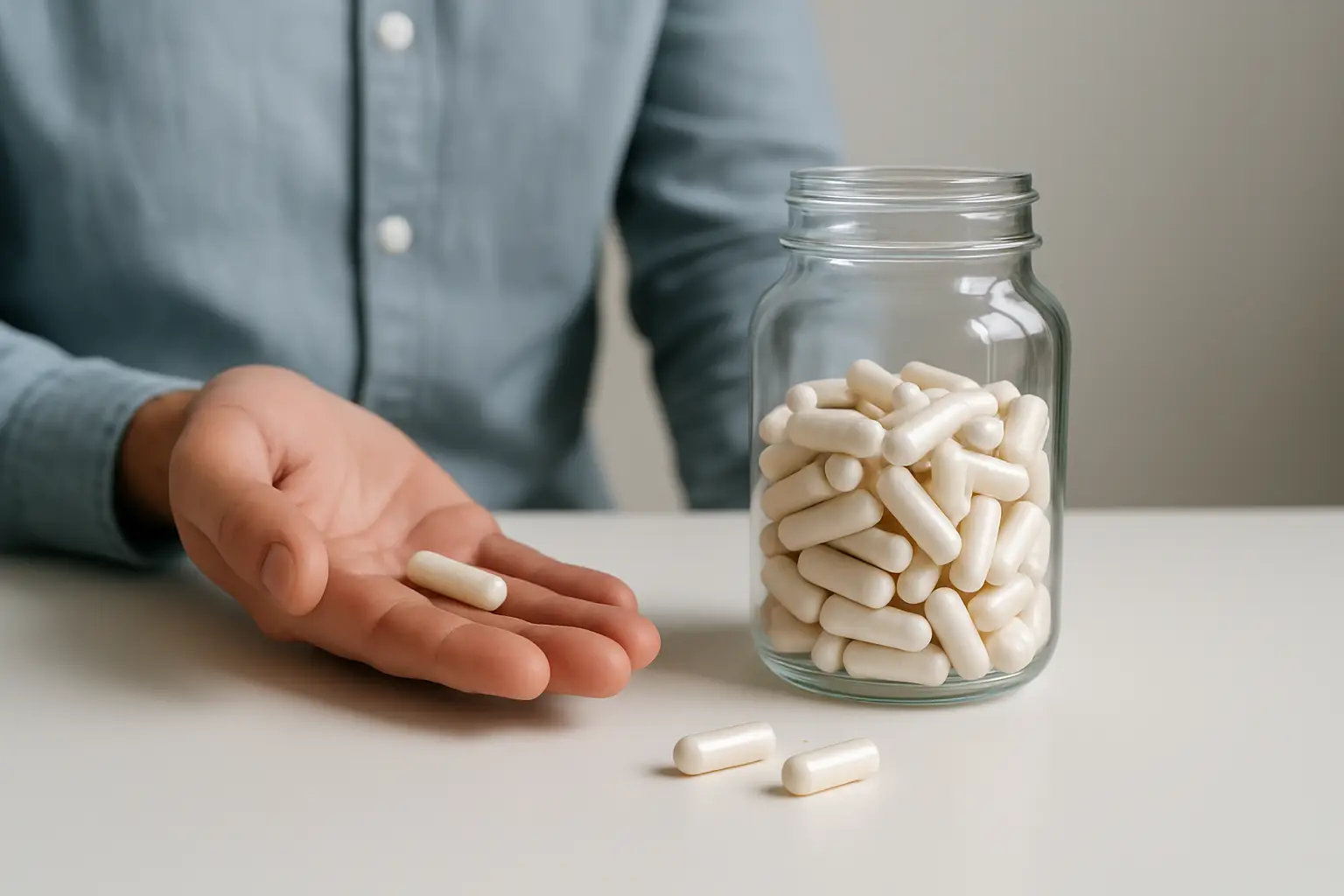
Most commonly, NAC is found on the supplement market in 600 mg capsules. Typical use for an adult often revolves around 600-1200 mg per day, depending on the goal and tolerance. For some, 600 mg is enough; others choose 600 mg in the morning and 600 mg during the day.
If you are a beginner, it’s worth starting with a lower dose and seeing how your stomach and overall well-being react. NAC can cause mild nausea or discomfort in some people, especially when taken on an empty stomach. In that case, a simple solution is to take it with food.
How long to take it? A common practice is in cycles. For example, 2-6 weeks during the cold season or during a period of more intense exertion, then a break. If the goal is very specific (e.g., respiratory mucus), a shorter period is often enough. Long-term use is worth discussing with a healthcare professional, especially if you have chronic conditions or take medications.
What does NAC combine best with?
NAC is rarely the only “hero” ingredient. It often fits nicely into a broader plan when your goal is energy, stress control, and recovery.
Practically, the most common combinations are with vitamin C or selenium (antioxidant direction), zinc (seasonal support), as well as alpha-lipoic acid (ALA) when people look at the overall metabolic and antioxidant side. But if you have a sensitive stomach or already take many supplements, it’s better to start with one thing and only then add others – that way you’ll understand what actually works for you.
When NAC might not be suitable: cautionary rules without panic
NAC is not “for everyone and always.” There are situations where it is necessary to consult a doctor or be more cautious.
If you take nitroglycerin or other nitrates (heart medications), NAC can interact and enhance the effect, increasing the risk of side effects. Also be careful if you have stomach ulcers, very sensitive digestion, or severe reflux – NAC can worsen this for some.
If you have asthma or bronchial hyperreactivity, NAC’s mucus-thinning effect can sometimes provoke discomfort. Not for everyone, but it’s definitely worth “testing” cautiously.
During pregnancy and breastfeeding, it’s wisest to coordinate any targeted supplements with a doctor – not because NAC is automatically bad, but because safety is the priority.
How to know if NAC is “working” for you?
The effect of NAC is often functional, not theatrical. If your goal is breathing, a sign might be easier expectoration and less “heaviness” in the chest. If the goal is general well-being, you might notice that after a few weeks, your body “revs up” less from stress, you recover more easily, and you feel that background fatigueless often.
If after 1-2 weeks you feel only digestive discomfort and no plus – that is also an answer. Supplements are tools, not an obligation. Sometimes it’s worth changing the time (with food), reducing the dose, or taking a break.
Quality and form: what to pay attention to when choosing NAC
NAC is a quite specific substance, so clarity on the label is desirable. Practical criteria are simple: a clear NAC dose per capsule, minimal unnecessary additives, a reliable manufacturer, and transparency.
If it’s convenient for you to have everything in one place – from basic vitamins to more targeted ingredients – you can also find NAC at StayStrong.lt, where supplements are selected according to clear quality standards and the logic of “what actually helps whom”.
A small but important strategy: NAC is not a substitute for sleep
If there is one thing that enhances the benefits of NAC more than “another 600 mg”, it is sleep and rhythm. When you sleep 7-9 hours, eat enough protein, have vegetables, a good water regimen, and at least minimal movement – NAC becomes a meaningful addition, not an attempt to patch a hole.
Your journey to better well-being does not have to be perfect. But it must be consistent. Choose one goal – easier breathing, more stable energy, or recovery after exertion – and give yourself 2-4 weeks to observe the change calmly, without pressure. A stronger tomorrow begins today, with a small action that you can truly sustain.