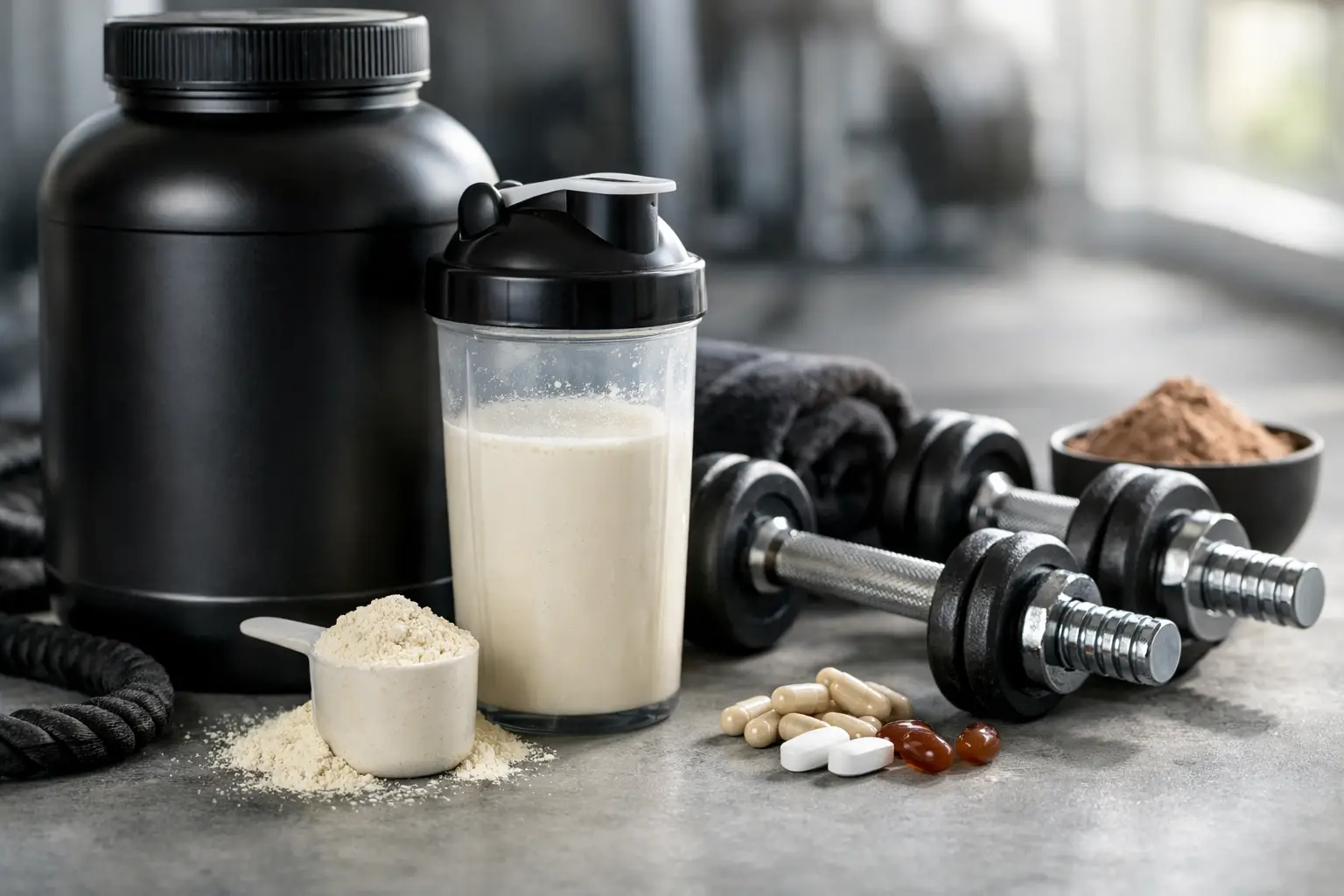
After a good workout, you often feel not only pleasant fatigue but also a question – what to do now so that the body recovers faster? This is exactly where protein supplements for muscle recovery become a practical tool, especially when you want not only to train hard but also to get real progress from it.
Muscle recovery is not a separate stage that begins only after leaving the gym. It happens constantly – after a strength workout, after more intense running, after prolonged physical work, or even when returning after a break. If the body lacks building material, recovery can be prolonged, and your results slow down along with it: strength, endurance, performance, even motivation.
Why proteins are so important after exertion
During training, muscle tissue experiences micro-damage. This is normal and even necessary if the goal is to get stronger or build muscle mass. However, the actual growth occurs not during training, but when the body receives enough rest, energy, and protein.
Proteins provide the body with amino acids, which are necessary for muscle protein synthesis. Simply put, this is the process by which the body renews and strengthens the stressed muscle tissue. If the amount of protein is too low, recovery can be slower, and you will feel weakness or muscle pain for longer after workouts.
It is important to understand one thing – a protein supplement is not a miracle. If you sleep for 5 hours, eat haphazardly, and train without a plan, a single shake will not solve the problem. But as part of a proper routine, it can certainly help.
When do protein supplements for muscle recovery provide the most benefit
The greatest benefit occurs when the supplement solves a real problem. Most often, it is very simple – you do not get enough protein from food during the day, or you do not have a convenient way to eat quickly after a workout.
If you train in the morning before work, a protein shake can be more practical than a full breakfast plate right after sports. If you exercise in the evening and have little appetite after a workout, liquid-form proteins are also often easier to tolerate. And if your goal is muscle mass or frequent intense sports, a supplement helps maintain a more stable daily protein intake.
At the same time, there are cases when a supplement is not necessary. If you already get enough protein during the day from meat, fish, eggs, cottage cheese, yogurt, or other complete sources, then the supplement is simply a convenience solution, not a necessity. And that is normal.
How much protein do you actually need
There is no single number for everyone, as the need depends on body weight, type of sport, age, and goal. Often, for an actively exercising person, the indicative protein requirement is about 1.6-2.2 g per kilogram of body weight per day. If you weigh 70 kg, this could mean approximately 112-154 g of protein per day.
Not everything needs to be drunk from a shaker. The majority of protein should come from regular food, and the supplement fills the gap. For most people, one serving after a workout or between meals is sufficient. This is usually about 20-30 g of protein at a time, although larger individuals or after very heavy workouts may benefit from a bit more.
Here, it is worth avoiding extremes. Too little amount will not help, but constant overdoing is not an additional plus either. The most important thing is the total daily amount, not the magical size of a single serving.
Which protein supplement to choose
There is a lot of choice on the market, so it is easy to get lost. In practice, it is worth looking not at the loudest name, but at what suits your digestion, lifestyle, and goal.
Whey protein
This is one of the most popular options after a workout. Whey protein is quickly absorbed, has a good amino acid profile, and is convenient when you want a quick recovery solution. It often works well after strength training, more intense sports, or simply when you need a convenient way to meet your daily requirement.
If you tolerate dairy products well, this is usually a safe and practical first choice.
Whey isolate
If you want a cleaner composition, less lactose and a higher protein concentration, isolate may be a better option. It is often preferred by people with more sensitive digestion, or those who more carefully count calories and carbohydrates.
The downside is simple – such products usually cost more. Therefore, it is not always worth overpaying if regular whey protein works perfectly for you.
Other protein sources
For some athletes, alternatives based on individual tolerance or preferences are more suitable. The point here is simple: the best supplement is the one you can consistently use without bloating, heaviness, or a feeling of rejection. If you feel bad after every shake, the theoretical advantages are no longer very important.
When to take it – immediately after a workout or later?
For a long time, a very narrow time window after a workout was overemphasized, as if everything is lost if you don’t drink protein within 30 minutes. Reality is calmer. Yes, getting protein after a workout is beneficial, but the most important thing is that you get quality protein within a few hours around the workout and generally consume enough of it throughout the day.
If you ate a complete, protein-rich meal before your workout, there is no need to rush. If you exercised on an empty stomach or know that your next substantial meal will only be in a few hours, a shake after the workout becomes a very logical solution.
In other words, timing is important, but not as much as consistency.
How to recognize a quality product
The label tells more than the bright packaging design. First, look at how much protein is in one serving, how much sugar is added, and whether the composition is unnecessarily overloaded. The clearer the formula, the easier it is to understand what you are actually consuming.
It is also worth paying attention to the manufacturer’s reliability, the quality of the raw materials, and overall transparency. If a product sounds too good to be true – for example, promising both big muscles, instant recovery, and fat burning all at once – it is better to be cautious.
In a reliable place, such as StayStrong.lt, it is usually easier to choose, because attention is paid not only to the assortment but also to whether the product can actually be useful for your goal.
Common mistakes when using protein supplements
One mistake is to think that a supplement will replace a complete diet. It will not. If you skip meals during the day, lack vegetables, carbohydrates, or total calorie intake, recovery will still stall.
Another common mistake is choosing based on taste rather than tolerance. Taste is important because it helps you stick to a regimen, but if a product doesn’t suit your digestion, you won’t use it for long.
Another mistake is consuming protein only on training days. If your goal is consistent recovery and muscle maintenance or growth, the total daily protein intake is also important on rest days.
Are protein supplements only suitable for those who work out in the gym?
Definitely not. Although they are most often discussed in the context of strength sports, protein is also important for those who are generally active. If you walk a lot, do physically active work, run, cycle, or want to maintain muscle mass in older age, adequate protein intake remains relevant.
This is especially important for older people, because maintaining muscle mass becomes more difficult with age. In this case, a protein supplement can be not a sports accessory, but a very practical aid for daily well-being and maintaining functional capacity.
Protein supplements for muscle recovery – what is worth remembering when choosing
If you want faster recovery, less prolonged fatigue after workouts, and more stable progress, protein supplements can be truly beneficial. But they work best when you view them soberly – as a supportive tool, not a replacement for the entire plan.
Start with a simple question: do you really find it difficult to get enough protein during the day? If so, a quality supplement can save time, ease your routine, and help your body recover after exertion. And when recovery is better, the journey itself becomes better – more strength, more desire to move, more confidence that you are on the right track.
A stronger tomorrow often begins not with a complex plan, but with one good decision today.