
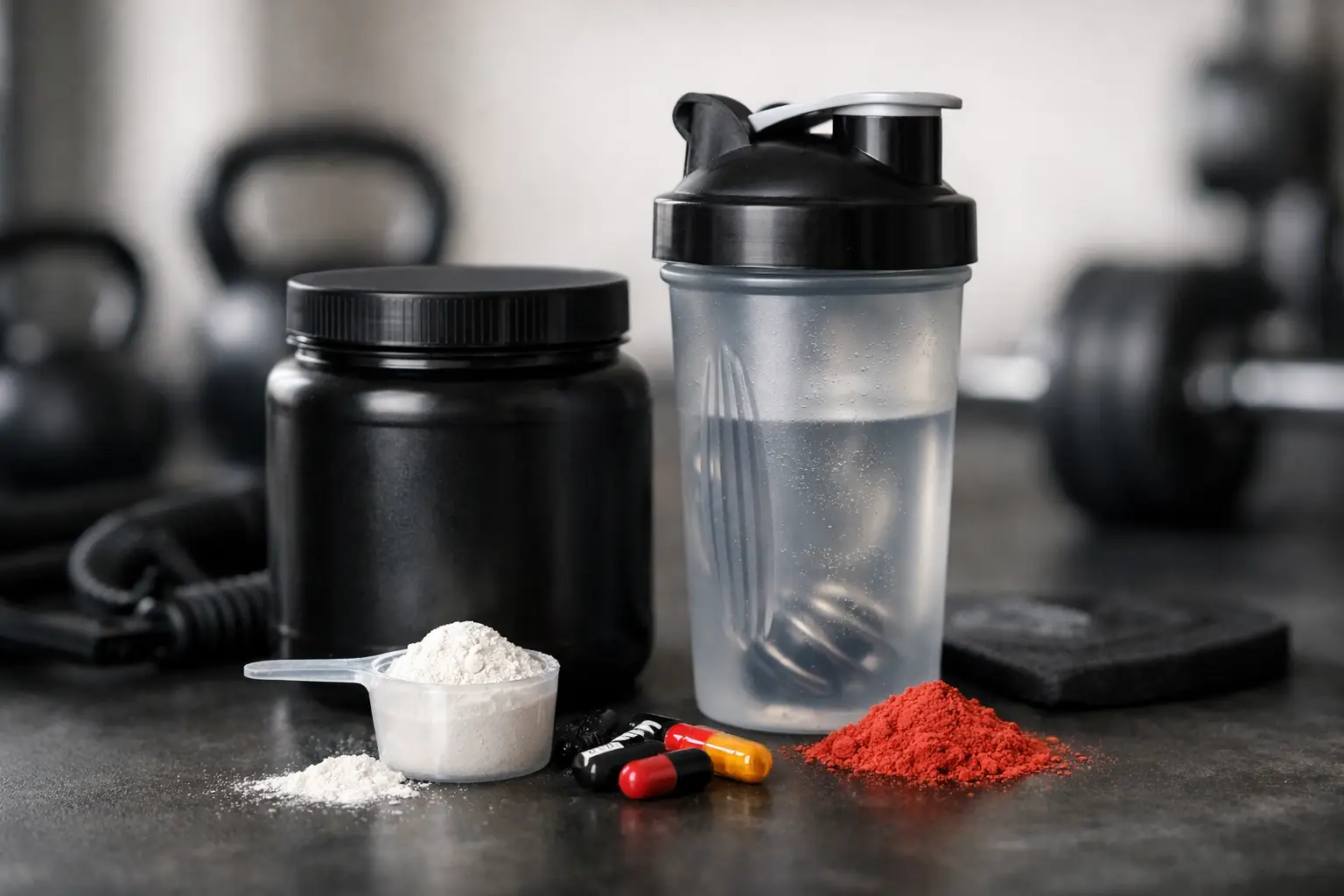
When you’re low on energy before a workout, your hand often reaches for the first pre workout product you come across. That’s exactly where the mistakes begin. If you’re considering how to choose a pre workout supplement safely, what matters most isn’t the brightest packaging or the loudest promise, but the ingredients, dosages, and how your body responds to them.
A pre workout supplement can help you focus, increase alertness, and improve your training experience. But not everyone needs the strongest option. Sometimes the best choice isn’t the one that “feels” the most intense, but the one that lets you train steadily, without heart palpitations, anxiety, or poor sleep that same night.
How to Choose a Pre Workout Supplement Safely Based on Your Goal
The first question is simple — what do you expect from it? If your goal is more energy after a workday, you’ll look for one type of product. If you want better focus early in the morning or a stronger “kick” for heavy strength training, your priorities may differ.
Some people choose a pre workout purely for the caffeine, even though the formula may contain other active ingredients that change the overall effect. For example, some ingredients are more related to alertness, others to endurance or the muscle “pump” sensation. That’s why a safe choice doesn’t start with how “strong” the product is, but with whether it matches your training time, stimulant sensitivity, and actual needs.
If you train in the evening, a highly stimulating option can harm your sleep. If you’re a beginner, a complex multi-ingredient formula with a high caffeine dose will often be too aggressive a start. And if your blood pressure tends to rise or you’re sensitive to caffeine, caution becomes not a recommendation, but a necessity.
The Most Important Place — the Label, Not the Marketing Promise
When choosing a pre workout supplement, the label should tell you more than the front of the packaging. Words about energy, focus, or strength sound appealing, but the real value lies in the ingredients.
First, check whether the dose of each ingredient is clearly stated. If you only see a “proprietary blend” or a similarly named mixture without exact amounts, evaluating safety is much harder. You won’t know exactly how much caffeine, amino acids, or other active substances you’re getting.
The next step is to assess whether the formula is overloaded. A very long ingredient list doesn’t necessarily mean a better product. Sometimes it simply means more variables, a higher chance of a sensitive reaction, and less clarity about what actually works. Especially if you’re also taking other supplements for daily energy, weight control, or concentration.
A reliable formula usually looks clear: understandable ingredients, stated dosages, a logical purpose. If the label reads as if the product were designed only for shock value rather than results, it’s worth stopping.
Caffeine — Useful, but Only When There’s Not Too Much
For many people, the main pre workout effect is tied specifically to caffeine. It can improve alertness, reduce subjective fatigue, and help you train more energetically. But safety here depends on the dose and your individual tolerance.
If you rarely consume caffeine, even a moderate dose can feel strong. If you drink several cups of coffee daily, your body may already be adapted. The problem arises when people fail to account for their total daily intake. Coffee in the morning, an energy drink at lunch, and a pre workout in the evening — such a combination can end not with a better workout, but with excessive strain on the nervous system.
It’s safer to start with a smaller portion, even if the manufacturer recommends a full scoop. The first trial shouldn’t happen before your hardest workout of the week or late in the evening. Give yourself a chance to see how you react: whether trembling, nausea, heart palpitations, dizziness, or irritability appear.
An important nuance — a strong sensation doesn’t mean a better result. If after taking the product you feel anxiety, struggle to concentrate, or your movement control drops, that’s not “good workout energy.” It’s a sign that the dose or formula isn’t right for you.
Which Ingredients to Look at Calmly and Critically
A safe approach doesn’t mean fearing all ingredients. It means understanding what you’re taking. The most common ingredients found in pre workout formulas are caffeine, beta alanine, citrulline, and various focus-supporting compounds.
Beta alanine causes a tingling sensation on the skin for some people. This is often not dangerous, but it can be unpleasant if you don’t know what to expect. For some, this sensation doesn’t bother them; for others, it feels too intense. If you’re sensitive to sensations or want a milder option, it’s worth evaluating this in advance.
Citrulline is often included for the workout “pump” and blood flow sensation. It’s generally not associated with the same stimulating effect as caffeine, so for some people, formulas with a clearly balanced combination of citrulline and moderate caffeine seem like a better choice than just a very high amount of stimulants.
If you see many obscure plant extracts, especially when their purpose isn’t explained on the label, it’s worth being more cautious. The more exotic ingredients and the less transparency, the harder it is to predict how it will affect you specifically.
Who Pre Workout Supplements Aren’t Always Suitable For
There are situations where a pre workout should only be chosen after consulting a doctor or avoided altogether. If you have cardiovascular problems, high blood pressure, rhythm disorders, severe anxiety, or panic episodes, stimulating supplements may be unsuitable.
Caution is also needed if you’re taking medication, especially those related to blood pressure, the nervous system, or mood. Even if the supplement seems “sporty,” it still has a physiological effect. It’s not just a simple sweet drink before a workout.
Pregnant and breastfeeding women, as well as very young athletes, should not experiment independently with strong pre workout products. In such cases, safety comes first, not a short-term energy boost.
How to Choose a Pre Workout Supplement Safely if You’re a Beginner
If you’re just starting out, your advantage is that you don’t need to chase the strongest formulas. It’s more beneficial for you to learn to distinguish what really helps your workout from what merely creates an overly intense sensation.
Start with a simple formula and a small portion. Test the product on days when you’re rested, have eaten, and are drinking enough water. If you go to the gym completely fasted, sleep-deprived, and dehydrated, even a good formula can feel bad.
It’s important not to try several new things at once. If you’re simultaneously changing your diet, training intensity, and introducing a pre workout, it will be hard to understand what caused a good or bad reaction. Progress likes clarity.
Practical Signs That a Product Is Right — or Not Right — for You
A suitable pre workout typically helps you get into the workout, maintain alertness, and perform your working sets more steadily. You feel energy, but don’t lose control. Your heart rate doesn’t rise inappropriately, your stomach doesn’t protest, and after an evening workout you can still relax normally.
An unsuitable option usually shows itself quickly. If after taking it you feel chest pressure, severe trembling, nausea, unusual anxiety, headache, or more serious unpleasant symptoms, you need to stop using it. If symptoms are pronounced, it’s essential to seek medical attention.
There’s also a less obvious mismatch scenario — the product seems to work, but after a few hours a strong energy crash, irritability, or poor sleep follows. In that case, the formula isn’t necessarily “bad,” but it may be unsuitable for your rhythm.
The Most Common Mistakes When Buying Your First Pre Workout
One of the most common mistakes is choosing based on the “strongest” promise. Stronger isn’t always better. Especially if your goal is consistent training several times a week, not a single impressive session.
Another mistake is ignoring other caffeine sources. A third is taking a full portion the first time. A fourth is taking it too late. And yet another common problem is expecting the supplement to compensate for a lack of sleep, nutrition, and routine. It can help, but it won’t replace the basics.
That’s exactly why it’s worth viewing a pre workout as a tool, not as a foundation. When the fundamentals are solid, the supplement can contribute to a better result. When the fundamentals are lacking, even the best formula often only masks fatigue for a short while.
If you want to choose with more confidence, it’s worth looking for reliable, clearly labeled products from sellers who don’t just offer a range but also help you figure out what suits whom. Such an approach is closer to long-term progress than an impulsive purchase based on a single loud promise.
Your workout should give you strength, not take away your peace of mind. When you choose responsibly, a pre workout can be a useful tool — not a trick, but smart support for reaching your goals.