Just saying “eat more protein” is not enough. If your goal is to lose fat, build muscle, recover faster after workouts, or simply feel fuller for longer, it’s not just the fact of protein that matters, but also the amount. This is where many people get stuck – some eat too little, others overdo it unnecessarily.
How much protein you need per day based on your goal
Protein needs are not the same for everyone. They change based on body weight, physical activity, age, and what you are currently aiming for.
- If you are not very active, about 0.8-1.0 g/kg is often sufficient.
- If you move regularly, exercise for health or general fitness, it’s worth aiming for about 1.2-1.6 g/kg.
- If you actively train for strength or muscle growth, about 1.6-2.2 g/kg is usually suitable.
- If you are in a calorie deficit and want to preserve as much muscle as possible, protein needs often rise to 1.8-2.4 g/kg.
For example, if you weigh 70 kg and exercise 3-4 times a week, your realistic goal might be about 110 g of protein per day. If your goal is not just good well-being but also improving body composition, this amount is often much more beneficial than the minimum norms.
What determines how much protein you need per day
Weight alone doesn’t tell the whole story. Two people of the same weight can have different protein needs.
Activity level
If you move a lot, lift weights, run, cycle, or do physically demanding work, your muscles experience greater strain. They need more building material for recovery. In this case, protein needs naturally increase.
Goal – maintenance, growth, or weight loss
If your goal is simply to maintain your current state, a smaller amount is enough. If you want to build muscle, you need more. If you are losing weight, protein becomes even more important because it helps preserve lean body mass and better control hunger.
Age
In older age, the body responds to protein somewhat less effectively than in youth. Because of this, older people often benefit from getting slightly more protein, even if their physical activity is not very intense. This is especially important for maintaining strength, stability, and daily functionality.
Overall diet
If your diet is very chaotic, dominated by snacks, pastries, and little whole food, you might theoretically consume enough calories but not enough protein. Therefore, it’s worth looking not only at “how much I eat” but also at what that food consists of.
Is more protein better?
In short – not always. Protein is beneficial, but it’s not a miracle. If your need is about 120 g per day, 220 g won’t automatically give you twice the results.
How to distribute protein throughout the day
Many people make a simple but important mistake here – they eat almost no protein all day and then try to “make up for it” in the evening. It’s easier for the body when you get protein more evenly.
Which foods help you reach the required amount
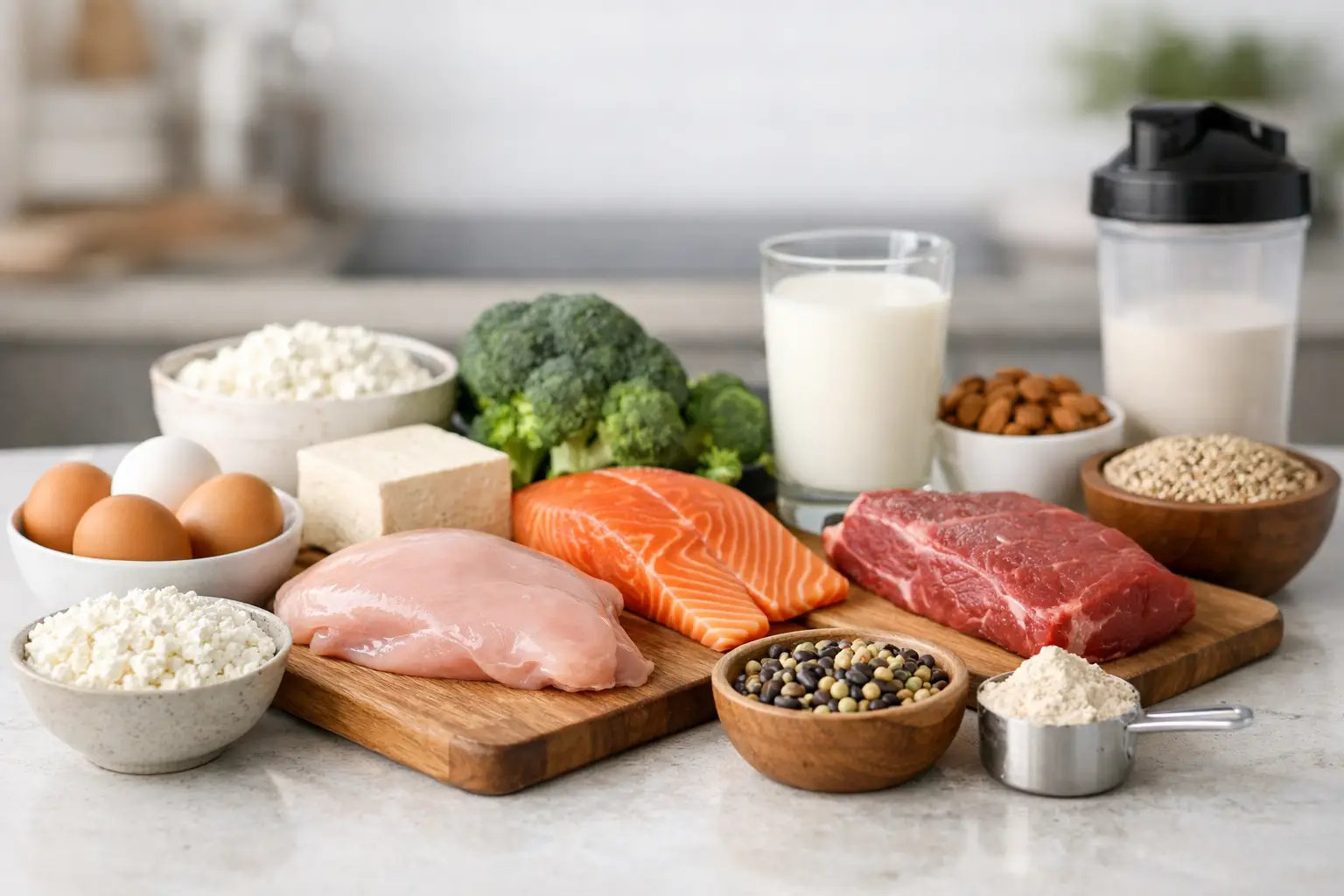
You’ll usually get the most protein from regular food. Eggs, cottage cheese, Greek yogurt, chicken, turkey, lean beef, fish, legumes, tofu, fermented cheeses – all of these can form a solid foundation. whey protein or protein bars – not instead of normal food, but as a practical way to fill a gap. If you choose this option, it’s important to look at the ingredients, the amount of protein per serving, and whether the product actually helps you, rather than just looking “sporty.”
Common myths about protein
“If I don’t exercise, I almost don’t need protein”
You do. Protein is important not just for muscles in the gym. It’s needed for enzymes, hormones, immunity, tissue renewal, and daily satiety. Even if your goal isn’t athletic, you still need enough.
“The more protein, the faster muscles will grow”
Muscle growth depends not only on protein. You need the stimulus from training, enough calories, sleep, and time. If you only increase protein intake but don’t train or constantly sleep 5 hours, the result will be limited.
“Protein powder is chemicals”
Whey protein is essentially a concentrated source of protein. It’s not magic and not necessarily evil. What matters is the product’s quality, ingredients, and how it fits into your day. A supplement doesn’t become a problem just because it’s in powder form.
“The same norm applies to everyone”
It doesn’t. A 55 kg low-activity woman and a 95 kg regularly exercising man won’t benefit from the same recommendation. Therefore, it’s worth starting not from a trend, but from your own situation.
How to know if you’re getting too little protein
A precise answer is helped by monitoring your diet for at least a few days. People are often surprised to see that their “not bad diet at all” actually provides only 50-70 g of protein per day, even though the need would be significantly higher. cravings for sweets or difficulty putting together a more filling breakfast can indicate that there is simply too little protein in the diet. Of course, this is not always solely a protein issue, but it is certainly worth attention.
A simple way to calculate your norm
If you want a quick start, do this. Take your body weight and multiply:
- by 1.0 if you are sedentary;
- by 1.4 if you move regularly and want better well-being;
- by 1.6-2.0 if you train for strength, muscle mass, or body composition;
- by 1.8-2.4 if you are in a calorie deficit and want to preserve muscle.
Then look not at the ideal, but at the realistic plan. If you currently eat about 60 g, and your goal would be 120 g, you don’t have to change everything in one day. It is usually better to add 20-30 g per day and observe how you feel, how much satiety you have, how your workouts are going, and whether it is easy to maintain week after week.