HMB (beta-hydroxy-beta-methylbutyrate) is a metabolite of leucine, which the body naturally produces in very small amounts. This compound is valued in sports nutrition for its ability to protect muscle mass and speed up recovery after intense training. While supplements alone cannot replace a balanced diet or consistent training, high-quality HMB can become a valuable ally in reaching your athletic goals and maintaining lean body mass. In this article we will review the 7 key benefits of beta-hydroxy-beta-methylbutyrate and explain how to use this leucine metabolite correctly.
Key Takeaways
- HMB — a leucine metabolite that reduces muscle protein breakdown and helps preserve muscle mass even during a calorie deficit.
- The recommended daily dose is 3 grams, divided into 3 servings of 1 gram or 2 servings of 1.5 grams.
- Beta-hydroxy-beta-methylbutyrate provides the greatest benefit to beginners, older adults and those losing weight.
- This compound is safe for long-term use and combines well with creatine and protein.
Contents
What Is HMB?
HMB (beta-hydroxy-beta-methylbutyrate) is a metabolite that is formed in the body when the essential amino acid leucine is broken down. Only about 5% of consumed leucine is converted into HMB, which is why this compound is naturally produced in very small amounts. Beta-hydroxy-beta-methylbutyrate is primarily known for its anti-catabolic effect — it helps reduce muscle protein breakdown, which is especially important during intense training, calorie deficits or longer rest periods.
HMB is found in food only in traces — small amounts occur in fish, alfalfa, grapefruit and some other products, but these amounts are not enough to produce any physiological effect. Therefore, the most practical way to get the required dose of beta-hydroxy-beta-methylbutyrate is through dedicated supplements. Read more about the benefits of amino acids for sports in our article on the benefits of L-glutamine for muscle recovery.
The question sometimes arises of why not simply take more leucine or BCAAs instead of HMB. Although leucine is the precursor of this metabolite, only a small part of it is converted into beta-hydroxy-beta-methylbutyrate, so direct supplementation is a more effective way to reach the desired concentration. Moreover, this compound acts somewhat differently than leucine itself — it is more oriented towards stopping protein breakdown than towards stimulating synthesis.
1. Preserving Muscle Mass
The main benefit of HMB is its anti-catabolic effect. Beta-hydroxy-beta-methylbutyrate suppresses the mechanisms of protein breakdown in muscle cells, so muscles are less “broken down” even under heavy load. This is especially relevant when you train intensely, follow a strict diet or, for various reasons, reduce your physical activity — in all these cases the body tends to break down muscle protein for energy.
Research shows that taking this leucine metabolite helps preserve lean muscle mass in older adults and in those who cannot train. HMB acts through the mTOR signaling pathway, which regulates protein synthesis and muscle growth, so muscle mass loss slows down even under unfavorable conditions. The result is firmer muscles and better body composition in the long term.
This benefit is particularly relevant for older adults, whose muscle mass naturally declines with age — a process called sarcopenia. Studies show that taking beta-hydroxy-beta-methylbutyrate together with light physical activity can help slow muscle mass loss and maintain independence and strength in everyday life.
2. Faster Recovery After Training
After a hard workout, microscopic damage appears in the muscles, and the speed of recovery determines how quickly you can return to training. HMB helps reduce this damage and speed up regeneration, so you feel less muscle soreness and regain your strength faster. With regular use of this leucine metabolite, the duration of muscle soreness after training noticeably shortens.
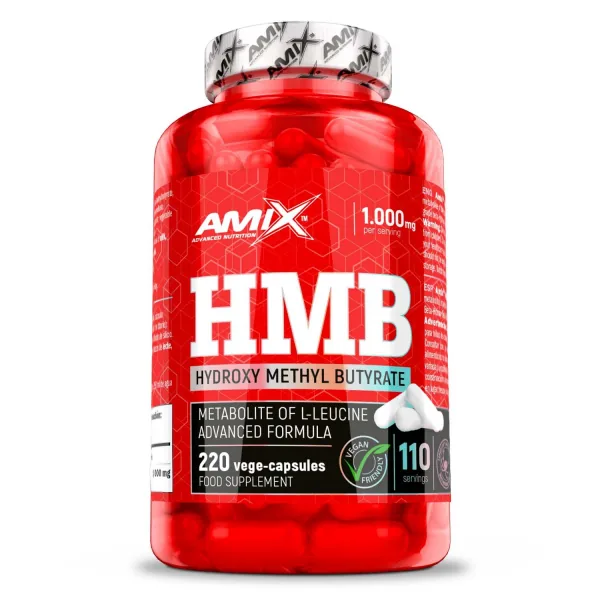
Capsule-form supplements are a convenient way to ensure a consistent amount of beta-hydroxy-beta-methylbutyrate every day. For example, Amix HMB 220kap contains 500 mg of HMB in each capsule, making it easy to lay out the required daily dose precisely. Faster recovery allows you to train more often and avoid overtraining, which is often what stalls progress.
HMB is especially valuable for athletes who combine strength and endurance training or train twice a day. In such cases the recovery window is short, so every measure that helps you regain strength faster directly contributes to better results and a lower risk of injury.
3. Reducing Muscle Damage
Intense strength training causes damage to muscle cells, which is indicated by increased levels of creatine kinase (CK) and lactate dehydrogenase (LDH) in the blood. Research shows that taking HMB reduces these damage markers compared with a placebo. This means that muscles experience less structural stress after training and return to their baseline state faster.
A lower level of muscle damage means not only weaker soreness but also better muscle function in the days that follow. Beta-hydroxy-beta-methylbutyrate helps protect cell membranes from damage, so muscles recover faster and retain their strength and endurance. This is especially useful for athletes who train several times a week and cannot afford long recovery breaks.
In practice this means less delayed-onset muscle soreness (DOMS), which usually appears 24–48 hours after training. By reducing this soreness, HMB allows you to maintain high training quality even under heavy load, which over time translates into better athletic results and more stable progress.
4. Benefits for Beginners
Interestingly, the greatest HMB benefit is usually noticed by beginners. For people who are just starting to train, the muscles experience a new, unusual load, so the damage is greater and recovery is slower. Beta-hydroxy-beta-methylbutyrate helps soften this “shock” and adapt to the training load faster, which makes the first weeks in the gym considerably easier.
For experienced athletes whose muscles have already adapted to the load, the effect of this leucine metabolite may be less noticeable. Even so, HMB can be useful for them during intense training phases or when returning after a longer break. That is why the supplement is especially valued by beginner athletes, those returning after a break and older adults who want to maintain muscle mass.
From a practical standpoint, this is exactly why HMB is often recommended as one of the first supplements for those who are just starting to train more seriously. This leucine metabolite helps protect against excessive muscle soreness and overtraining in the initial phase, when the body is still adapting to the new load.
5. Support During Weight Loss
When losing weight, the most important goal is to lose fat, not muscle. A calorie deficit promotes muscle protein breakdown, so muscle mass is often lost along with fat. HMB helps slow this process and preserve muscle even when restricting calories, so body composition improves and metabolism stays active.
Studies with overweight people show that taking beta-hydroxy-beta-methylbutyrate along with a diet helps preserve more muscle mass than dieting alone. This compound does not directly stimulate fat burning, but it protects muscle, which in turn raises the basal metabolic rate and helps burn more calories even at rest. When choosing an HMB supplement for weight loss, pay attention to the dose and the purity of the formula.
In one study, participants who took HMB together with a calorie deficit preserved significantly more lean mass over 12 weeks than the placebo group. This matters because muscle helps maintain a higher basal metabolic rate and protects against weight regain after the diet ends.
6. Synergy with Creatine and Protein
HMB combines very well with other popular sports supplements. Creatine increases strength and energy production in muscle cells, while beta-hydroxy-beta-methylbutyrate reduces muscle breakdown — these two mechanisms complement each other. Combining these supplements can deliver better results than taking each one separately, because different training problems are addressed at the same time.
This leucine metabolite also combines well with protein and essential amino acids. Protein provides the building material for muscles, while HMB helps use this material more efficiently and protects it from breakdown. Although the supplements can be taken at the same time, many athletes drink creatine before training and spread HMB throughout the day — this ensures a consistent level of both compounds in the body. Read more about the effects of creatine in the article on the benefits of creatine for muscles and the brain.
7. Safety for Long-Term Use
HMB is considered one of the safest sports supplements. Clinical trials lasting up to 12 months found no significant side effects at recommended doses. This leucine metabolite does not burden the liver and kidneys the way some other supplements do, so it is suitable for long-term use without mandatory breaks.
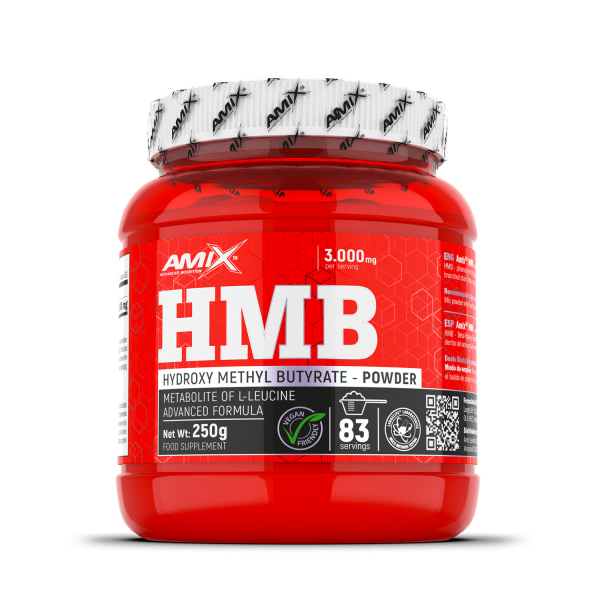
In addition, unlike some stimulants or thermogenics, beta-hydroxy-beta-methylbutyrate does not raise blood pressure and does not cause nervousness, so it is safe to combine with other sports supplements. The position of the International Society of Sports Nutrition (ISSN), published in PubMed / NIH, confirms the safety and effectiveness of this compound for athletes. Powder-form supplements, for example Amix HMB Powder 250g with 3000 mg of HMB per serving, make it easy to reach the recommended daily dose.
How to Take HMB?
Recommended dose: 3 grams of HMB per day, divided into 3 servings of 1 gram or 2 servings of 1.5 grams. When taking capsule or powder supplements, follow the manufacturer’s instructions on the package and do not exceed the recommended dose.
When to take: beta-hydroxy-beta-methylbutyrate can be taken at any time of day, but it is most convenient to spread the doses evenly — for example, in the morning, before training and before bed. Taking it with food helps reduce the risk of possible stomach discomfort and ensures stable absorption.
Duration of use: HMB is not a fast-acting measure — evaluate the first changes after 2–4 weeks, and the muscle-mass-preserving effect after 8–12 weeks of consistent use. Thanks to its good safety profile, this leucine metabolite can be taken in long-term cycles without mandatory breaks.
Maximum safe dose: in studies, up to 6 grams per day was well tolerated, but doses above 3 grams have no proven additional benefit. StayStrong offers Amix HMB Powder 250g and Amix HMB 220kap — convenient HMB supplements with a clear formula and recommended daily dose.
Unlike creatine, HMB does not require any loading phase — the effect is achieved by taking a consistent daily dose from the very first day. The most important thing is regularity: it is better to take a smaller dose every day than a large dose irregularly.
Possible Side Effects
HMB is well tolerated by most people. In rare cases, mild digestive disturbances may occur — bloating, nausea or diarrhea, especially when taking large doses on an empty stomach. These symptoms usually pass after reducing the dose or starting to take it with food, so they should not cause serious concern.
Long-term studies that followed participants for up to a year found no significant changes in health markers, so HMB is considered a safe choice for most healthy adults. Pregnant and breastfeeding women, as well as people with serious liver or kidney disease, should consult a doctor before starting beta-hydroxy-beta-methylbutyrate. HMB supplements are not recommended for children and adolescents without medical supervision.
HMB and Creatine — What You Should Know?
HMB and creatine are often confused, but they work completely differently. Creatine increases energy production in muscle cells and improves strength and explosive power, while beta-hydroxy-beta-methylbutyrate reduces muscle protein breakdown. For this reason they do not conflict with each other — on the contrary, they can act synergistically and complement each other’s weak points.
When combining these two supplements, it is recommended to stick to standard doses: 3 grams of HMB and 3–5 grams of creatine per day. The safety of both supplements is confirmed by long-term studies, and the doses are clearly supported by science, so combining them is easy even for beginners. Read more about creatine use in our article on creatine and its benefits for sports.
To sum up — if your goal is strength and muscle mass, creatine is the primary choice, and HMB complements it perfectly. This combination is especially useful when the training load is high or you are in a calorie deficit and want to protect the muscles you have worked hard to build.
Frequently Asked Questions
What is HMB and where does it come from?
HMB (beta-hydroxy-beta-methylbutyrate) is a metabolite of leucine that the body produces naturally, but in very small amounts. It is found in food only in traces, so the most practical way to get the required dose is through dedicated HMB supplements.
Does HMB help build muscle?
HMB does not directly stimulate muscle growth the way protein or creatine does, but it reduces muscle breakdown. This creates more favorable conditions for preserving and building muscle mass, especially when combined with training and proper nutrition.
When is the best time to take HMB?
It is most convenient to spread the doses of beta-hydroxy-beta-methylbutyrate throughout the day — for example, in the morning, before training and before bed. Taking it with food helps avoid possible stomach discomfort.
Can HMB be combined with other supplements?
Yes, beta-hydroxy-beta-methylbutyrate combines well with creatine, protein and amino acids. In the StayStrong range you will find Amix HMB 220kap, which is convenient to combine with other sports supplements.
Disclaimer: This information is for educational purposes only and cannot replace professional medical advice. Before starting to take any dietary supplements, always consult a doctor or pharmacist.
Related Articles
- Creatine: 7 Benefits for Muscles, Brain and Athletic Performance
- L-Glutamine: 7 Benefits for Gut, Immunity and Muscle Recovery
- L-Arginine: 7 Benefits for Blood Flow, Sports and Heart