Ginkgo Biloba (maidenhair tree) is one of the oldest known trees in the world, and its leaf extract has been used for centuries to support brain circulation and memory. If you notice it is harder to concentrate at work, you forget small details, or you want to preserve mental clarity in the long run – ginkgo leaf extract may be a natural solution worth your attention.
Key Takeaways
- Ginkgo Biloba – an extract from the leaves of the maidenhair tree, whose active compounds help support brain and peripheral circulation.
- Main benefits – better concentration and memory, mental clarity, antioxidant protection and circulation support.
- Safe dosage – usually 120–240 mg of standardized extract per day is recommended, ideally divided into 2–3 doses.
Table of Contents
What Is Ginkgo Biloba?
Ginkgo Biloba, or the maidenhair tree, is the only surviving representative of the ginkgo family, and these trees have been growing on Earth for more than 200 million years. Supplements use a standardized extract of ginkgo leaves, in which two groups of active compounds are considered most valuable – flavonoids and terpenoids (ginkgolides and bilobalide).
Flavonoids act as powerful antioxidants and help protect cells from oxidative damage, while terpenoids contribute to blood vessel dilation and better blood flow. This combination explains why ginkgo leaf extract is traditionally associated with supporting brain circulation and cognitive function.
Ginkgo leaf extract is not a fast-acting stimulant – it works gradually, so results are usually noticeable only after several weeks of consistent use. In this sense it differs from caffeine or other fast-acting substances and is better suited to long-term brain health care.
More about ginkgo research and its uses is published by the U.S. National Center for Complementary and Integrative Health NCCIH. It provides independent, research-based information about the effects and safety of this plant.
Quality supplements use a standardized extract, usually labelled EGb 761, in which the amount of active compounds is strictly controlled – 24% flavonoid glycosides and 6% terpene lactones. When choosing a supplement, always check the label: these numbers indicate that the product is made from standardized, quality raw material, not simple powdered leaf.
1. Supports Brain Circulation
The brain is one of the most energy-demanding organs – although it makes up only about 2% of body weight, it uses about a fifth of all oxygen carried by the blood. Good blood supply to the brain is essential for concentration, memory and overall mental clarity.
The terpenoids in ginkgo extract help blood vessels dilate and contribute to blood flow, so the brain can be better supplied with oxygen and nutrients. This is especially relevant for people who do long sedentary work or spend a lot of time indoors.
Omega-3 fatty acids also support brain circulation, so ginkgo extract is often combined with fish oil. Read more about this combination in our article on omega-3.
2. Improves Memory and Concentration
Memory and concentration are two of the most frequently mentioned reasons why people choose ginkgo leaf extract. Thanks to better blood supply to the brain and antioxidant protection, ginkgo extract can help maintain focus when performing attention-demanding tasks.
It has been observed that ginkgo works best when taken regularly over a longer period, not episodically. People who take the extract for several months more often report easier concentration and less mental fatigue at the end of the day.
Memory function depends not only on circulation but also on the strength of connections between nerve cells. The antioxidants in ginkgo extract help protect nerve cells from damage, which can contribute to better remembering and recalling information, especially during long, attention-demanding tasks.
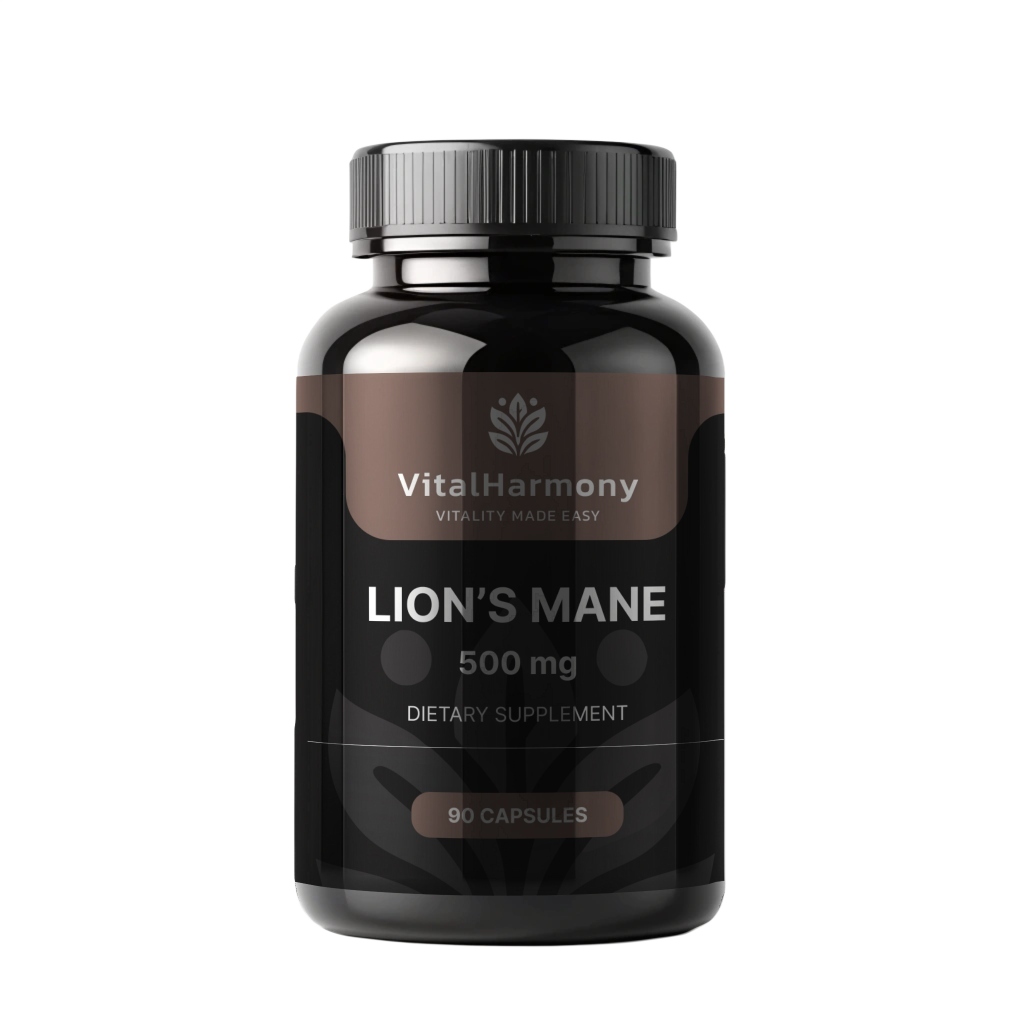
🛒 VitalHarmony Lion’s Mane 500 mg — 7,49 € – lion’s mane extract for brain and nerve health, memory and concentration. Read more about this mushroom in our article on lion’s mane.
3. Helps Maintain Mental Clarity
Mental clarity is the ability to think quickly, express thoughts clearly and avoid a constant “fog” in the head. Its common enemy is fatigue, stress and an excessive flow of information, which many modern people face.
Ginkgo leaf extract can contribute to a more stable level of energy and attention, because it helps the brain use oxygen better. Unlike caffeine, it does not cause a sudden energy spike followed by fatigue – it works gently and evenly.
Many people associate mental clarity with a morning routine – a full diet, movement and fluid balance. Ginkgo extract can become a natural addition to this routine, helping maintain mental sharpness throughout the day without the side effects of stimulants.
For many people, ginkgo becomes a natural alternative when they want to support productivity without overloading the nervous system. Nevertheless, it does not replace good sleep and rest, which are the main sources of mental clarity.
4. Contributes to Peripheral Circulation
Ginkgo’s effect is not limited to the brain – it is also associated with peripheral circulation, that is blood flow to the arms and legs. Cold extremities, tingling or a feeling of heaviness in the legs are often linked to slower peripheral circulation.
Terpenoids help blood vessels relax, which can improve blood reaching the farthest parts of the body. Because of this property, ginkgo extract is traditionally used to support circulation – especially during the cold season.
This benefit is most often sought by people who sit a lot, work standing in a cold environment or simply want to keep their limbs comfortable during the cold season. Regular movement together with ginkgo extract can give the best results, because physical activity naturally stimulates circulation, and the extract complements this effect.
Arginine and coenzyme Q10 also support circulation. Read more about heart and vascular health in our article on coenzyme Q10.
5. Acts as an Antioxidant
Oxidative damage is one of the main factors of cell aging, and the brain is especially sensitive to it because of its high oxygen consumption. Ginkgo leaves are rich in flavonoids – substances that help neutralize free radicals.
Free radicals arise naturally, but their excess, driven by stress, pollution, poor diet and intense exercise, can damage cell membranes and DNA. Antioxidants help maintain this balance and protect cells from premature wear.
Brain cells contain a large amount of unsaturated fatty acids, so they are highly sensitive to oxidative damage. Regular intake of antioxidants helps maintain the integrity of cell membranes and slows natural aging processes, which over time is reflected in both thinking speed and memory.
Vitamin C also strengthens antioxidant protection. Read more about the importance of antioxidants in our article on vitamin C.
6. Supports Mood and Stress Resilience
Long-term stress exhausts the nervous system and can lead to feelings of anxiety, poor sleep and difficulty concentrating. Better circulation and antioxidant protection indirectly contribute to more even nervous system function, which can help you get through tense periods more easily.
Ginkgo extract is often combined with adaptogens – plant substances that help the body adapt to stress. If you are looking for an additional stress management tool, it is worth looking at our article on ashwagandha.
Mood and the ability to cope with stress are determined by many factors – sleep, physical activity, social connections and diet. Ginkgo extract is not a direct mood regulator, but better brain circulation and antioxidant protection help the nervous system function more stably, which during difficult periods can be felt as a calmer sense of well-being.
Still, it is important to understand that ginkgo is not a medicine for anxiety or mood disorders. It can be a supportive tool for general well-being, but serious symptoms should be assessed by a specialist.
7. Supports Long-Term Cognitive Function with Age
With age, brain circulation and cell renewal naturally slow down, which can affect memory and thinking speed. Ginkgo extract is one of the most frequently studied natural substances associated with supporting cognitive function in older age.
Scientific research in this area gives mixed results, but some of it shows that regular use of ginkgo extract can be beneficial for maintaining memory and mental flexibility with age. The most important thing is to start earlier and take it consistently, not only when decline is already felt.
Although ginkgo extract is often associated with older people, you can start caring for your brain much earlier. Brain health, like physical fitness, depends on long-term habits – regular mental exercise, learning new skills, movement and a balanced diet are the foundation, and ginkgo can be an additional support for this base.
B vitamins and acetyl-L-carnitine also play an important role in long-term brain health. Read more in our article on acetyl-L-carnitine.
How to Take Ginkgo Biloba?
The most commonly recommended daily dose of ginkgo leaf extract is from 120 to 240 mg of standardized extract containing 24% flavonoid glycosides and 6% terpene lactones. This dose is best divided into two or three parts and taken with food.
Noticeable effects usually take from 4 to 6 weeks of consistent use, so the most important thing is regularity rather than a large single dose. You can start with a lower dose, for example 80–120 mg per day, and gradually increase it while observing your body’s reaction.
It is not recommended to exceed a daily dose of 240 mg without a specialist’s recommendation. Pregnant and breastfeeding women, people taking blood-thinning medications, and before planned surgery should only take ginkgo extract after consulting a doctor.
The best results are achieved by those who take ginkgo extract consistently – every day, at a similar time, without long breaks. Occasional use does not give the same effect, because the active compounds accumulate in the body gradually and their benefit only emerges after several weeks of a regular routine.
Possible Side Effects
Ginkgo leaf extract is well tolerated by most people when taken in recommended doses. The most common side effects are mild – headache, stomach discomfort, nausea or dizziness, which can usually be avoided by taking the supplement with food.
People taking blood-thinning medications (anticoagulants or antiplatelets) should pay special attention, because ginkgo can enhance their effect and increase the risk of bleeding. In such cases, consult a doctor before use. Ginkgo leaf extract is not intended to diagnose, treat or prevent diseases – it is a food supplement that complements a balanced diet.
Ginkgo Biloba and a Healthy Diet — What to Know?
Unlike many nutrients, the active compounds of ginkgo cannot be obtained from ordinary food – they are compounds found in the tree’s leaves, and their use requires a specially prepared standardized extract. Therefore the supplement here is not a convenience but the only practical way to obtain these compounds.
Nevertheless, brain health depends greatly on your daily diet. Fatty fish, nuts, seeds, dark green leafy vegetables, berries and eggs supply the brain with omega-3 fatty acids, B vitamins and antioxidants, which work together with ginkgo extract.
You will achieve the best results by combining a quality ginkgo extract with a varied diet, regular movement and enough sleep. A supplement can strengthen the effect of a healthy lifestyle, but should never become its substitute.
Frequently Asked Questions
What is Ginkgo Biloba?
Ginkgo Biloba, or the maidenhair tree, is one of the oldest trees in the world. Supplements use a standardized extract of its leaves, in which the most valuable compounds are flavonoids (antioxidants) and terpenoids (improve circulation).
How long does Ginkgo Biloba take to work?
Ginkgo leaf extract is not a fast-acting substance. Noticeable results usually take from 4 to 6 weeks of consistent use, so the most important thing is regularity and patience.
What daily dose of Ginkgo Biloba is safe?
The most commonly recommended dose is 120–240 mg of standardized extract per day, divided into 2–3 doses. It is not recommended to exceed 240 mg per day without a specialist’s recommendation.
When is the best time to take Ginkgo Biloba?
It is best to take ginkgo extract with food to reduce the risk of stomach discomfort. The daily dose can be taken in the morning or divided into two parts – morning and midday. Taking it in the evening is not recommended, because for some people it can slightly stimulate activity.
Does Ginkgo Biloba have side effects?
The extract is well tolerated by most people. In rare cases, headache, stomach discomfort or dizziness may occur. People taking blood-thinning medications should consult a doctor before use.
Can Ginkgo Biloba be combined with other supplements?
Yes, ginkgo extract combines well with omega-3, B vitamins, lion’s mane and lecithin – these substances are often used together to support brain and nerve health. When taking several supplements, it is worth consulting a specialist about the right combination of doses.
Disclaimer: This information is for educational purposes only and cannot replace professional medical advice. Before starting to take any food supplements, be sure to consult a doctor or pharmacist.
Related Articles
- Lion’s Mane: 7 Benefits for the Brain, Concentration and Nervous System
- Lecithin: 7 Benefits for the Brain, Liver and Heart
- Omega-3: Benefits for the Heart, Brain and Health