Curcumin is the active compound found in turmeric (Curcuma longa) roots, responsible for the characteristic golden-orange color of the spice and most of its beneficial properties. If you are interested in natural ways to support joint comfort, reduce inflammation or strengthen your overall well-being, this plant-based compound is one of the most frequently mentioned and widely studied in the world.
Key Takeaways
- Curcumin is the active compound in turmeric, known for its anti-inflammatory and antioxidant properties.
- Main benefits – joint comfort and mobility, antioxidant protection, and support for digestion and immunity.
- Absorption – pure curcumin is poorly absorbed, so it is worth choosing supplements with piperine or better-absorbed forms.
Table of Contents
What Is Curcumin?
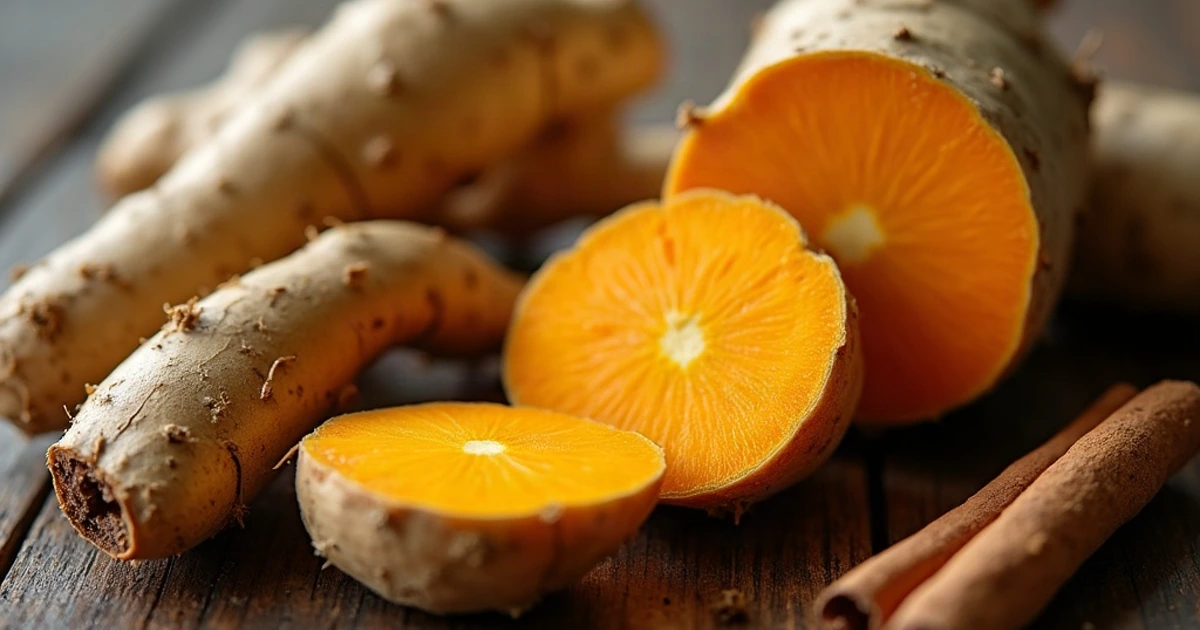
Curcumin is a natural polyphenolic compound belonging to the curcuminoid group, found in turmeric roots. It is this compound that gives turmeric its bright golden-orange color and is responsible for most of the spice’s traditionally known properties. Turmeric has been used for centuries in Ayurveda and other traditional medicine systems, and in recent decades its active component has become one of the most intensively studied plant-derived substances in the world.
Supplements most commonly use a standardized turmeric extract, in which the concentration of curcuminoids is much higher than in ordinary spice. Ordinary turmeric powder contains only about 2–5% curcumin, so to get a larger dose of the active substance, the spice alone is usually not enough in the diet. More reliable information about turmeric is published by the US National Center for Complementary and Integrative Health (NCCIH).
It is important to know that pure curcumin is poorly absorbed from the digestive tract and breaks down fairly quickly in the body. For this reason, in high-quality supplements this substance is often combined with piperine (black pepper extract) or special absorption-enhancing forms are used, such as liposomal ones. The form and combination largely determine how much of the active substance actually reaches your body.
Turmeric roots contain three main active curcuminoids, which together form a natural complex associated with turmeric’s effects. In a standardized extract, their amount is usually given as a percentage, so when choosing a supplement it is worth paying attention to this number rather than only the capsule weight.
1. Reduces Inflammation in the Body
Turmeric extract is best known for its ability to act on inflammatory processes in the body. Scientists link it to the effect of certain inflammation-regulating signaling molecules, which is why this compound is often compared to substances associated with reducing inflammation, but without many of the side effects of synthetic preparations.
Inflammation is a natural reaction of the body to damage or infection, but when it becomes chronic, it can contribute to various health disorders. Turmeric extract helps maintain a balanced inflammatory response, and this property is linked to many of its other benefits – from joints to heart and brain function. That is why turmeric extract is often added to the daily routine of those who want to maintain the body’s balance in advance, rather than reacting to symptoms that have already appeared.
2. Supports Joint Health
Joint comfort is one of the most common reasons why people choose turmeric extract. This compound’s ability to maintain a normal inflammatory response directly contributes to joint mobility and comfort, especially for physically active people or older adults who want to maintain an active lifestyle for many years.
This compound pairs well with other substances intended for joints, for example glucosamine and chondroitin. The combination of these substances is often used in joint care complexes – turmeric extract contributes to reducing the inflammatory response, while glucosamine and chondroitin support the structure and elasticity of cartilage. Together they create a comprehensive joint support strategy. Joint care is especially relevant for athletes and those who spend a lot of time on their feet – for these people, turmeric extract can become a valuable part of their daily routine.
3. Acts as a Strong Antioxidant
Turmeric extract has strong antioxidant properties – it helps neutralize free radicals that can damage cells and accelerate the aging process. The role of antioxidants is especially important in the everyday environment, where the body constantly faces oxidative stress from pollution, stress and intense physical exertion.
This property links turmeric extract to other powerful antioxidants, such as resveratrol or vitamin C. Combining these substances with a varied, antioxidant-rich diet can create even stronger protection at the cellular level and contribute to overall well-being in the long term.
The effect of antioxidants is best revealed when the body receives them from various sources – both from food and supplements. Therefore, turmeric extract should be viewed not as the only solution, but as part of a broader antioxidant strategy complemented by berries, green vegetables and quality fats.
4. Supports Digestion and Gut Health
In traditional medicine, turmeric has long been used to support digestion, and modern research partly confirms this experience. The active component of turmeric contributes to normal bile production and digestive processes, so it can be useful for maintaining digestive comfort after a heavier or fattier meal.
Turmeric extract is also associated with supporting the gut microbiota and intestinal lining. A balanced gut environment is important not only for digestion but also for overall immunity, since a large part of the body’s immune cells are linked to the gut. A healthy gut is often called the foundation of good immunity. In addition, turmeric is traditionally associated with more comfortable digestion and less bloating after meals, which is why it is often included in digestion-supporting complexes.
5. Contributes to Heart and Cardiovascular Health
Heart and cardiovascular health directly depends on the level of inflammation and oxidative stress in the body, and it is precisely in these areas that this compound is strongest. By maintaining a normal inflammatory response and contributing to the protection of the inner layer of blood vessels, it can become a valuable part of a heart care routine.
Turmeric extract perfectly complements the benefits of omega-3 fatty acids – both substances are often mentioned together when talking about heart and cardiovascular care. Combining them with a healthy diet and regular exercise provides a comprehensive heart support strategy. In addition, turmeric extract is often mentioned alongside healthy lifestyle habits – regular movement, balanced nutrition and quality sleep – which work together and reinforce each other’s effect.
6. Supports Brain Function and Mood
Increasing attention is being paid to the effect of turmeric extract on the brain. Research shows that this compound can contribute to maintaining the level of brain-derived neurotrophic factor (BDNF) – a protein important for the growth and functioning of nerve cells, whose level is associated with cognitive function and mood.
Although turmeric extract is not a fast-acting substance, consistent use can contribute to long-term brain health. In this sense, it is often mentioned together with other brain-beneficial substances, such as omega-3 or lion’s mane, which all support nervous system function. Although research in this area is still ongoing, the first results are promising and encourage viewing turmeric extract as a possible part of long-term brain care.
7. Supports Immunity
The antioxidant and inflammation-regulating properties of turmeric extract also contribute to supporting the immune system. A balanced inflammatory response is an important part of a properly functioning immune system, and antioxidants help protect immune cells from oxidative damage.
Turmeric extract can be a valuable part of a daily immunity routine, especially in the cold season, when the body’s need for protection increases. Combining this substance with vitamin C, zinc and vitamin D creates a solid foundation for immune support.
How to Take Curcumin?
The commonly recommended curcumin dose ranges from 500 to 1500 mg per day, depending on the extract concentration and the desired goal. It is best to start with a lower dose, for example 500 mg per day, and gradually increase it while observing the body’s reaction.
This substance is fat-soluble, so it is best to take it with food that contains fat – this improves absorption. The daily dose can be taken at once or divided into two parts, for example in the morning and evening, depending on the supplement’s recommendations.
Since pure curcumin is poorly absorbed, it is worth choosing supplements with piperine, which can increase the absorption of the active substance several times. When choosing a supplement, pay attention to the curcuminoid concentration – a high-quality extract should contain at least 95% of them.
Results usually take several weeks, so the most important thing is consistency. Turmeric extract is not a fast-acting substance, and its benefits only become apparent when taken consistently every day at a similar time, without longer breaks.
If you take other medications or have chronic health conditions, it is always worth consulting a doctor or pharmacist before starting to take supplements. This is especially important if you plan to take curcumin for a long time or combine it with other active substances.
Possible Side Effects
Turmeric extract is well tolerated by most people when taken at recommended doses. In rare cases, mild stomach discomfort, nausea or diarrhea may occur, especially when taking very large doses on an empty stomach. These sensations can usually be avoided by taking the supplement with food.
Caution is advised for people taking blood-thinning medications or those with gallbladder problems. Pregnant and breastfeeding women should consult a doctor before use. Turmeric extract is a food supplement and is not intended to diagnose, treat or prevent diseases.
Curcumin and a Healthy Diet — What Is Important to Know?
Turmeric is a common kitchen spice, but it contains relatively little curcumin – just 2–5%. Therefore, even generously seasoning dishes, it is practically impossible to get a larger dose of the active substance from the spice alone. A supplement here is a practical way to get a higher concentration.
Nevertheless, using turmeric in cooking is a great habit. Turmeric pairs well with dishes cooked in fat, and together with black pepper the absorption of its curcumin improves even when obtained from food. This is a simple way to enrich the diet every day and diversify the flavor of dishes. Turmeric is easy to add to the daily kitchen – it fits in stews, soups, rice or warm drinks, for example the so-called golden milk. With a splash of fat (coconut oil or milk) and a pinch of black pepper, the beneficial substances are absorbed better.
The best results are achieved by combining a high-quality curcumin supplement with a varied diet rich in vegetables, fruits, fatty fish and nuts. A supplement can strengthen the effect of a healthy lifestyle, but should never become a substitute for it.
Frequently Asked Questions
What is curcumin and how does it differ from turmeric?
Turmeric is a plant (spice), while curcumin is the active compound found in turmeric roots and responsible for most of its beneficial properties. Supplements use a concentrated turmeric extract, in which the amount of active substance is much higher than in the spice.
How much curcumin should be taken per day?
Usually 500–1500 mg of curcumin per day is recommended, depending on the extract concentration. Start with a lower dose and take it with food that contains fat to improve absorption.
Does curcumin help joints?
This compound contributes to maintaining a normal inflammatory response, which is directly linked to joint comfort and mobility. Many people choose this compound specifically for joint care, often combining it with glucosamine and chondroitin.
Why is curcumin poorly absorbed?
Pure curcumin is poorly absorbed from the digestive tract and breaks down quickly in the body. That is why in supplements this substance is combined with piperine or liposomal and other absorption-enhancing forms are used.
When is the best time to take curcumin?
It is best to take curcumin with food that contains fat, as this improves absorption. The specific time of day is not as important as consistency – the most important thing is to take it every day at a similar time.
Does curcumin have side effects?
For most people, this compound is well tolerated. In rare cases, mild stomach discomfort may occur. People taking blood-thinning medications should consult a doctor before use.
Disclaimer: This information is for educational purposes only and cannot replace professional medical advice. Before starting to take any food supplements, be sure to consult a doctor or pharmacist.
Related Articles
- Glucosamine: 7 Benefits for Joints, Mobility and Health
- Omega-3: Benefits for Heart, Brain and Health
- Resveratrol: 7 Benefits for Health, Antioxidant Protection and Longevity