
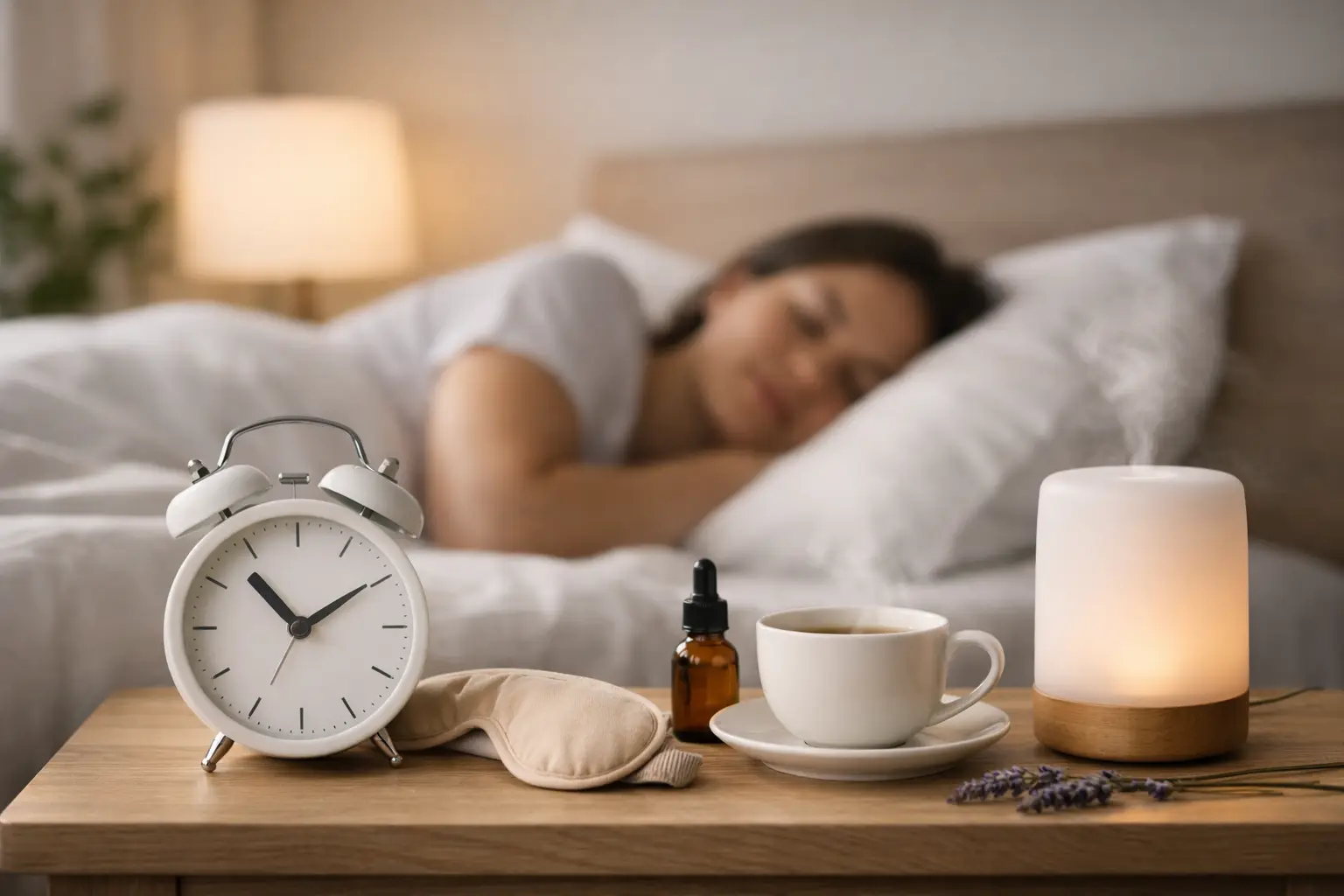
If you feel tired in the evening but still toss and turn once you lie down, the problem often isn’t just “too little sleep.” More often, it’s your rhythm, habits, and environment. This sleep hygiene guide for adults will help you understand what to change first so that sleep becomes deeper and mornings feel lighter.
Sleep isn’t a reward after a hard day. It’s your recovery system. When this system stalls, it’s not just your energy that suffers—it also affects your appetite, mood, workout quality, concentration, and even your patience in everyday situations. That’s why it’s worth looking for solid foundations rather than quick tricks.
What sleep hygiene really is
Sleep hygiene isn’t just a quiet room and a switched-off phone. It’s a set of habits that send your body a clear signal about when to be alert and when to shift into rest mode. Consistency is key here, because your body thrives on rhythm.
Some people expect that one good night will be enough. But sleep is more often fixed like physical fitness—not with a single deep breath, but through repetition. If you go to bed at 11 PM one week, after 1 AM the next, and sleep until noon on weekends, your body receives conflicting signals. Then even severe fatigue doesn’t guarantee quality sleep.
Sleep hygiene guide for adults: 7 areas that deliver the most benefit
1. A fixed wake-up time matters more than an ideal bedtime
Many people start by asking what time they should go to bed. In practice, a different approach helps more—waking up at a similar time every day. This stabilizes your internal clock, and sleepiness in the evening comes more naturally.
If your rhythm is chaotic right now, don’t try to break it all in one day. Shift your wake-up time in 15–30 minute increments. This way, there’s less resistance and a greater chance the change will stick.
2. An evening routine should calm you down, not rev you up further
Your body doesn’t fall asleep at the push of a button. It needs a transition period. If you’re working, scrolling on your phone, sorting out work matters, or watching highly stimulating content in the last hour before bed, your nervous system stays tense.
A good evening routine doesn’t have to be complicated. Sometimes dimmed lighting, a warm shower, a few pages of a book, or calm breathing are enough. The key is repetition. When you repeat the same sequence, your brain starts associating it with sleep.
3. Caffeine lasts longer than it seems
If you feel exhausted in the afternoon, coffee seems like the logical solution. But that’s where the trap lies. For some people, caffeine after lunch barely affects them, while for others, even a cup at 3 PM reduces sleepiness in the evening.
So it’s worth observing not the theory, but your own reaction. If you struggle to fall asleep, the first experiment is simple—limit caffeine in the second half of the day for 7–10 days and see what changes. Such a test often gives you more than guessing.
4. Alcohol doesn’t improve sleep, even if it helps you fall asleep faster
This is one of the most common mistakes. An evening glass may create the impression of relaxation, but sleep quality often suffers as a result. Sleep becomes fragmented, there are more awakenings, and in the morning you may feel like you slept but didn’t recover.
If an evening drink is sometimes part of your routine, there’s no need to dramatize it. But if your goal is better sleep, it’s worth reducing the frequency for at least a few weeks and seeing how your morning well-being changes.
5. Your bedroom environment should work in your favor
Too warm, too bright, too noisy—and your body stays more alert than you’d like. A cooler, darker, and quieter room helps sleep best. Even small changes here can produce a tangible effect.
If you live in a noisier area, a constant background sound can sometimes help. If there’s a lot of light in the room, it’s worth reducing it at least in the last hour before bed. The fewer alertness signals there are, the easier it is for your body to settle down.
6. Evening overeating and going to bed hungry—both extremes
A heavy, very fatty, or overly large evening meal can interfere with falling asleep. But the other extreme doesn’t work for everyone either—going to bed with hunger pangs. Especially if you exercise, follow a calorie deficit, or simply have a long day.
A simple rule applies here: dinner should be filling but not heavy. If you feel hungry before bed, a small, easily digestible snack may be a better option than tossing and turning in bed. Again, the most important thing is to observe how you personally react.
7. Stress built up during the day doesn’t disappear in the evening
Sometimes a person says: “I’m tired, so why can’t I fall asleep?” Because fatigue and calmness aren’t the same thing. You can be physically exhausted but mentally still running a marathon.
That’s why sleep hygiene doesn’t start only in the evening. It starts during the day—with breaks, movement, clear work boundaries, and at least short moments away from screens. If your nervous system is tense all day, it’s hard for it to switch off in the evening.
What to do if your thoughts become active exactly when you lie down
A very common situation—you manage all day, but the noise in your head starts only when you turn off the light. In such cases, the bed becomes not a place of rest, but an arena for thoughts. What helps here isn’t fighting the thoughts, but “offloading” them earlier.
Set aside 10 minutes in the evening to write down what’s spinning in your head: what needs to be done, what’s bothering you, what you want to remember tomorrow. It’s not magic, but your brain no longer needs to hold everything in active memory. For some people, a short breathing practice also helps, where the exhale is longer than the inhale.
If you can’t fall asleep for a long time, it’s better not to lie there feeling frustrated. Sometimes it’s better to get up briefly, stay in a calm, dimly lit environment, and return to bed only when you feel sleepier. This way, the bed becomes less associated with frustration.
When It’s Worth Considering Additional Support
The first step should always be routine, environment, and daily rhythm. However, there are phases when habits alone aren’t enough or are hard to maintain due to increased stress, shift work, or prolonged exhaustion. In such cases, some adults may benefit from purposefully selected sleep or relaxation solutions.
It’s important not to look for a miracle in a capsule. Supplements can be a supportive tool, but not a substitute for a chaotic lifestyle. If you’re considering this option, choose a clear formula, reliable quality, and assess whether the solution aligns with your goal—relaxing more easily, falling asleep faster, or reducing evening tension. StayStrong puts it simply: the product should support your progress, not replace your foundational habits.
When the Problem Is No Longer Just a Hygiene Issue
If sleep is occasionally poor, routine usually helps. But if for weeks or months you struggle to fall asleep, wake up frequently, snore, feel severe fatigue in the morning, or feel sleepy during the day even after enough hours, it’s worth looking for a deeper cause.
Sometimes sleep is disrupted by stress, sometimes by breathing disorders during sleep, sometimes by pain, hormonal changes, or side effects of certain substances. In such cases, discipline helps but doesn’t always address the root cause. The sooner you recognize this, the easier it will be to move forward.
How to Start If You Don’t Want to Change Everything at Once
The biggest mistake is trying to become an ideal person in one evening. Then sleep hygiene becomes annoying and quickly falls apart. It’s much better to choose two actions you can truly maintain for the next 7 days.
For example, wake up at the same time and dim the lights an hour before bed. Or cut out caffeine after lunch and leave your phone out of bed. Small steps work better here than perfect plans because they build self-confidence.
Good sleep rarely returns through force. It returns when your daily life starts sending a clear message to your body: it’s safe to rest now. That’s where a stronger tomorrow begins.