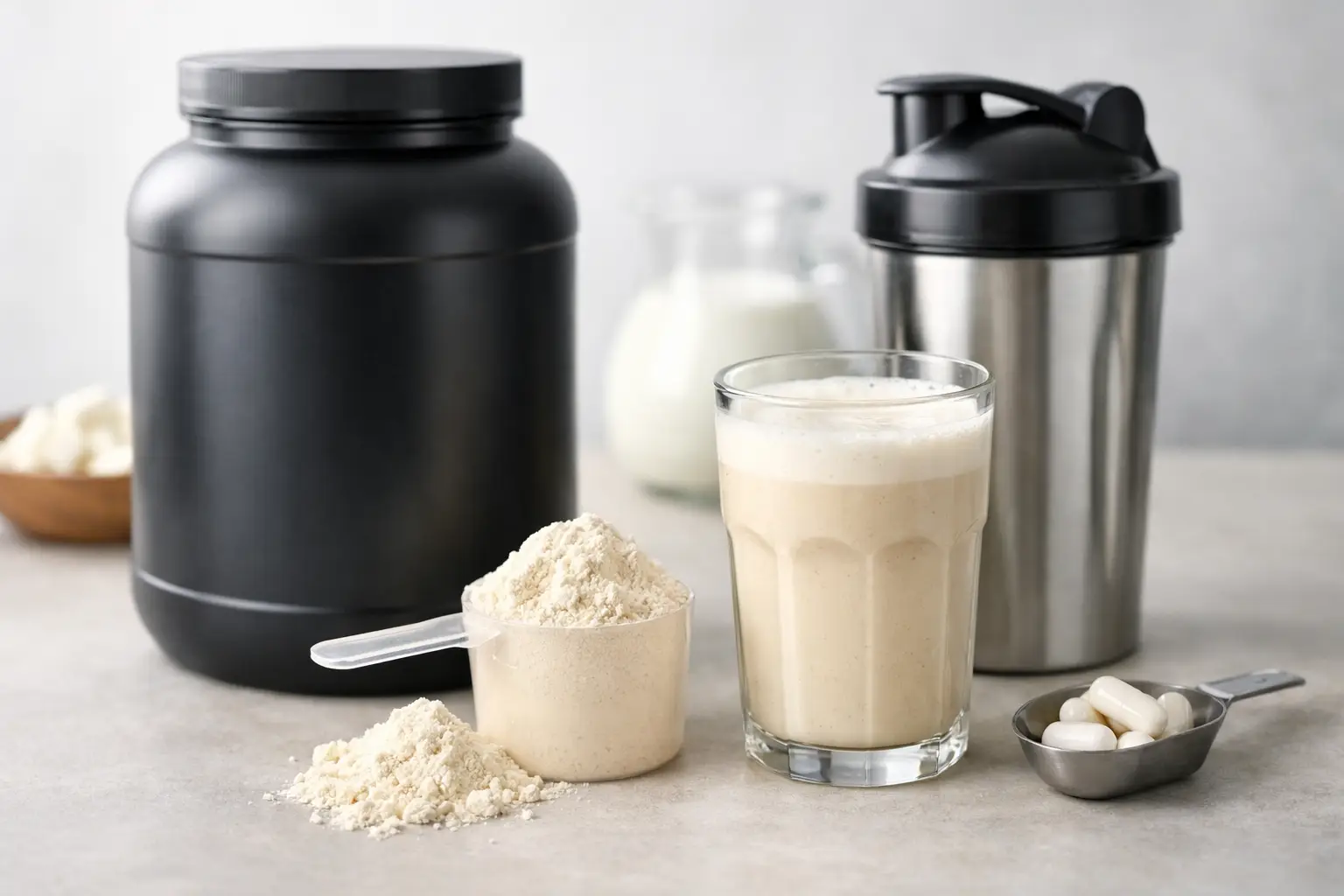
If after training you want not guesswork but a clear answer, this whey protein isolate review is just for you. Isolate is often presented as a “cleaner” protein, but the real value becomes clear only when you know what you’re getting for the higher price, who it’s actually beneficial for, and when a simple concentrate might be perfectly sufficient.
Turinys
What is whey protein isolate
Whey protein isolate is a milk-derived protein that has been additionally filtered so that it contains more protein and less fat and carbohydrates. Typically, this means a higher protein percentage per serving than concentrate. Because of this, isolate is often chosen when precision matters to you — more protein, fewer “extras” from a macronutrient standpoint.
In practice, this usually also means a lower lactose content. This is exactly where isolate becomes not a marketing term but a genuinely more convenient choice for many people. If you feel bloating or heaviness after certain protein shakes, the problem may not be the protein itself but the higher lactose content in the product.
Whey protein isolate review based on real benefits
The most important question is not “is isolate good?” but “is it the best for your situation?” If you aim to build muscle mass, recover after training, or simply conveniently hit your daily protein target, isolate can be a very good tool. It is quickly digested, has plenty of essential amino acids and especially leucine, which is important for muscle protein synthesis.
However, it’s worth saying it straight — isolate alone doesn’t create results. If your total daily protein intake is too low, your sleep is poor, and your training is random, a pricier protein won’t solve the problem. A supplement helps when you already have at least some kind of plan.
This is where isolate’s main advantage comes in: convenience. When you don’t have time for a full meal, want a quick option after sports, or are following calorie control, it lets you manage your nutrition more precisely. Less fat and carbohydrates means it’s easier to “fit” protein into your daily target.
How it differs from concentrate
The biggest difference is in the composition, not in some miraculous effect. Concentrate is also a quality whey protein and is perfectly sufficient for most people. It often costs less, the taste can be creamier, and results in a sports context will often be very similar if the total protein intake per day matches.
Isolate stands out when lower lactose content, stricter nutrition control, or more sensitive digestion matters to you. If you’re in a “cutting” phase, counting every gram, or simply want a lighter product, isolate often wins. If your goal is simply to get more protein at a reasonable price, concentrate may be the more rational choice.
In short, there is a difference, but it’s not equally important to everyone. Your goal matters more than the label.
Who whey protein isolate is best suited for
It usually works best in four situations. First, when you train regularly and want a fast protein source after training. Second, when it’s hard to hit your daily protein target through food alone. Third, when you feel that regular dairy products or certain protein blends upset your digestion. Fourth, when you’re in a calorie deficit and want as much protein as possible with as few extra calories as possible.
For an older person, isolate can also be a practical solution if appetite is lower but protein needs remain important for maintaining muscle mass and overall well-being. In that case, the key thing isn’t the sports label but a simple factor — whether it’s easy to consume enough protein throughout the day.
If you’re a beginner, there’s no need to fear that this is “too serious” a product. A protein supplement isn’t only for bodybuilders. It can be a simple way to bring more structure into your day, especially if you rush in the morning, train after work, and don’t feel like eating heavy food in the evening.
When to take it for it to make sense
The most popular time is after training because it’s simply convenient. You drink it quickly, get protein quickly, and don’t have to overthink it. But there’s no magical 30-minute window that ruins everything if you miss it. Far more important is how much protein you get over the entire day.
Isolate also works in the morning, if your breakfast is poor in protein, or between meals when you want a more filling but not too heavy option. Some people also use it in recipes — in porridge, yogurt, smoothies. This is a good solution if you want not just to “drink a protein” but also to organize your nutrition more simply.
If you train in the evening and don’t feel like having a big meal after sports, isolate can be especially convenient. Still, if you come home after training and eat a normal meal, the supplement isn’t necessary. It’s useful when it makes life easier, not when it’s bought out of obligation.
How to evaluate a product label
A good whey protein isolate review doesn’t stop at the word “isolate” on the package. Evaluate the serving and composition. First, look at how much protein is in one serving. Then assess how much sugar and fat there is, and whether the product isn’t overloaded with unnecessary additives.
It’s also worth paying attention to the ingredient order. If you see whey protein isolate in first place, that’s already a good sign. If the product is called an isolate but the composition has a lot of blends, flavor enhancers, or fillers, it’s worth pausing and comparing.
Taste and solubility matter too. A theoretically perfect product that you can’t drink because of the taste or that leaves lumps won’t stay in your routine for long. A sustainable choice is the one you actually use week after week.
Most common myths about isolate
One myth is that isolate automatically builds more muscle than concentrate. Not quite. If the daily protein intake from both products is similar, the difference in practice can be small. The result is determined more by overall nutrition, training, and recovery.
Another myth is that isolate suits everyone without exception. If you’re sensitive not only to lactose but also to milk protein itself, isolate may not be suitable. Less lactose doesn’t mean it’s no longer a milk-derived product.
A third myth is that the more expensive the isolate, the better it always is. Price often reflects not just the raw material but also taste, brand, additional ingredients, or even packaging. The smartest approach is to compare not promises but protein content, composition, and how your body tolerates the product.
Is it worth paying more
It’s usually worth it when you feel a clear benefit. If you feel fine with concentrate, easily hit your protein target, and don’t count every calorie, isolate may be more of a “nice to have” than a “must have.” If you have more sensitive digestion, are aiming for very precise nutrition, or want a lighter option for everyday use, the higher price can pay off in convenience.
At this point, it’s not worth chasing trends. Consistency matters more for your progress than the most perfect product on the shelf. Sometimes a better decision is a simpler supplement that you buy and use regularly, rather than a premium option that sits in the cupboard after two weeks.
How to make a good decision
Start with yourself, not with advertising. Are you short on protein? Do you feel discomfort after other products? Are you in calorie control? Do you need a quick option after training? If you answer “yes” to at least a few questions, isolate could be a very logical step.
If you’re still unsure, choose based on real-world use. What taste is acceptable to you, what serving size is convenient, whether the product fits your daily rhythm. This is exactly where long-term results usually come from — not from a perfect plan on paper, but from a choice you actually implement.
The StayStrong approach here is simple: a supplement should serve your goal, not create more questions. When you choose clearly and according to your situation, protein becomes not a trendy purchase but a practical tool for a stronger tomorrow.
If you want progress, don’t look for a miracle — look for a solution you can repeat without stress. That’s exactly how you build results that last.