Digestive Enzymes are among the most important helpers in your body — they are responsible for you getting the maximum benefit from food. If you feel heavy after a meal, suffer from bloating or constant fatigue, it may be that your enzyme system is not working efficiently enough. High-quality digestive enzyme supplements can help restore this balance and improve your overall well-being.
Key Takeaways
- Digestive Enzymes — directly break down food: proteins, fats, carbohydrates and lactose, helping the body absorb up to 30% more nutrients.
- 5 main enzymes — amylase, protease, lipase, lactase and cellulase work in a complex way, solving problems of bloating, heaviness and gas after every meal.
- Enzyme production decreases with age — after the age of 30, natural enzyme production begins to slow down, making supplements especially important in older age.
Table of Contents
What Are Digestive Enzymes?
Digestive Enzymes are specialized proteins produced by your pancreas, stomach, and small intestine. The task of these enzymes is to break down complex food components into simple molecules that the body can easily absorb. Without digestive enzymes, even the healthiest diet would not provide the desired benefits.
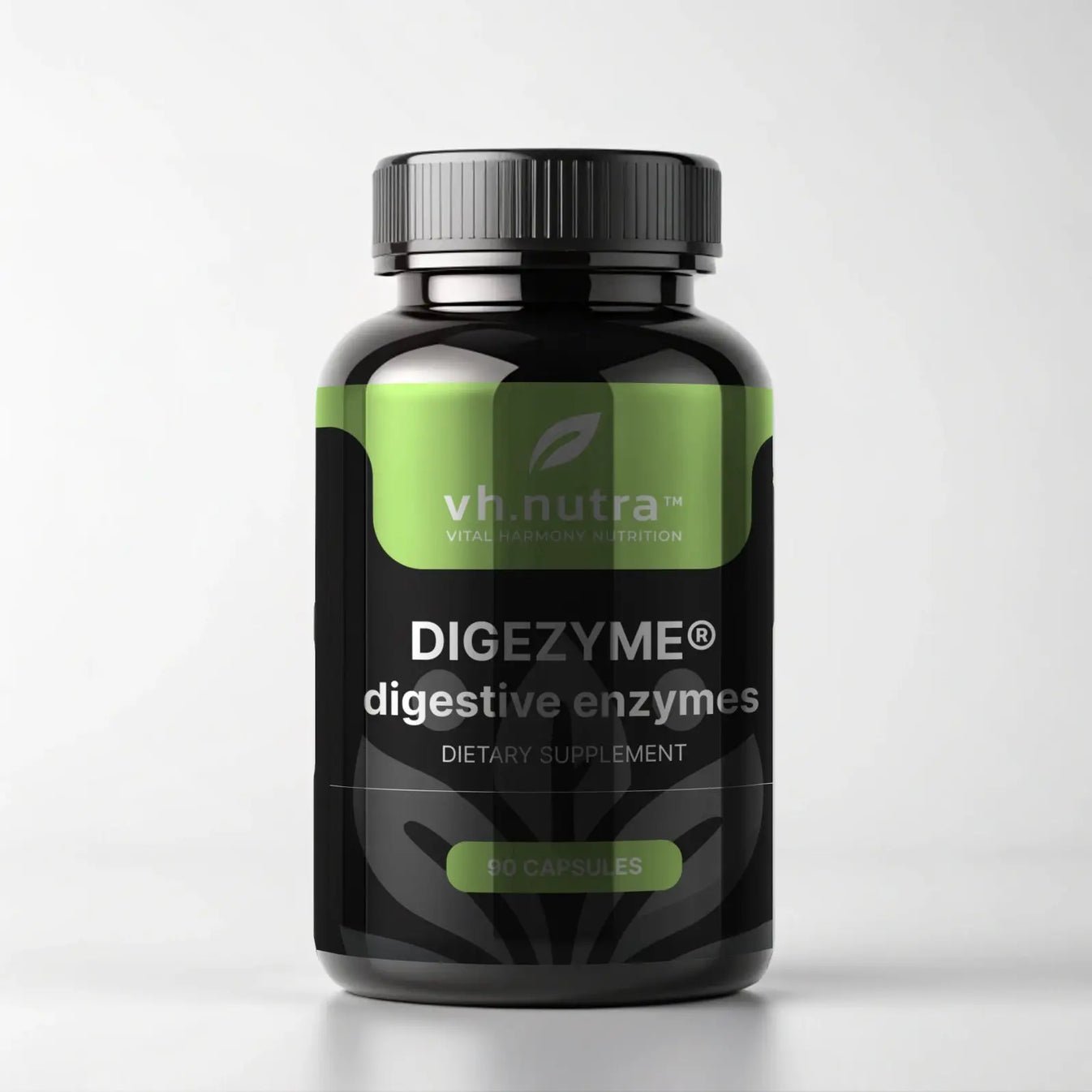
There are several main types of digestive enzymes. Amylase breaks down carbohydrates into simple sugars. Protease is responsible for breaking down proteins into amino acids. Lipase helps digest fats, and lactase breaks down milk sugar lactose. Cellulase, which the human body does not produce, helps break down plant fiber. That is why complex digestive enzyme supplements, such as VitalHarmony VH.Nutra DigeZyme® — digestive enzyme complex, combine all these enzymes in one product. You can find more enzyme supplement options in the supp.lt digestive enzymes category.
Natural digestive enzyme production decreases with age. After the age of 30, enzyme activity can decrease by 10-15%, which is why many people begin to experience digestive discomfort. It is important to understand that digestive enzyme deficiency is not a disease — it is a natural physiological process that can be corrected with appropriate enzyme supplements.
1. Better Nutrient Absorption
The most important benefit of digestive enzymes is that they help the body extract more vitamins, minerals, and other beneficial substances from the same amount of food. When enzymes efficiently break down proteins, fats, and carbohydrates, the intestines can absorb up to 30% more nutrients. This means that even a perfectly balanced diet without these enzymes can be only partially effective.
Imagine: you eat plenty of vegetables, lean meat, healthy fats, but your body absorbs only part of their value. It is for this reason that digestive enzymes are so important not only for those with digestive problems but also for everyone who wants maximum return from their diet. For example, the VH.Nutra DigeZyme® enzyme complex with five enzymes ensures that your body gets everything you give it.
2. Reduced Bloating and Gas
Bloating after a meal is one of the most common signals that your enzyme system needs help. When food is not fully digested, it reaches the large intestine, where bacteria begin to ferment it. This process releases gases, causing discomfort, distension, and an unpleasant feeling of heaviness.
Digestive enzymes solve this problem fundamentally. Instead of undigested food fermenting in the gut, enzymes break it down in the stomach and small intestine. The result is significantly less gas and much more comfortable well-being after meals. According to the National Institutes of Health (NIH), people who take these enzymes regularly experience up to 60% fewer episodes of bloating.
These enzymes are especially beneficial when consuming legumes, cruciferous vegetables (broccoli, cabbage), or dairy products — those foods that naturally cause more gas. It is important to know that the problem is not in the products themselves, but in the enzymes’ ability to process them properly.
3. Better Gut Health
A healthy gut is not just good digestion, but the foundation of overall body well-being. Digestive enzymes contribute to gut health in several ways. First, they reduce the amount of undigested food that could irritate the intestinal walls. Second, efficient digestion supports a healthy balance of gut microflora.
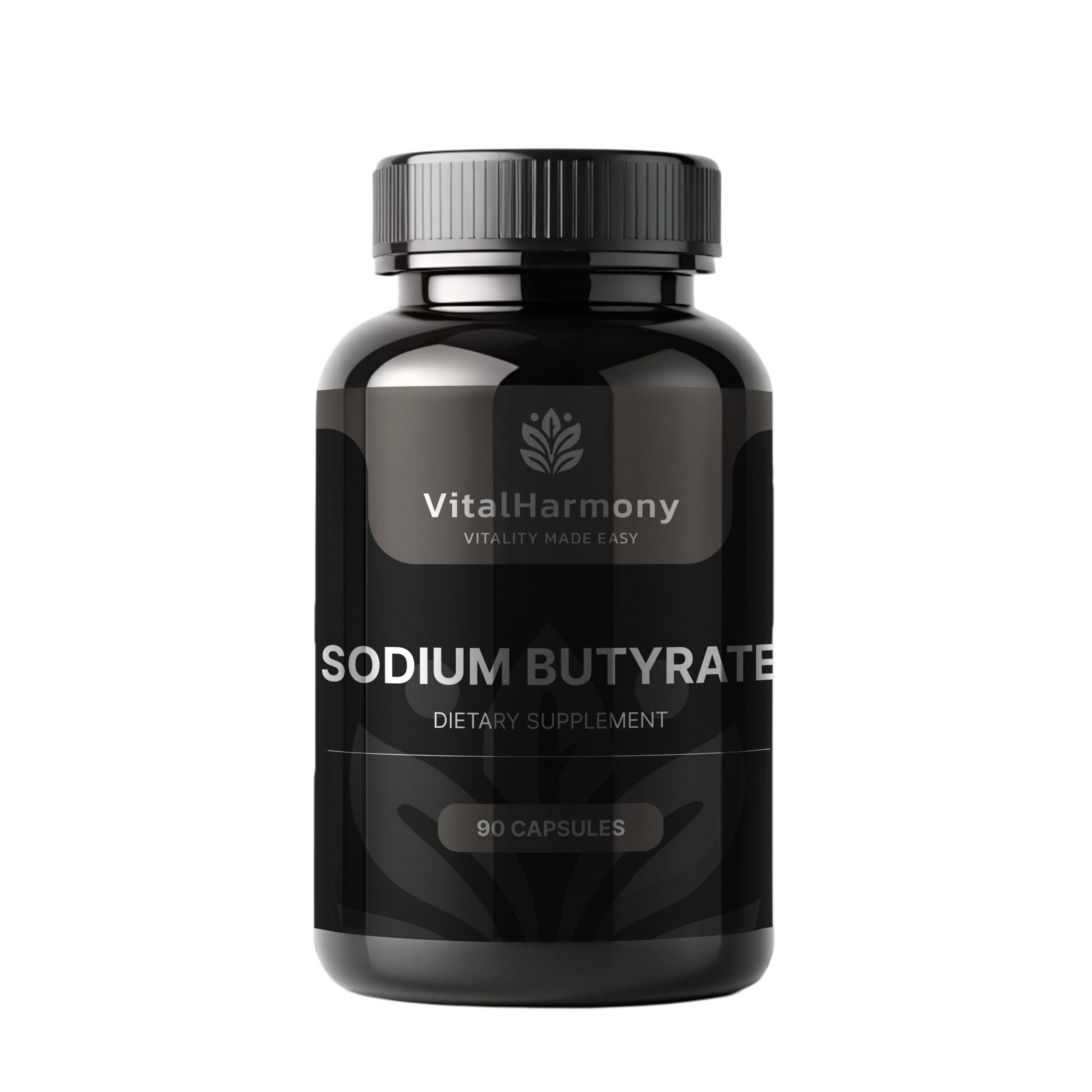
When digestive enzyme activity is optimal, the intestinal lining receives less damage and performs its barrier function better. This is especially important for people with sensitive digestion or irritable bowel syndrome. In addition to enzyme supplements, gut health can also be supported by VitalHarmony Sodium Butyrate, which is specifically designed to support the intestinal lining.
4. Increased Energy Levels
Constant fatigue after meals is often mistakenly attributed to laziness, when in fact it may signal a digestive enzyme deficiency. Digestion is an energy-intensive process — it uses about 10% of the body’s total energy. When the enzyme system works inefficiently, the body has to work twice as hard to extract the same nutrients.
Digestive enzymes lighten this load. Instead of expending energy on heavy digestion, the body can direct it where it is truly needed — to brain function, muscle work, or the immune system. Many people notice that after starting enzyme supplements, the afternoon energy slump becomes significantly smaller, and overall energy levels rise.
Furthermore, better nutrient absorption means the body gets more B vitamins, iron, and magnesium — precisely those substances directly responsible for energy production in cells. This creates a positive feedback loop: better digestion → more energy → better well-being.
5. Stronger Immunity
Did you know that 70-80% of immune system cells are located in the gut? This fact explains why digestive enzymes have a direct impact on your immunity. When the gut functions optimally, the immune system receives all the necessary resources to fight infections and inflammation.
Digestive enzymes strengthen immunity through several mechanisms. First, they ensure better absorption of nutrients essential for the immune system — zinc, selenium, vitamin C, and vitamin D. Second, efficient protein breakdown supplies the body with amino acids needed for antibody production. Third, the reduced amount of undigested food in the gut decreases systemic inflammation, which weakens the immune response.
For people who exercise, this benefit of digestive enzymes is doubly important — intense workouts temporarily weaken immunity, so efficient digestion becomes even more crucial for recovery and protection against illness.
6. Help with Weight Loss
Digestive enzymes are not a magical weight loss tool, but they can become a valuable ally on the path to weight control. How does it work? When food is fully digested, the body receives a satiety signal faster. This means you feel full for longer and snack less between meals.
A second important aspect is better fat breakdown. Lipase, one of the main digestive enzymes, efficiently breaks down fats into fatty acids that the body can use for energy rather than storing as reserves. Additionally, reduced bloating visually decreases waist circumference and improves well-being, which motivates you to continue a healthy lifestyle.
Third, digestive enzymes help prevent constipation — a common problem when changing diet during weight loss. Together with XXL Nutrition Psyllium Husk Fiber, enzymes create a synergistic effect: enzymes break down food, while fiber helps regularly eliminate waste.
7. Better Skin Condition
Your skin is a mirror of your body, and gut health is one of the strongest factors affecting skin condition. The connection between digestive enzymes and skin condition goes through several pathways: better nutrient absorption supplies the skin with collagen, vitamins A, C, E, and zinc, which are needed to maintain healthy skin.
When digestive enzyme activity is insufficient, undigested food residues can accumulate in the gut, promoting systemic inflammation. This inflammation often manifests through the skin — acne, rashes, or puffiness. Enzymes help prevent this inflammatory cascade by ensuring food is fully digested before it reaches the large intestine.
Research shows that people with chronic skin problems often also have digestive disorders. Although digestive enzymes are not a direct treatment for skin problems, they can significantly contribute to improving skin condition through the gut-skin axis mechanism.
How to Take Digestive Enzymes?
To get the maximum benefit from digestive enzymes, it is important to know a few basic usage rules. Here is what experts recommend:
- Recommended dose: for most people, 1-2 capsules with each main meal is sufficient. The exact amount depends on the specific product — for example, VH.Nutra DigeZyme® recommends 1 capsule 2-3 times per day.
- When to take: before a meal or at the beginning of a meal. This ensures the enzymes are active exactly when food enters the stomach.
- Duration of use: enzymes can be taken for a long time, especially if you have chronic digestive problems. Many people take them continuously as part of their daily routine.
- Maximum safe dose: follow the manufacturer’s instructions. Exceeding the recommended dose may cause diarrhea or abdominal cramps.
It is important to remember that digestive enzymes work best when taken regularly. The first results are usually noticeable after 3-5 days, and the full effect becomes apparent within 2-3 weeks.
Possible Side Effects
Digestive enzymes are considered one of the safest dietary supplements on the market. Most users experience no negative effects. However, as with any supplement, there are a few things worth knowing.
In rare cases, especially during the first days of use, mild abdominal discomfort, diarrhea, or constipation may occur. These symptoms usually resolve within a few days as the body adjusts to the higher enzyme intake. If symptoms persist for longer than a week, it is recommended to reduce the dose or consult a doctor.
Particular caution should be exercised by people with stomach ulcers, pancreatitis, or other serious digestive system diseases — in such cases, digestive enzymes should only be taken after consulting a doctor. Pregnant and breastfeeding women are also advised to consult a specialist before taking enzyme supplements.
Digestive Enzymes and Probiotics — What Is Important to Know?
It is often confused that digestive enzymes and probiotics are the same thing. In reality, they are two different products that complement each other perfectly. Enzymes are proteins that directly break down food. Probiotics are live beneficial bacteria that live in your gut and help maintain a healthy microflora.
The best strategy is to use both. Digestive enzymes prepare food for absorption, while probiotics ensure that the gut environment is favorable for that absorption. It is similar to a team: some unlock the doors (enzymes), others take care that the room is tidy (probiotics).
In addition to enzymes and probiotics, digestive health is also supported by other supplements, such as sodium butyrate — a short-chain fatty acid that nourishes gut cells. This combination creates a comprehensive digestive support system. Read more about general wellness supplement choices in our article supplements for well-being — what to choose.
Frequently Asked Questions
Can I take digestive enzymes every day?
Yes, most digestive enzymes are designed for daily long-term use. They have no habituation effect, so the body does not start producing fewer enzymes on its own. However, if you do not experience any digestive problems, enzyme supplements may not be necessary in your daily routine.
Do digestive enzymes help with heartburn?
Digestive enzymes can help indirectly. Heartburn often occurs due to slow stomach emptying, and enzymes speed up the breakdown of food and its passage from the stomach to the intestines. This reduces pressure on the lower esophageal sphincter, and consequently, the likelihood of heartburn.
What is the difference between plant-based and animal-based digestive enzymes?
Animal-based enzymes (e.g., pancreatin) are obtained from animal pancreas, while plant-based enzymes (e.g., bromelain from pineapple, papain from papaya) come from plants. Plant-based enzymes work over a wider pH range, making them more versatile and suitable for various digestive disorders. Complex supplements, such as VH.Nutra DigeZyme®, most often use microbial-derived enzymes, which are the most stable and effective.
Are digestive enzymes suitable for vegans?
It depends on the product. Plant-based and microbial digestive enzymes are suitable for vegans. Always check the product label — if the enzymes are obtained microbiologically (like DigeZyme®), they are 100% plant-based and suitable for vegans.
Disclaimer: This information is for educational purposes only and cannot replace professional medical advice. Before starting any dietary supplements, it is necessary to consult a doctor or pharmacist.
Related Articles
- Berberine: 7 Benefits for Metabolism, Blood Sugar Control and Health
- Supplements for Well-Being: What to Choose?
- Zinc: 7 Benefits for Immunity, Skin and Health