Turinys
Trumpai:
- Vitaminas D yra vienas svarbiausių vitaminų organizmui — jo trūkumas siejamas su silpnesniu imunitetu, kaulų retėjimu ir prastesne nuotaika.
- Vitamino D trūkumas ypač dažnas Lietuvoje — nuo spalio iki balandžio saulės UVB spindulių nepakanka vitamino D gamybai odoje.
- Vitaminas D3 yra 2–3 kartus efektyvesnis nei D2 — rinkis D3 formą su riebalais geresniam įsisavinimui.
- Vitamino D papildai su K2 užtikrina, kad kalcis patektų į kaulus, o ne į kraujagysles.
- Vitaminas D veikia kaip hormonas — reguliuoja per 200 genų ir dalyvauja imuninės sistemos, kaulų bei raumenų veikloje.
- Net 80% lietuvių žiemą turi vitamino D trūkumą — pagrindinė priežastis yra saulės šviesos trūkumas, o ne mityba.
- Vitaminas D3 yra 2–3 kartus efektyvesnis nei D2, o derinant su vitaminu K2 užtikrinamas tinkamas kalcio pasiskirstymas organizme.
- Frequent infections — if you get colds or the flu more than 2–3 times a year, vitamin D deficiency could be one of the causes.
- Persistent fatigue — you feel exhausted even after a full night’s sleep. This is one of the most common symptoms of vitamin D deficiency.
- Bone and joint pain — especially in the back and hip area. Vitamin D deficiency can cause osteomalacia, which manifests as deep bone pain.
- Muscle weakness — it is difficult to climb stairs, get up from a chair, or carry heavy objects.
- Poor mood — you feel depressed, irritable, or apathetic without a clear reason.
- Slow wound healing — vitamin D deficiency slows down tissue renewal and wound healing after surgeries or injuries.
- Infants (0–12 months): 400 IU per day (recommended for all infants in Lithuania).
- Children (1–18 years): 600–1000 IU per day, depending on age and sun exposure.
- Adults (19–70 years): 800–2000 IU per day for prevention.
- Older adults (>70 years): 800–2000 IU per day — in older age, the skin produces less vitamin D.
- Pregnant and breastfeeding women: 1500–2000 IU per day.
- Athletes: 2000–4000 IU per day, especially when training indoors.
- Take with food containing fat. This vitamin is fat-soluble — taking it with avocado, nuts, olive oil, or fatty fish increases absorption by 30–50%.
- Best time — morning or lunch. Taking it in the evening may disturb sleep for some people, as it is involved in energy metabolism.
- Take it regularly, every day. It accumulates in the body, so irregular use will not have the same effect. 2000 IU daily is better than 10000 IU once a week.
- Combine with vitamin K2 and magnesium. Magnesium helps activate vitamin D in the body, so these three elements work synergistically.
- Check your level after 2–3 months. If you started taking it due to a deficiency, check your 25(OH)D blood level after 2–3 months — this will tell you if the chosen dose is appropriate.
Vitaminas D dažnai vadinamas „saulės vitaminu” — ir ne veltui. Tai vienintelis vitaminas, kurį mūsų organizmas gali pasigaminti pats, veikiamas saulės šviesos. Tačiau gyvenant Lietuvoje, kur saulėtų dienų skaičius ribotas, vitamino D trūkumas tampa itin dažna problema. Tiesą sakant, tyrimai rodo, kad iki 80% lietuvių žiemos metu turi vitamino D stygių. Šiame straipsnyje sužinosi 7 svarbiausias vitamino D naudas, kaip atpažinti trūkumą ir kokius papildus rinktis.
Pagrindinės išvados
Vitaminas D ir imunitetas — kaip stiprina apsaugą?
Vitaminas D yra vienas svarbiausių imuninės sistemos reguliatorių. Jis aktyvina imunines ląsteles — makrofagus ir T-limfocitus — kurios kovoja su virusais ir bakterijomis. Be pakankamo jo kiekio imuninė sistema veikia lėčiau, o organizmas tampa imlesnis infekcijoms.
Scientific research confirms that people with low levels of this vitamin are more likely to suffer from respiratory tract infections, flu, and colds. A large-scale study published in the British Medical Journalshowed that D3 supplements reduce the risk of acute respiratory tract infections by 12–42%, especially in those with initially low levels.
Interestingly, vitamin D not only strengthens innate immunity but also regulates adaptive immunity — helping to prevent an overly strong immune response that can cause tissue damage. For this reason, this fat-soluble vitamin is being studied in the context of autoimmune diseases, including multiple sclerosis and rheumatoid arthritis.
If you want to maintain strong immunity, vitamin D should be part of your daily routine, especially in autumn and winter. The recommended preventive dose to support the immune system is 800–2000 IU per day.
Vitamin D for bone health — why is calcium not absorbed without it?
This is probably the most well-known function of vitamin D — regulating calcium and phosphorus metabolism. Without sufficient levels, the body can absorb only 10–15% of dietary calcium. With adequate levels, this number rises to 30–40%.
Vitamin D deficiency in children causes rickets — softening and deformation of bones. In adults, it manifests as osteomalacia (bone pain and weakness) and osteoporosis — a condition where bones become brittle and fracture easily. Studies show that people over 50 who take this vitamin supplement with calcium have a 15–30% lower risk of hip fractures.
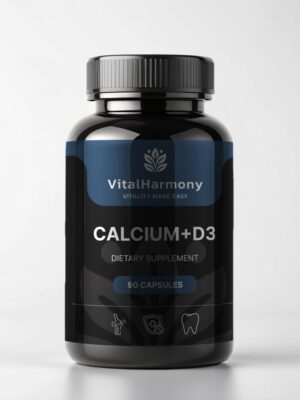
It is important to note that vitamin D and vitamin K2 work together — D helps absorb calcium, while K2 directs it to bones rather than blood vessels. This is why many high-quality supplements combine these two substances. This synergy is especially important for older people, for whom calcium buildup in arteries poses a risk of cardiovascular disease.
Vitamin D and mood — the link with depression and fatigue
Have you noticed that in winter you often feel depressed, lacking energy and motivation? This may be related not only to shorter days but also to vitamin D deficiency. Research shows a clear link between low levels of this vitamin and symptoms of depression.
A 2019 meta-analysis reviewing 31 studies with over 28,000 participants found that people with the lowest levels had a 62% higher risk of depression compared to those with the highest levels. Additionally, supplemental D3 significantly reduced depressive symptoms, especially in those diagnosed with major depressive disorder.
Why is this? The brain has many receptors for this hormone — particularly in areas responsible for mood regulation. Vitamin D is involved in the production of serotonin (the “happiness hormone”) and regulates inflammatory processes in the brain that can contribute to the development of depression.
If you experience seasonal fatigue or low mood during the winter months — checking your blood level of this vitamin could be the first step toward better well-being. And preventive intake of 2000 IU per day can help maintain a good mood all year round.
Vitamin D for muscle function — why do athletes need more of it?
Muscle cells also have vitamin D receptors. Adequate levels of this substance directly affect muscle strength, speed, and recovery after physical exertion. Athletes and physically active people often have a higher need for it than the average person.
Studies with professional athletes have shown that vitamin D supplements can improve jump height, sprint speed, and muscle recovery. One study with football players found that after 8 weeks of supplementation, their 10-meter sprint time improved, and markers of muscle damage after training were lower.
Deficiency of this vitamin in athletes manifests not only as reduced performance but also as an increased risk of injuries, especially stress fractures. If you are active in sports — it is worth checking your blood level and, if necessary, taking 2000–4000 IU per day.
Signs of vitamin D deficiency — how to recognize it?
Signs of vitamin D deficiency are often subtle and develop gradually. Many people do not even suspect that their levels are too low. Here are the most common signals to pay attention to:
If you recognize several of these symptoms — it is worth checking vitamin D levels in the blood. This is a simple blood test (25(OH)D) that your family doctor can prescribe. The optimal level is 30–50 ng/ml (75–125 nmol/l).
How much vitamin D is needed per day?
Vitamin D dosage depends on age, lifestyle, current blood levels, and health status. Here are general recommendations based on guidelines from the European Food Safety Authority (EFSA) and other authoritative organizations:
The safe upper limit for adults is 4000 IU per day for long-term use. Higher doses (up to 10000 IU) may be prescribed short-term by a doctor when a significant deficiency is identified. However, it is important to remember — excess vitamin D accumulates in the body and can be toxic, so taking high doses without medical supervision is not recommended.
Only a blood test can determine the most optimal dose. If you cannot get tested, a safe preventive dose in autumn and winter is 2000 IU per day.
Best forms of vitamin D — D2 or D3?
Vitamin D supplements come in two main forms: D2 (ergocalciferol) and D3 (cholecalciferol). Although both forms increase vitamin D levels in the blood, D3 is significantly more effective.
Vitamin D3 is the same form that the skin produces when exposed to sunlight. Studies show that D3 is 2–3 times more effective than D2 — it raises 25(OH)D levels in the blood better, remains in the body longer, and is more biologically active. For this reason, most specialists recommend choosing supplements with vitamin D3 rather than D2.
Another important aspect is the form. This vitamin is fat-soluble, so it is best absorbed when taken with food containing fats. Choose oil-based supplements (soft gelatin capsules or drops) rather than dry tablets — dissolved in oil, it is absorbed 30–50% better.
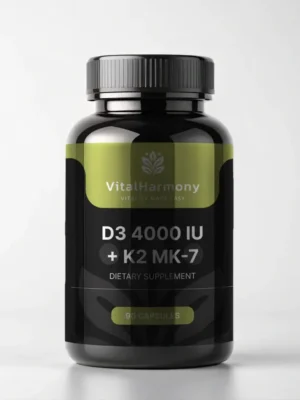
An additional advantage is the combination with vitamin K2 MK-7. As we mentioned, vitamin D and K2 work synergistically: D increases calcium absorption, K2 directs calcium to the bones. This combination is especially recommended for older people and those concerned with bone and heart health.
An excellent choice is — Vitamin D3 4000 IU + K2 MK-7. This supplement combines high-strength D3 with vitamin K2, ensuring maximum calcium absorption and proper distribution in the body. Taking one capsule per day with food provides the optimal daily intake of both vitamins. You can find more information here.
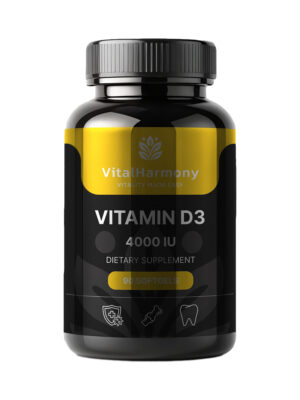
For those looking for a simpler option without K2 — Vitamin D3 4000 IU is an excellent choice. One small capsule per day provides the recommended 4000 IU dose, especially suitable for those who already take vitamin K2 separately. Read more about this product here.
How to take vitamin D?
To get the maximum benefit from supplements, it is important not only which form you choose, but also how you take them. Here are practical recommendations:
It is worth mentioning that D3 synthesis in the skin only occurs when the sun is high enough — in Lithuania, this is from May to September, approximately between 11 a.m. and 3 p.m. During the rest of the year, even when outdoors, the skin does not produce it. Therefore, supplements in autumn and winter are not a recommendation, but a necessity.
If you want to learn more about other minerals important for immunity, I recommend reading the article about signs of zinc deficiency — zinc works together with vitamin D in the immune system. It is also worth getting acquainted with the benefits of magnesium, as magnesium is essential for the activation of this vitamin in the body.
You can find high-quality D3 supplements and other health-beneficial products at supp.lt — exclusive offers and professional consultations.
Disclaimer: This information is for educational purposes only. Consult a doctor or pharmacist before starting to take supplements. The information provided in the article is not medical advice.