Calcium is one of the most important minerals in the human body — it is not only responsible for the strength of bones and teeth but also participates in hundreds of vital processes. Although most people associate calcium only with bone health, this mineral plays a much broader role: from muscle contraction to nerve impulse transmission. Unfortunately, many people do not consume enough calcium through their diet, so high-quality calcium supplements can become an important part of the daily routine. In this article, we will discuss in detail the benefits of calcium, usage rules, and how to choose the best calcium supplement for your needs.
Key Takeaways
- Calcium — makes up about 1-2% of body weight, 99% of which is in bones and teeth, while the remaining 1% circulates in the blood and regulates vital functions.
- Peak bone mass is reached by age 30 — after that, adequate calcium intake helps maintain bone strength and reduces the risk of osteoporosis by 30-50%.
- Calcium + vitamin D3 + K2 synergistic combination ensures that calcium reaches the bones rather than accumulating in blood vessels — choose supplements with all three components.
Table of Contents
What Is Calcium?
Ca (calcium) is the most abundant mineral found in the body — an adult human body contains about 1-1.2 kilograms of it. As much as 99% is stored in bones and teeth, where this mineral provides structural strength and hardness. The remaining 1% circulates in the blood, muscles, and other tissues, where it performs vital regulatory functions.
The body cannot produce calcium on its own, so this mineral must be obtained through food or supplements. The main dietary sources of this mineral are dairy products, green leafy vegetables, sardines with bones, sesame seeds, and fortified plant-based beverages. However, even a balanced diet does not always ensure an adequate amount — especially if you are an active athlete, elderly, or do not consume dairy products. In such cases, supplements of this nutrient become a rational choice.
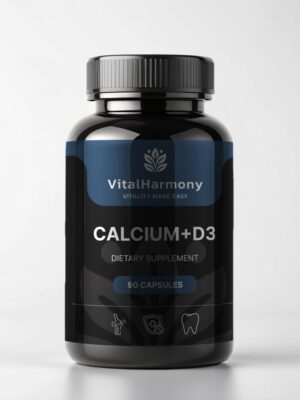
It is important to know that vitamin D3 is necessary for calcium absorption, and vitamin K2 is needed for this mineral to reach the bones rather than accumulate in blood vessels. This is why the best calcium supplements, such as VitalHarmony Calcium + D3 – Strong bones and immune support, already contain synergistically acting vitamins.
Interestingly, calcium is the fifth most abundant element in the Earth’s crust and one of the most studied minerals in medical science. Its homeostasis in the body is regulated by three main hormones: parathyroid hormone, calcitonin, and the active form of vitamin D3, calcitriol. This complex regulatory system ensures that calcium concentration in the blood remains constant even when intake fluctuates.
About 200-300 mg of calcium is lost daily through urine and sweat, so the reserves of this nutrient must be constantly replenished. The good news is that high-quality supplements, such as VitalHarmony Calcium + D3, allow you to easily and conveniently maintain optimal levels of this mineral even with a busy lifestyle.
1. Strengthens Bones and Reduces Osteoporosis Risk
Bones are not a static structure — they are constantly renewing: old bone tissue is broken down, and new bone is formed. Calcium is the main building material in this process. Until about age 30, the body accumulates peak bone mass, and later, especially after 40, bone density begins to gradually decrease.
Adequate intake of this mineral throughout life can reduce the risk of osteoporosis by as much as 30-50%. Osteoporosis is a condition where bones become brittle and prone to fractures even from minor impacts. It is especially important to ensure an adequate intake for postmenopausal women, as decreased estrogen levels accelerate bone tissue loss.
Studies show that regularly taking this mineral along with vitamin D3 significantly reduces the risk of bone fractures. For example, VitalHarmony Calcium + D3 provides 500 mg of calcium and vitamin D3 per serving — an optimal combination for daily bone support.
Scientists emphasize that its effect on bones is long-term — adequate intake of this mineral during childhood and adolescence leads to greater bone mass for life. It is like an investment in health: the more reserves you accumulate by age 30, the lower the likelihood of encountering osteoporosis later in life. Regular physical activity, especially weight-bearing exercises, further enhances the positive effect of calcium on bone density.
2. Supports Dental Health and Enamel Strength
Tooth enamel is the hardest substance in the human body, composed mainly of hydroxyapatite crystals (calcium-phosphorus compounds). This mineral gives teeth resistance to acids, mechanical impact, and daily wear. When this element is deficient, tooth enamel weakens, increasing the risk of caries and tooth sensitivity.
Interestingly, the body first supplies the blood and nervous system with calcium, and if it is lacking, it takes reserves from bones and teeth. Therefore, dental problems are often the first sign of calcium deficiency. Regular calcium intake, especially together with vitamin K2, helps maintain strong teeth and healthy enamel throughout life. If you want a supplement with K2, VitalHarmony Vitamin D3 4000 IU + K2 MK-7 perfectly complements calcium intake.
3. Regulates Muscle Contraction and Relaxation
Every muscle contraction — from a heartbeat to lifting an arm — depends on calcium ions. This mineral acts as a signaling switch: when a nerve impulse reaches a muscle, calcium ions are released into the muscle cell and initiate contraction. When they are removed from the cell, the muscle relaxes.
For physically active people, adequate calcium levels are especially important — a deficiency of this mineral can cause muscle cramps, spasms, and weakness. Together with magnesium, which acts as a natural muscle relaxant, calcium helps maintain optimal muscle function. This is precisely why it is recommended to combine calcium supplements with magnesium preparations — for example, VitalHarmony Magnesium Bisglycinate, which has the highest bioavailability and is gentle on the stomach.
4. Participates in the Blood Clotting Process
This mineral is an essential component of the blood clotting cascade — without this mineral, the body could not stop bleeding. In the clotting process, calcium acts as a cofactor, activating clotting factors and platelets. Every time you get injured, it is calcium that helps form the fibrin network that closes the wound.
Interestingly, the body regulates calcium concentration in the blood so strictly that even with a significant deficiency, blood calcium levels remain normal — the body simply “takes” the missing calcium from the bones. This is why a long-term deficiency can go unnoticed until serious bone problems appear. This is another reason why preventive calcium intake is a rational decision — it is better to maintain reserves in advance than to try to restore lost bone mass.
5. Supports Nervous System Function
The nervous system operates through electrochemical signals, and calcium is one of the main participants in this process. In nerve cells, calcium ions regulate the release of neurotransmitters — chemical substances that transmit signals between neurons. Without the proper amount of calcium, nerve impulses could not travel across synapses.
Calcium deficiency can manifest with symptoms such as irritability, anxiety, insomnia, or even depression. Scientific studies show a link between low calcium levels and an increased risk of neurological disorders. Fortunately, balanced use of these supplements can help maintain nervous system balance and well-being. This is especially relevant for people experiencing high stress or engaged in intense mental work.
Neuroscience specialists emphasize that this mineral is critically important for learning and memory. Long-term potentiation (LTP) — the process by which neurons strengthen their connections during learning — directly depends on the influx of calcium ions into nerve cells. This is why a balanced diet that provides the body with adequate amounts of this nutrient can contribute to better cognitive function throughout life.
6. Regulates Heart Rhythm and Blood Pressure
The heart is a muscle, so it is not surprising that this mineral plays a crucial role in its function. Every heartbeat depends on the coordinated movement of calcium ions in heart muscle cells. This mineral helps regulate heart rhythm, blood vessel tone, and blood pressure.
Clinical studies have shown that adequate calcium intake is associated with lower blood pressure and a reduced risk of hypertension. According to the National Institutes of Health (NIH), a balanced diet rich in this mineral can reduce the likelihood of high blood pressure by up to 20%. However, it is important to remember that an excess of this mineral (especially from supplements without D3 and K2) can accumulate in blood vessels, so always choose balanced supplements with synergistic vitamins.
7. Helps Maintain a Healthy Weight
Recent scientific studies have revealed an unexpected benefit of calcium — this mineral can help regulate body weight. The mechanism is related to fat cells: when the concentration of this nutrient in cells is adequate, the body burns fat more actively and stores less of it. Conversely, when this mineral is deficient, fat cells tend to accumulate reserves.
Several large-scale studies have shown that people who consume adequate amounts of this element have an average body weight 2-4 kg lower than those who are deficient in this mineral. Of course, calcium supplements alone will not solve weight problems — they act as additional support alongside a balanced diet and physical activity. But it is another reason to ensure your body gets enough of this versatile mineral.
Scientists have also noted that dairy products, which are the main source of this nutrient, correlate more strongly with lower weight than supplements alone. This suggests that it may not be just the amount of calcium that matters, but also the synergy of other bioactive components — proteins, probiotics. Nevertheless, supplements remain an excellent alternative for those who, for various reasons, cannot consume dairy products.
How to Take Calcium
Recommended dosage: 1000-1200 mg of calcium per day for adults. For those under 50 — 1000 mg, for those over 50 — 1200 mg. For pregnant and breastfeeding women, 1000-1300 mg per day is recommended.
When to take: The carbonate form is best taken with meals, as stomach acid helps with absorption. Calcium citrate can be taken independently of food. It is important to split the daily dose into two parts (e.g., 500 mg in the morning and evening), as the body can effectively absorb only about 500-600 mg of this mineral at one time.
Duration of use: It can be taken long-term, especially if you do not get enough of this mineral from food. For maintaining bone health, a continuous preventive dose is recommended.
Maximum safe dose: Do not exceed 2000 mg of calcium per day (including from food and supplements). Higher doses increase the risk of kidney stones and can cause heart problems. VitalHarmony Calcium + D3 provides 500 mg of calcium per serving — an optimal portion that is easy to dose according to individual needs.
Possible Side Effects
Although calcium is safe when taken in recommended doses, excessive amounts can cause unpleasant side effects. The most common symptoms are constipation, bloating, and gas buildup. Calcium carbonate more often causes these symptoms than calcium citrate.
Long-term use of very high doses (over 2000-2500 mg per day) can increase the risk of kidney stone formation. It is also important to know that this mineral can interact with certain medications — antibiotics, thyroid hormone preparations, and iron supplements. It is recommended to take calcium supplements and these medications at least 2-3 hours apart. Always consult your doctor if you are taking prescription medications and planning to start these supplements.
Calcium and Vitamin D — What You Need to Know
Calcium and vitamin D3 work as an inseparable pair — without adequate vitamin D3 levels, the body can absorb only 10-15% of consumed calcium, but with it, up to 30-40%. Vitamin D3 stimulates the production of calcium-transporting proteins in the intestines, allowing this mineral to enter the bloodstream more effectively. This explains why even with high calcium intake, but with vitamin D3 deficiency, a deficiency can still develop.
Even more important is vitamin K2 — it directs calcium to where it is needed (into bones) and prevents it from accumulating in blood vessels and soft tissues. It is for this reason that modern supplements of this nutrient are combined with D3 and K2. VitalHarmony Vitamin D3 4000 IU + K2 MK-7 is an excellent addition to calcium preparations — this combination ensures that every milligram of calcium reaches the right place. Read more about the synergy of these vitamins in our article How to properly combine vitamin D and K2.
Frequently Asked Questions
Can I get enough calcium from food alone? Theoretically, yes — if you consume 3-4 servings of dairy products, green leafy vegetables, and other calcium-rich foods daily. However, in practice, most people do not meet the recommended intake. For example, one cup of milk contains about 300 mg of calcium — to reach 1000 mg, you would need to drink more than 3 cups daily. If your diet lacks calcium sources, supplements are a rational solution. More calcium supplement options can be found in the supp.lt calcium supplements category.
Does calcium interfere with iron absorption? Yes, calcium can reduce iron absorption if taken together. It is recommended to take calcium and iron supplements at different times — for example, calcium in the morning and evening, and iron at lunch. There should be at least a 2-hour break between these minerals.
When is it better to take calcium — morning or evening? It is best to take it twice a day, splitting the daily dose. An evening dose can be especially beneficial because the most intense bone renewal occurs at night, and it can also help with relaxation and improve sleep quality. If you take magnesium, it is also better to take it in the evening — VitalHarmony Magnesium Bisglycinate perfectly complements the evening routine.
In conclusion, ensuring an adequate calcium intake in your daily diet is one of the simplest yet most effective investments in long-term health. Whether you are a young athlete aiming for maximum results or an older person wanting to maintain bone strength — a properly chosen supplement can become a reliable ally. Choose products with synergistic vitamins D3 and K2, follow the recommended dosages, and remember that a balanced diet is always the foundation, while supplements are just a smart addition to it.
Disclaimer: This information is for educational purposes only and cannot replace professional medical advice. Before starting any dietary supplements, it is necessary to consult a doctor or pharmacist.