L-Glutamine is a conditionally essential amino acid that plays a crucial role in gut health, the immune system, and muscle recovery. Although the body can produce glutamine itself, its need increases significantly during intense sports, stress, or illness. High-quality L-glutamine supplements can become a valuable tool for maintaining energy, faster recovery after workouts, and stronger immunity.
Key Takeaways
- L-Glutamine — the most abundant amino acid in blood and muscles, constituting about 60% of all muscle amino acids.
- Gut Health — the primary energy source for intestinal cells, helps maintain the integrity of the lining and reduces leaky gut.
- Muscle Recovery — reduces muscle soreness after workouts and speeds up glycogen replenishment by up to 40%.
- Immunity — essential for the function of white blood cells, especially after intense training or illness.
Table of Contents
What is L-Glutamine?
L-Glutamine is a conditionally essential amino acid — meaning the body can produce it on its own, but under certain conditions, the need for it exceeds production capacity. This amino acid is the most abundant in blood plasma and muscle tissue, where it makes up about 60% of all amino acids found in muscles. L-glutamine plays a crucial role in many bodily functions — from protein synthesis to cellular energy production.
Interestingly, L-glutamine is called “conditionally essential” — for a healthy person under normal conditions, it is sufficient, but during injuries, burns, surgeries, intense training, or chronic illnesses, the body’s glutamine stores deplete rapidly. This is precisely why this amino acid is especially important for athletes, those recovering from injuries, and those with digestive issues.
Unlike many other supplements, L-glutamine works not through one, but through many mechanisms — it is the primary energy source for rapidly dividing cells, such as intestinal epithelial cells (enterocytes) and immune system cells. For this reason, the benefits of glutamine encompass several different body systems simultaneously.
7 Benefits of L-Glutamine for the Body
The benefits of L-Glutamine for the body are broad and encompass the digestive, immune, muscle, and nervous systems. Here are seven key reasons why it’s worth considering supplementing this amino acid into your daily routine.
1. Gut Health Support
L-Glutamine is the primary energy source for intestinal cells — enterocytes, which line the small intestine. These cells use glutamine as their main fuel for activity and renewal. Research shows that glutamine supplementation can help maintain the integrity of the intestinal lining and reduce intestinal permeability — a condition often called “leaky gut”.
With leaky gut, undigested food particles, toxins, and bacteria can enter the bloodstream, causing inflammation and various symptoms. L-glutamine helps strengthen the tight junctions between intestinal cells, restoring the protective barrier. This is precisely why this amino acid is often recommended for people with Irritable Bowel Syndrome (IBS), Crohn’s disease, or ulcerative colitis.
Scientists have found that glutamine concentration in the gut directly affects the proliferation rate of mucosal cells. One study observed that supplemental glutamine use reduced intestinal permeability by up to 30% in patients recovering from major surgeries. This is particularly relevant for those who frequently experience bloating, discomfort, or irregular digestion.
2. Muscle Recovery After Workouts
During intense training, L-glutamine levels in muscles can decrease by up to 50%. This amino acid is essential for protein synthesis and muscle tissue repair. Supplemental glutamine intake after a workout can help repair damaged muscle fibers faster and reduce delayed onset muscle soreness (DOMS).
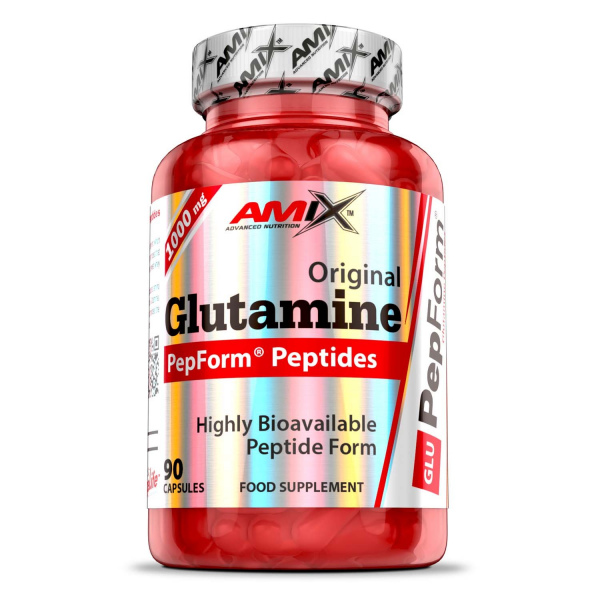
Research shows that L-glutamine not only promotes protein synthesis but also reduces muscle catabolism — the process by which the body breaks down muscle tissue for energy. This is especially important for those who train intensely, are on a calorie deficit, or during long endurance efforts. Amix Peptide PepForm® Glutamine uses advanced PepForm® technology, which improves glutamine absorption and bioavailability in muscle cells.
Practically, this means that regular glutamine use can help maintain muscle mass even during periods of intense sport or dieting. Athletes often notice that after incorporating glutamine into their routine, recovery between workouts becomes faster, and muscle soreness is reduced.
3. Immune System Strengthening
L-Glutamine is the primary fuel for immune system cells — lymphocytes, macrophages, and neutrophils. These cells use glutamine similarly to how muscles use glucose — for energy and to perform their functions. When glutamine levels in the blood drop, immune cells cannot effectively fight infections.
This is particularly relevant after intense workouts — it is known that after long endurance efforts (e.g., a marathon), athletes are more susceptible to upper respiratory tract infections. Studies have shown that glutamine supplements can reduce the risk of infection after such efforts. Long-term studies with marathon runners revealed that among runners who took glutamine, there were 35% fewer cases of colds.
Strengthening the immune system with glutamine is also beneficial for those recovering from surgeries, burns, or injuries. This amino acid helps the body restore the immune response more quickly and fight potential complications. Even people who do not exercise intensely can feel the immune benefits of glutamine — especially during the cold season or periods of higher stress.
4. Glycogen Replenishment
Glycogen is the main form of carbohydrate storage in muscles and the liver — it is the energy reserve the body uses during physical exertion. After an intense workout, glycogen stores are depleted, and their rapid replenishment is essential for quality recovery.
L-Glutamine has a unique property — it can increase glycogen storage in muscles after a workout. One study showed that taking glutamine along with carbohydrates after a workout resulted in glycogen replenishment that was 40% faster compared to taking carbohydrates alone. This property of glutamine is extremely valuable for athletes who train multiple times a day or need quick recovery between competitions.
This effect is especially important for endurance athletes — cyclists, runners, swimmers. Faster glycogen replenishment means more energy for the next workout and better athletic performance. Additionally, glutamine’s ability to aid glycogen storage is independent of insulin — this is an extra advantage, as excess carbohydrates are not always desirable.
5. Stress and Cortisol Reduction
Cortisol is a stress hormone released during physical exertion, emotional stress, or lack of sleep. While a certain amount of cortisol is normal and necessary, chronically elevated levels can lead to muscle catabolism, fat accumulation in the abdominal area, and weakened immunity.
L-Glutamine helps regulate cortisol levels in several ways. First, it is a precursor to glutamate and GABA — neurotransmitters that regulate the nervous system’s response to stress. Second, glutamine helps maintain stable blood sugar levels, which indirectly reduces cortisol release. Third, supplemental glutamine intake after a workout reduces the catabolic effect of cortisol on muscles.
Research shows that glutamine use can be beneficial not only during physical but also psychological stress. In one clinical trial, patients who experienced major surgical stress recovered their normal cortisol rhythm faster and had reduced post-operative catabolism with glutamine supplements. This suggests that this amino acid can be valuable for both athletes and people going through intense periods in their lives.
6. Brain Function Support
L-Glutamine plays an important role in brain function because it can be converted into glutamate — the main excitatory neurotransmitter — and GABA — the main inhibitory neurotransmitter. This balance between excitation and inhibition is essential for normal brain function, concentration, learning, and memory.
When glutamine levels in the body are adequate, the brain has enough raw material to produce the necessary neurotransmitters. When it is lacking — concentration may worsen, “brain fog” may appear, and fatigue may increase. Some studies suggest that glutamine supplements can help people experiencing mental fatigue from long work hours or intense study.
Interestingly, L-glutamine also participates in ammonia detoxification in the brain. Ammonia is a toxic byproduct of protein metabolism, especially during intense exercise. Glutamine helps remove excess ammonia, thereby protecting brain cells from toxic effects. This mechanism partially explains why glutamine can reduce mental fatigue after intense workouts.
7. Skin Health and Wound Healing
L-Glutamine is essential for rapidly dividing cells — this includes not only intestinal and immune cells but also skin cells. Skin renewal, wound healing, and collagen synthesis require a large amount of amino acids, and glutamine plays a major role here.
Research shows that after surgeries or injuries, glutamine stores in the body decrease significantly, and its supplementation can accelerate wound healing by up to 25%. This property is particularly relevant for athletes who experience microtraumas during training, as well as people with chronic skin issues such as acne or eczema.
For skin health, glutamine works indirectly — through the gut-skin axis. By improving gut condition, it reduces systemic inflammation, which often manifests on the skin. Amix Peptide PepForm® Glutamine with advanced absorption technology can be an effective choice for both athletes and those seeking digestive system support.
How to Take L-Glutamine?
Proper L-glutamine intake depends on your goals and lifestyle. Here are the main recommendations:
Recommended dose. The general daily dose of L-glutamine usually ranges from 5 to 15 grams, divided into 1-3 servings. For gut health support, 5-10 grams per day is sufficient. For athletes seeking better recovery, 10-15 grams is recommended, and up to 20 grams during intense training periods. Beginners are advised to start with a lower dose of 5 grams and gradually increase.
When to take. For athletes, the best time is immediately after a workout — along with a protein shake or carbohydrates. For gut health support, it is recommended to take it on an empty stomach — in the morning before breakfast or before bed. L-glutamine powder can be mixed with water, juice, or a protein shake — it is tasteless and dissolves easily.
Duration of use. L-glutamine can be taken both in cycles and long-term. Athletes often use it during intense training periods — 8-12 weeks, followed by a 2-4 week break. For people with digestive issues, glutamine is often recommended for longer periods — 3-6 months. StayStrong offers Amix Peptide PepForm® Glutamine — a high-quality glutamine supplement with enhanced PepForm® absorption technology, ensuring maximum bioavailability.
Maximum safe dose. Most studies show that up to 40 grams of L-glutamine per day is safe for healthy adults. However, exceeding 20 grams per day is recommended only for specific needs and after consulting a specialist. Very high doses may cause digestive discomfort.
Possible Side Effects
L-Glutamine is considered one of the safest dietary supplements when used at recommended doses. Since it is a naturally occurring amino acid in the body, side effects are rare and usually mild. Nevertheless, some people may experience the following symptoms:
- Digestive discomfort. Taking very high doses (>30 g per day) may cause nausea, bloating, or diarrhea. These symptoms can usually be avoided by dividing the dose into smaller portions.
- Headache. In rare cases, some people report a mild headache during the first few days of use, which usually subsides as the body adapts.
- Caution with liver disease. People with severe liver disease, hepatic encephalopathy, or kidney failure should only take glutamine after consulting a doctor.
It is important to note here that L-glutamine is not associated with glutamate (MSG) sensitivity. Although glutamine can be converted to glutamate in the body, this process is tightly regulated, and glutamine supplements do not cause the same effects as monosodium glutamate in food. Most people tolerate L-glutamine perfectly without any side effects.
L-Glutamine and Digestive Health — What’s Important to Know?
The connection between L-Glutamine and digestive health is one of the most researched aspects of this amino acid. As mentioned, glutamine is the primary energy source for intestinal cells. However, its benefits for digestion are not limited to supporting the lining — they also include gut microbiome balance and inflammation reduction.
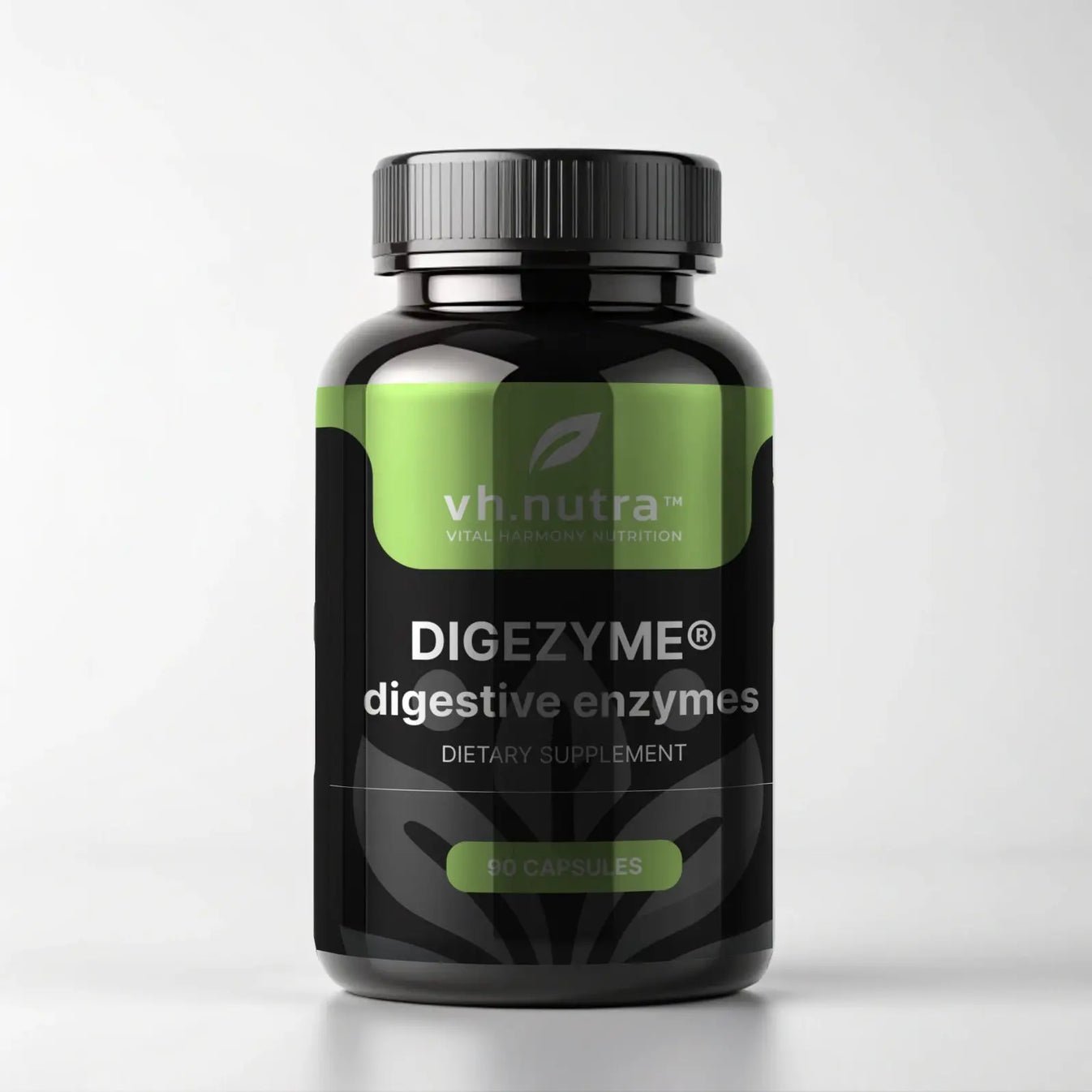
Recent studies show that L-glutamine can work synergistically with digestive enzymes — while enzymes help break down food, glutamine helps repair the damaged intestinal wall. This combination can be particularly beneficial for people suffering from chronic digestive disorders. VH.Nutra DigeZyme® digestive enzymes together with glutamine can provide comprehensive support for the digestive system.
L-glutamine supplements can also be beneficial when taken with probiotics — glutamine prepares the “soil” in the gut, while probiotics fill it with beneficial bacteria. Research shows that this combination can be more effective than each supplement alone, especially when restoring gut flora after a course of antibiotics.
Scientific sources, such as PubMed (National Library of Medicine), confirm the importance of glutamine for intestinal barrier function. This is particularly relevant knowing that gut health directly affects overall well-being, immunity, and even mood.
Frequently Asked Questions (FAQ)
Does L-glutamine help build muscle?
L-glutamine does not directly stimulate muscle growth like creatine or protein. However, it helps indirectly — by reducing muscle catabolism, improving recovery after workouts, and supporting protein synthesis. This means glutamine helps maintain existing muscle mass and recover faster, which over time allows for more frequent and effective training. Read more about muscle-building supplements in our sports supplement guide for beginners.
Can L-glutamine be taken with other supplements?
Yes, L-glutamine pairs well with most other sports and health supplements. It is often taken together with whey protein, creatine, BCAA, magnesium, and omega-3 fatty acids. A particularly effective combination is glutamine after a workout along with protein and carbohydrates — this combination optimally supports muscle recovery and glycogen replenishment.
What is the difference between L-glutamine powder and capsules?
The main difference is convenience and dosing. L-glutamine powder is more economical and allows for easy dose adjustment — it can also be mixed with other supplements. Capsules are more convenient for travel and require no mixing, but to get 5-10 grams of glutamine, you may need to take 10-20 capsules. The powder form is the most popular among athletes due to its flexibility and price.
Related Articles
- Digestive Enzymes: 7 Benefits for Digestion, Energy and Health
- Creatine: 7 Benefits for Muscles, Brain and Athletic Performance
- Sports Supplement Guide for Beginners
Disclaimer: This information is for educational purposes only and cannot replace professional medical advice. Before starting any dietary supplements, it is necessary to consult a doctor or pharmacist.